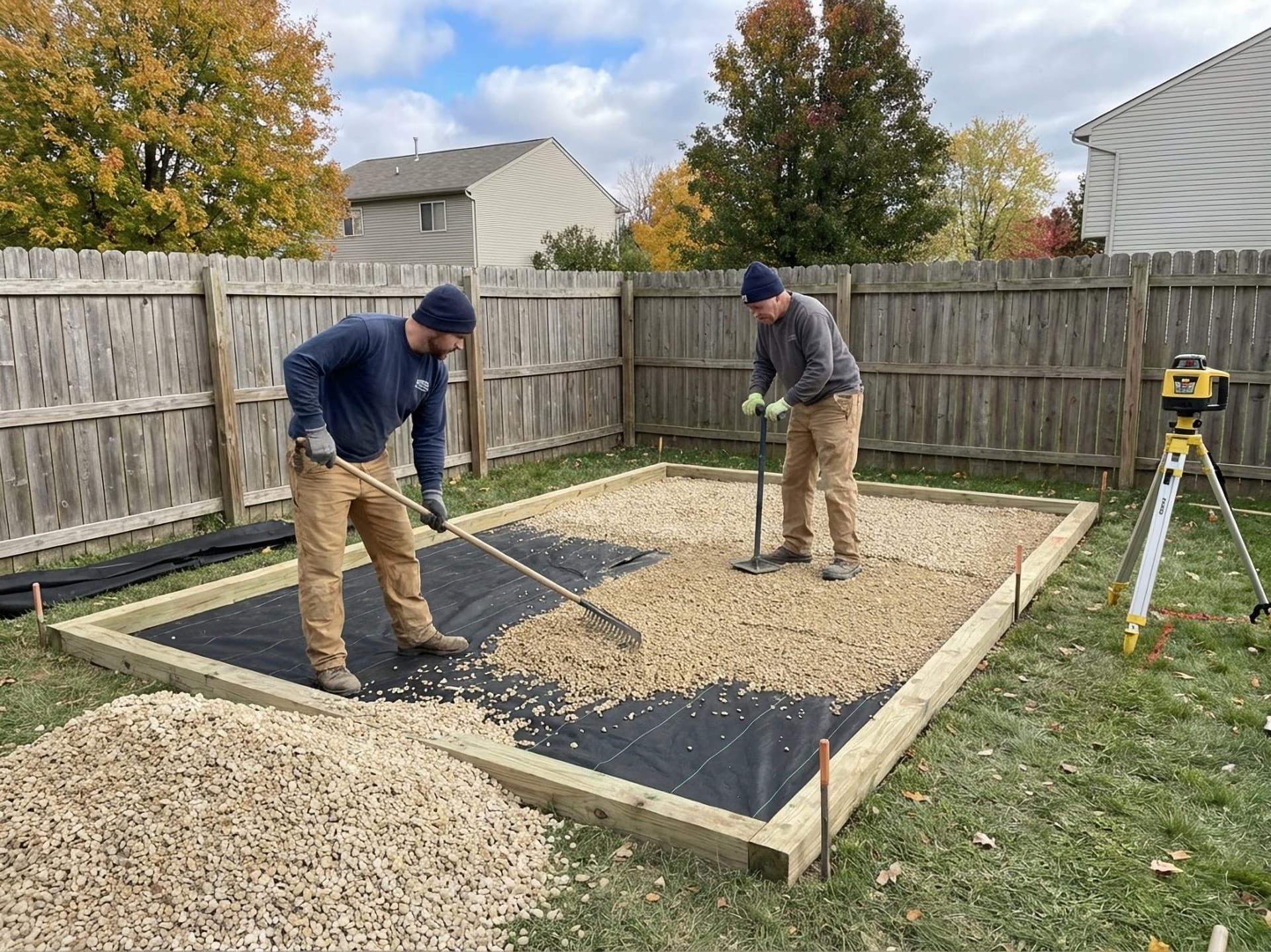
Workers raking and leveling a gravel pad with a laser level to prepare a shed foundation
Site Prep & Delivery

Get Your Site Ready for Delivery

Before the Mule rolls in, your spot needs to be level and reachable. Here is exactly what to have ready, the three foundation options to choose from, and the clearance our driver needs to set your building down right.

Pick the Base That Fits Your Building

Every building sits on pressure-treated skids, so it needs a flat, stable spot underneath. There are three ways to get there. For almost everyone, the answer is a gravel pad.

What we recommend

Gravel Pad

the long-term value

A gravel pad keeps your building level, dry, and off the dirt for years. It drains well and resists settling, which is why it fits nearly every shed, barn, and cabin. Most customers either build it themselves or hire a local contractor.

Footprint plus 12 inches on every side
4 to 6 inches of #57 crushed stone
Geotextile fabric underneath to block weeds
A slight crown so water runs off
The simplest start

Bare or Leveled Ground

The lowest-cost way to get going. Best for smaller sheds on ground that is already flat and well-drained. Just know bare dirt can settle and hold moisture over time.

Clear the grass and roots, level every corner, and steer clear of low spots where water pools.

The most permanent

Concrete Pad

A poured slab is the biggest commitment in cost and time. It makes sense for garages, large or heavy buildings, anything you plan to anchor, or when a permit calls for it.

Pour to the footprint, usually 4 inches thick and finished level. Plan anchoring points and pour well ahead of delivery day.

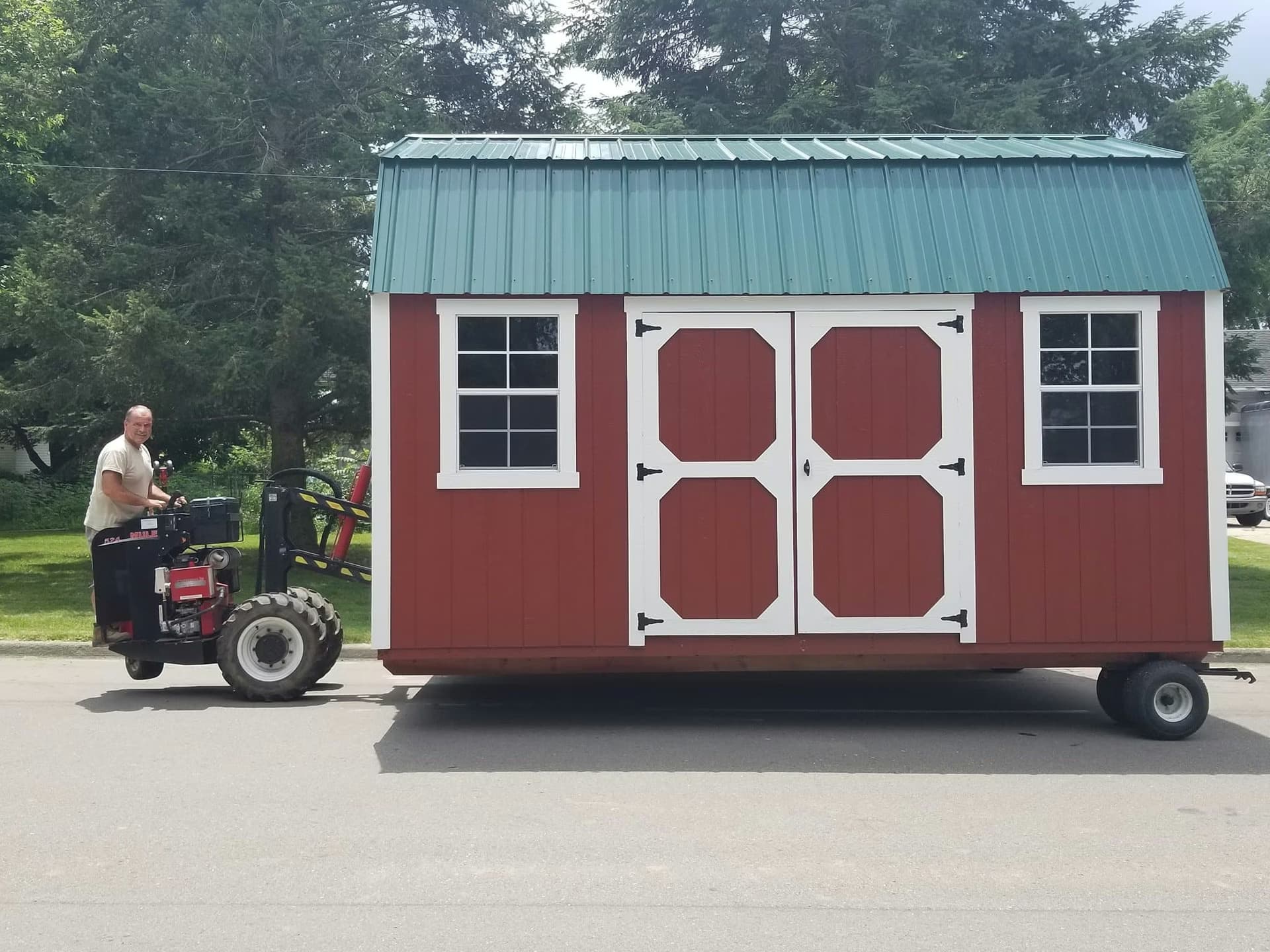
A red Amish-built lofted barn being set in place on a customer property by the delivery Mule
Getting It In Place

What the Mule Needs to Get In

Our delivery Mule is a nimble machine that can tuck a building into spots a truck never could. It still needs a clear, firm way in. Walk your route with these four things in mind.

A clear path in

The Mule needs an opening at least as wide as your building, plus a foot or two of wiggle room. Check gates, fence openings, and the gap between the house and trees.

Overhead clearance

Watch for low branches, power and cable lines, and roof eaves along the route. The building and the Mule both need room overhead.

Firm, fairly level ground

The Mule is heavy. Soft, wet, or sandy ground can bog it down. A gentle slope is fine, and our driver levels minor grade with blocks. Steep grades are tougher, so tell us ahead of time.

Gates and obstacles

Removable gate panels make placement easy. Point out anything fixed in the path, like AC units, septic lids, raised beds, or sprinkler heads, so we can plan around it.

If the site is not ready: our driver will take a look and make the call on the spot. If a building cannot be set down safely, we will not force it. We will work out the next step with you and reschedule. No surprise charges, no pressure.

Not Sure? Send Us Some Pictures (and/or Videos).

Every yard is different. Tell us about your property and what you are putting there, and we will be glad to help you figure out the right base and the easiest way in. No pressure, no guesswork.

Talk to Us About Your Site
Come See Them

Walk Through the Buildings.
Open Every Door.

Amish Outdoor Buildings Adrian location

Adrian

60+Buildings on Display

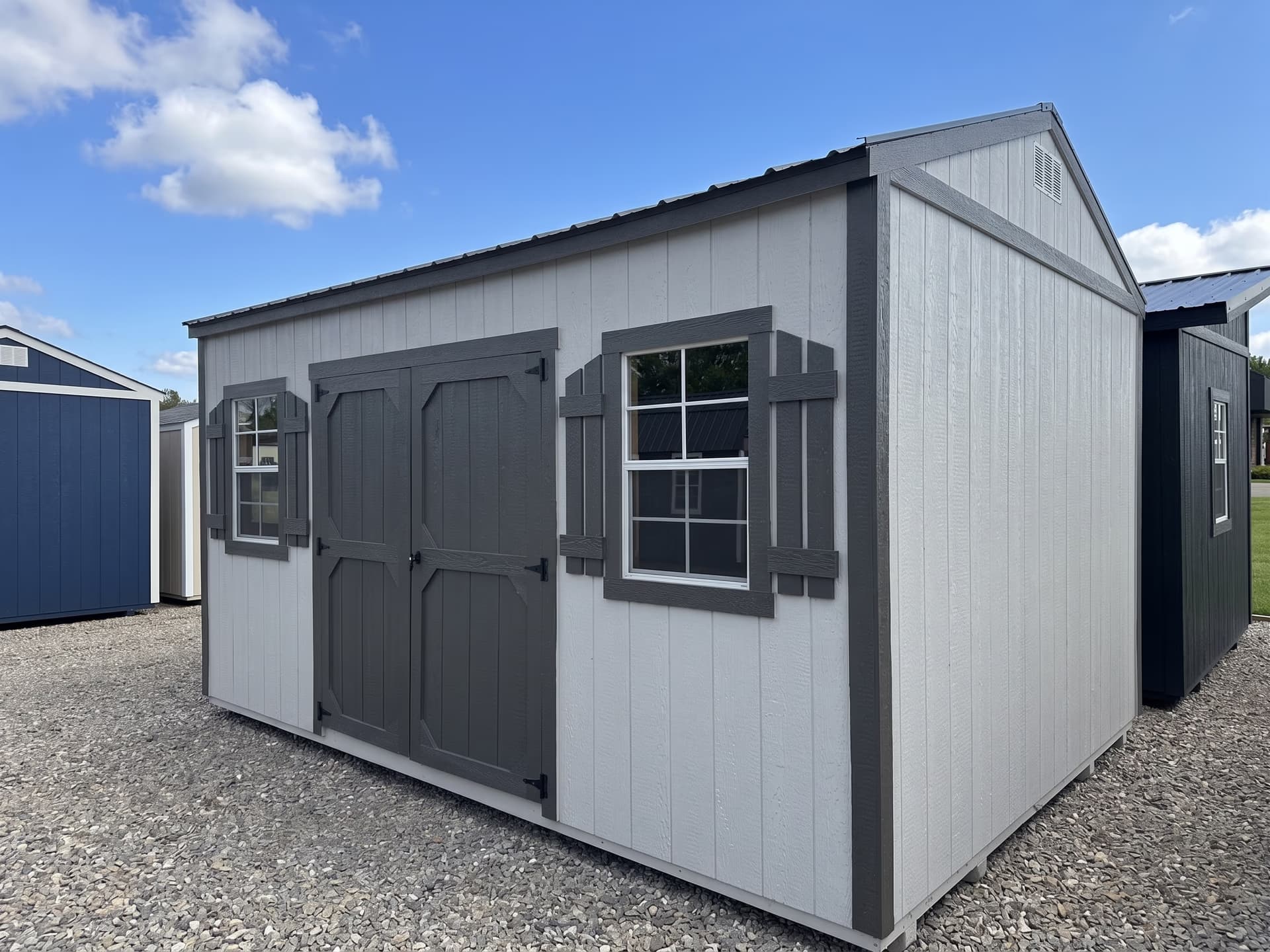
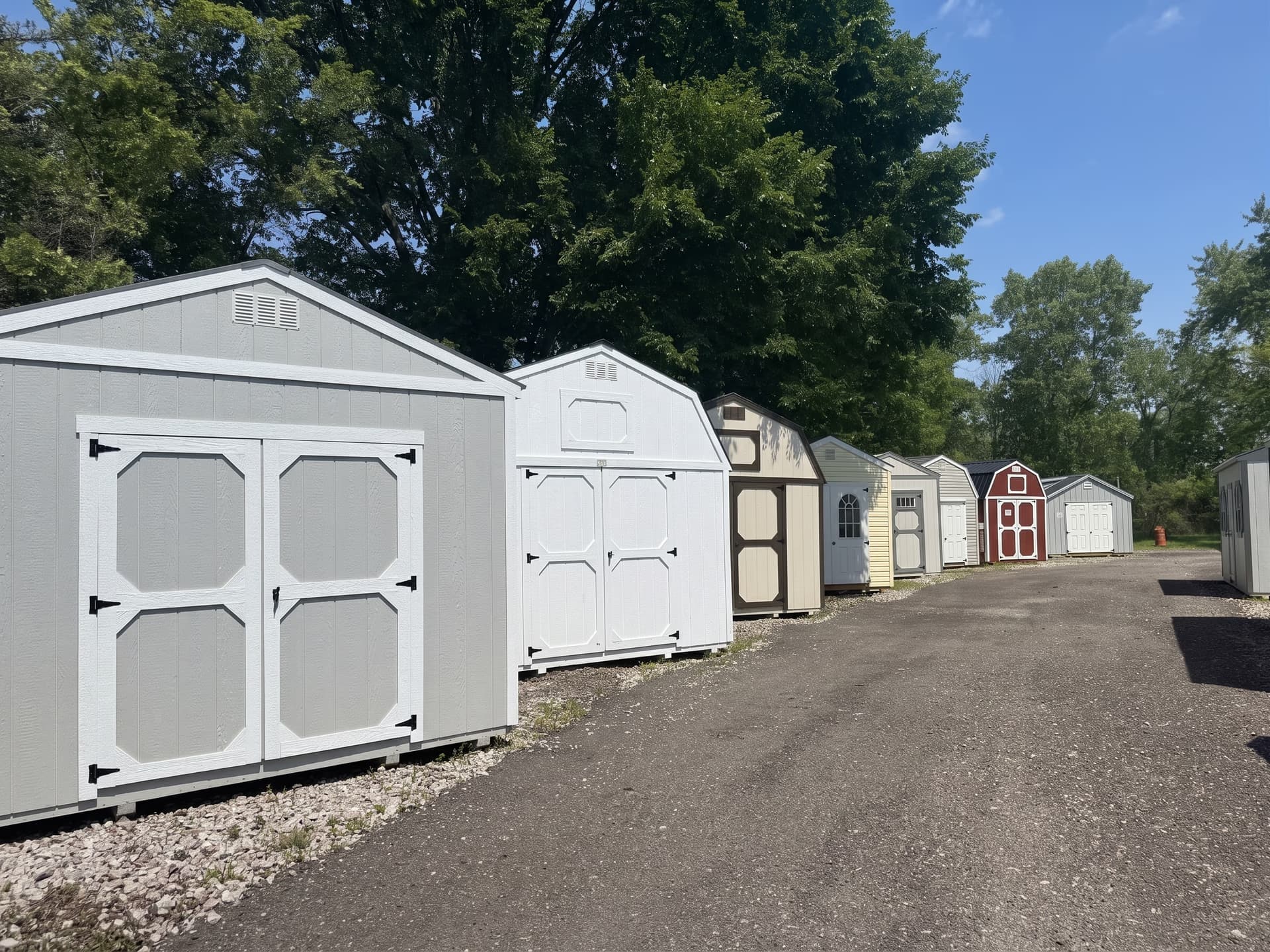
Our first established location just off US-223 in Adrian. Walk through dozens of styles and configurations, sit inside a few, take your time. No appointment needed. We leave the buildings unlocked. Come see the quality for yourself.

Hours

Mon–Tue: 10am–5pm

Wed: Closed

Thu–Fri: 10am–5pm

Sat: 10am–3pm

Sun: Closed

Amish Outdoor Buildings Carleton location

Carleton

55+Buildings on Display

Located just off Telegraph Road in Carleton, we have a full selection of sheds, cabins, garages, barns, and more ready to walk through whenever you're ready. We can't wait to see you soon.

Hours

Mon–Tue: 10am–5pm

Wed: Closed

Thu–Fri: 10am–5pm

Sat: 10am–3pm

Sun: Closed