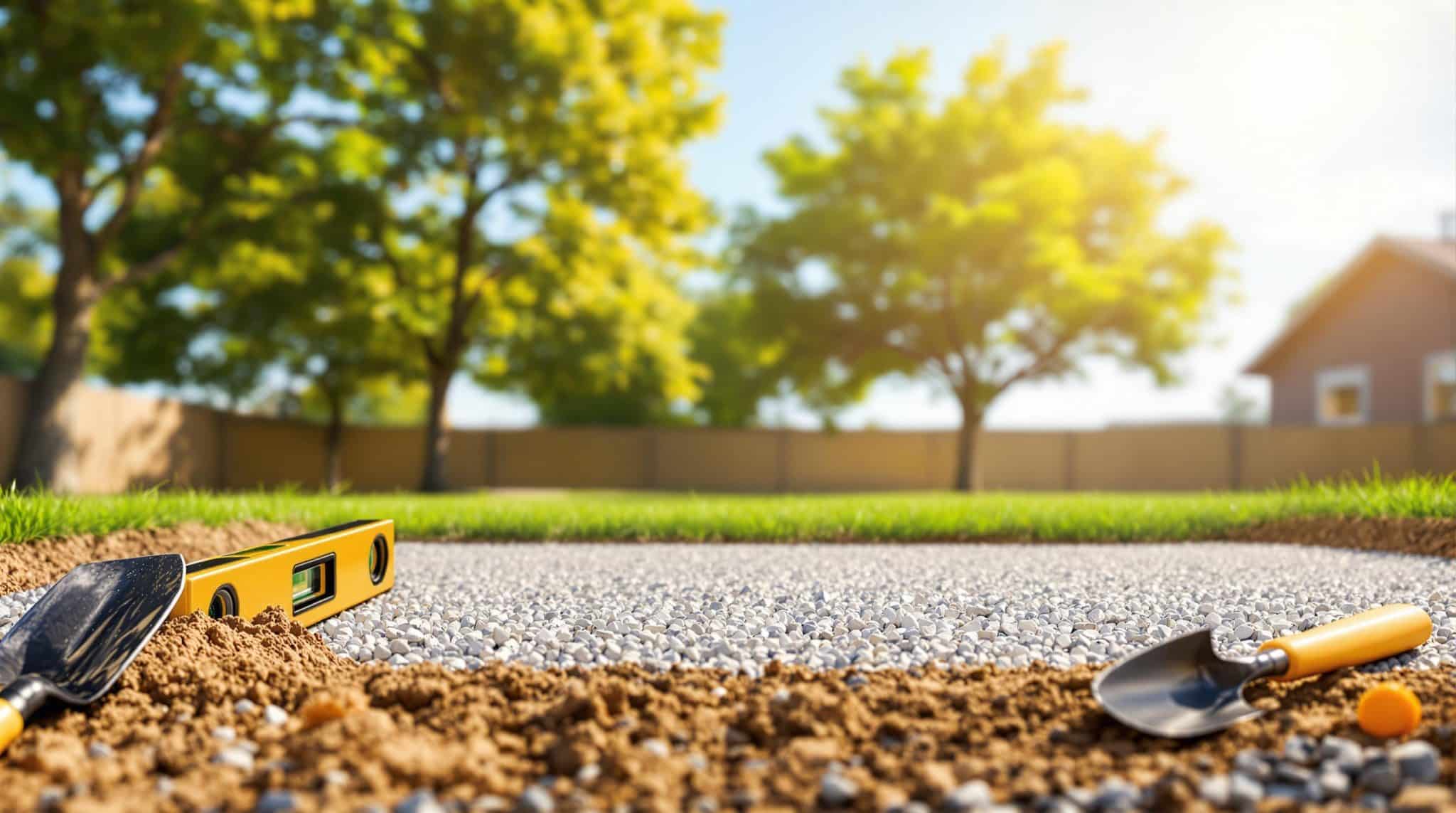
Want your shed to last for decades without issues? Proper site preparation is the key. From choosing the right location to ensuring a solid foundation and drainage, this guide covers everything you need to know to protect your investment and avoid costly repairs.
Key Steps to Prepare Your Shed Site:
- Pick the Right Spot : Elevated, level ground with good drainage and clear access.
- Foundation Options : Gravel pads (affordable, great drainage) or concrete slabs (durable for heavy loads).
- Water Management : Grade the site, install gutters, and consider French drains for proper drainage.
- Clearance for Delivery : Ensure 14 feet of vertical clearance and a path 2 feet wider than the shed.
- Maintenance Tips : Regularly check the foundation, drainage, and surrounding vegetation.
Quick Comparison: Foundation Types
Foundation Type: Gravel Pad | Best For: Most residential sheds | Cost (USD/sq ft): $1–$3 | Key Pros: Affordable, good drainage | Key Cons: Needs proper compaction
Foundation Type: Concrete Slab | Best For: Heavy equipment sheds | Cost (USD/sq ft): $5–$10 | Key Pros: Extremely durable | Key Cons: Expensive, harder to remove
Foundation Type: Concrete Blocks | Best For: Small sheds | Cost (USD/sq ft): $50–$100 (total) | Key Pros: Easy to install | Key Cons: Not ideal for slopes
Foundation Type: Wood Skids | Best For: Portable sheds | Cost (USD/sq ft): $50–$200 (total) | Key Pros: Easy to move | Key Cons: Shorter lifespan
Shed Foundations: How They Are Built
Picking Your Shed Location
Where you place your shed affects how long it lasts and how convenient it is to use.
Site Selection Checklist
When choosing the location, consider these key points:
- Ground Conditions
Pick an elevated, level area. - Stay away from low spots where water tends to gather.
- Make sure the soil is solid enough to support the foundation.
- Check how far it needs to be from property lines.
- Look into your HOA's rules, if applicable.
- Review building permit rules:
Sheds under 200 sq. ft. often don’t need a permit. - Larger sheds (over 200 sq. ft.) may require approval .
- Ensure 14 feet of clearance for height and width.
- The delivery path should be 2 feet wider than the shed.
- Gates must also be 2 feet wider than the structure .
- Think about how much sun the shed will get.
- Watch out for low-hanging tree branches.
- Make sure water drains away naturally from the area.
- Place the shed where it’s visible from your house for added security.
Site Layout Steps
- Initial Measurements
Measure the space you have and ensure proper clearances:
Leave at least 3 feet around all sides. - Allow 8–10 feet for ladder access if needed.
- Plan extra space for landscaping or pathways.
- Utility Marking
Contact a utility marking service to locate and avoid:
Underground power lines. - Water and gas pipes.
- Communication cables.
- Foundation Outline
Mark the shed’s footprint using:
Stakes at each corner. - Mason’s string to ensure straight lines.
- Spray paint for clear visual guides.
- A level to check the ground’s slope.
Ground Leveling Guide
Creating a level base is key to ensuring your shed stays stable and lasts for years. Here's a simple guide to help you prepare a solid foundation.
Self vs. Professional Leveling
Deciding between doing it yourself or hiring a professional? Here’s a quick comparison:
Factor: Best For | DIY Leveling: Small projects with minor unevenness | Professional Leveling: Large areas with steep slopes or drainage needs
Factor: Equipment Needed | DIY Leveling: Basic hand tools | Professional Leveling: Specialized machinery
Factor: Results | DIY Leveling: Works for simple tasks | Professional Leveling: Offers precise and consistent results
Consider professional help if your ground has a steep slope, requires complex drainage, or if you don’t have the tools or time to handle the job. Professionals can deliver more accurate and reliable results.
Basic Leveling Steps
Follow these steps to create a level base for your shed:
- Ground Preparation
Clear the area by removing grass and sod. These materials are too soft and won’t support your shed properly. - Height Assessment
Use string lines and a level to find the highest point in the area. Grade the site to ensure a 1-inch drop for every 4 feet away from your house . - Surface Preparation
Spread a 4-inch layer of crushed stone, then add a mixture of topsoil, sand, and compost. You can also lay down landscape fabric to prevent weeds. - Compaction and Settlement
Compact each layer thoroughly using a plate compactor or hand tamper. The base should be firm and show little to no movement when walked on. Let the soil settle for at least 48 hours .
Finally, check the level by placing a 2x4 with a level across the area. Adjust any high spots before moving on to installing your shed's foundation.
Shed Foundation Options
Picking the right foundation is crucial for keeping your shed stable and long-lasting. Different foundation types vary in cost, durability, and suitability for specific needs.
Foundation Choices
On-grade (or floating) foundations rest directly on the ground and work well for smaller sheds. Frost-proof foundations, on the other hand, are better for larger sheds or areas with colder weather .
Here’s a quick look at common foundation types:
Foundation Type: Gravel Pad | Best For: Most residential sheds | Advantages: Good drainage, affordable ($1-$3/sq ft) | Considerations: Needs proper compaction
Foundation Type: Concrete Slab | Best For: Heavy equipment storage | Advantages: Extremely durable, solid base | Considerations: Expensive ($5-$10/sq ft)
Foundation Type: Concrete Blocks | Best For: Small to medium sheds | Advantages: Easy to install, low cost | Considerations: Not ideal for sloped sites
Foundation Type: Wood Skids | Best For: Portable structures | Advantages: Easy to move, cost-effective | Considerations: Shorter lifespan
For colder areas with frost concerns, consider these options:
- Concrete piers : Simple and reliable for cold climates.
- Screw piles : Great for uneven or challenging ground.
- Post and beam : Works well on a variety of terrain.
Foundation Cost Guide
Foundation costs depend on the size of your shed, materials, and installation complexity. Here's a breakdown:
Basic Options ($50-$400):
- Skid foundations: $50-$200
- Concrete blocks: $50-$100
- Deck blocks: $50-$200
- Gravel pads: $100-$400
Mid-Range Options ($200-$1,000):
- Pavers: $200-$1,000
- Plastic foundations: $100-$400
- Metal foundation kits: $100-$800
- Pier and beam: $350-$2,000
Premium Options ($800-$5,000):
- Screw piles: $1,000-$4,000
- Floating concrete slab: $250-$3,000
- Concrete slab with footers: $800-$5,000
When choosing a foundation, keep these factors in mind:
- Local frost depth and climate.
- Shed size and weight (larger sheds over 200 sq ft need stronger foundations) .
- Site drainage needs.
- Local building codes and permit requirements.
- Maintenance expectations.
For example, a gravel pad is a solid choice for a garden shed, while a concrete slab is better suited for a workshop that stores heavy equipment .
Once your foundation is set, make sure to address water drainage around your shed to protect it from moisture damage.
Water Drainage Solutions
Protect your shed from water damage and extend its lifespan by pairing your foundation and leveling efforts with a well-thought-out drainage system.
Water Control Methods
Managing water effectively starts with careful planning. Here are a few ways to keep water away from your shed:
- Grade and Slope : Make sure the ground slopes gently away from your shed's foundation. This helps water flow away naturally.
- Gutter System Setup : Install gutters and downspouts to redirect rainwater. Add splash blocks or downspout extensions to guide the water farther from the shed.
- Underground Solutions : For areas prone to heavy rain or pooling water, consider underground options like French drains or drainage pipes. These systems can handle significant water flow and prevent accumulation.
Once you've chosen your water control methods, gather the tools and materials you'll need to get started.
Drainage Supply List
Here’s a list of essentials to have on hand:
Basic Materials :
- ¾" clean crushed stone
- Geotextile fabric
- Drainage gravel
- Splash blocks
- Gutter components
Professional Tools :
- Level
- Shovel
- Rake
- Tamper
- Wheelbarrow
- Marking paint
A practical example from the Bunnings Workshop community highlights how to tackle water issues in a wooden shed on a concrete base. Experts suggested adding an aluminum angle around the shed's perimeter and raising the floor to prevent water from seeping under the walls.
For extra protection, try these tips:
- Plant moisture-absorbing plants around the shed.
- Create a rain garden to soak up excess water.
- Build a concrete or paver apron at the shed entrance.
- Apply waterproof sealant to wooden surfaces.
Delivery Day Preparation
Getting your site ready for delivery day can help avoid unnecessary delays or issues. Follow these tips to ensure smooth access and clear communication with the installation team.
Access Path Requirements
A successful shed delivery starts with preparing an accessible path for the delivery equipment. Here's what you'll need:
- Vertical clearance : At least 14 feet for delivery trucks.
- Pathway width : Make sure it's 2 feet wider than the shed.
- Turn radius : Allow extra space for corners.
Some companies use specialized equipment like a "Mule" - a compact, all-terrain forklift designed for tight spaces and softer ground conditions .
Double-check these points along the delivery route:
Access Point: Gate entrance | Required Clearance: 2 feet wider than the shed | Common Obstacles to Remove: Fences, posts
Access Point: Straight path | Required Clearance: 14 feet in height | Common Obstacles to Remove: Tree limbs, overhead wires
Access Point: Corners/turns | Required Clearance: Extra width for maneuvering | Common Obstacles to Remove: Landscaping, furniture
Access Point: Final location | Required Clearance: 1 foot clearance on all sides | Common Obstacles to Remove: Plants, outdoor items
Working with Installers
Once the access path is ready, coordinate closely with the installation team. Clear communication is key to avoiding last-minute surprises.
Here’s how to prepare:
- Walk through the delivery path on the day of installation to ensure it’s clear.
- Be available during delivery or assign someone to oversee it.
- Have a backup location ready in case the primary spot isn’t accessible.
- Check the weather - rain or wet ground may require rescheduling.
If the delivery path crosses a neighbor’s property, secure written permission in advance. For sites with very limited access, discuss alternatives like on-site construction. This option usually only requires walkway access for materials and tools .
Next Steps and Maintenance
Now that your site is set up and your shed is delivered, keeping everything in good condition is key to protecting your investment.
Preparation Checklist
After delivery, use this checklist to ensure your site is ready for regular upkeep:
Area: Foundation | Key Actions: Check for level and inspect for settling | Timing: 24–48 hours after delivery
Area: Drainage | Key Actions: Test water flow and clear gutters | Timing: First rainfall
Area: Access | Key Actions: Remove temporary path markers | Timing: After installation
Area: Structure | Key Actions: Inspect doors and windows | Timing: 1 week post-delivery
Area: Surroundings | Key Actions: Clear debris and trim vegetation | Timing: Immediately
Site Upkeep Tips
Regular care is the best way to avoid problems down the line.
Here’s a seasonal guide to help you stay on track:
- Spring Tasks : Check the foundation for any winter damage, fertilize nearby grass to reduce erosion, and remove leftover debris from colder months.
- Summer Care : Trim back plants and grass to improve airflow and use moisture absorbers to manage indoor humidity.
- Fall Preparation : Wash the shed’s exterior, inspect gutters and drainage, and secure loose shingles.
- Winter Protection : Seal gaps with weatherproof caulk, clear snow and ice quickly, and watch for any frost-related ground shifts.
To keep everything in top shape, do these checks every three months:
- Look for erosion along foundation edges.
- Lubricate hinges and handles on doors.
- Sweep out the shed to discourage pests.
- Check ventilation to avoid moisture issues.
- Observe how water drains during rainstorms.