
Comparisons
How Amish-built structures compare to big-box stores, DIY kits, and other shed companies.
View Questions & AnswersQuestions
Local. A national brand ships you a product. A local company builds a relationship. When something needs attention, you're talking to real people who know your building, know your area, and genuinely care about getting it right.
Not every local company operates the same way, though. Some lean heavy on marketing, running sales every other weekend so the price is never the same twice. If you have to wonder whether you should buy now or wait for the next promotion, that's a sign the pricing isn't built to stand on its own. We keep it simple: consistent pricing, quality Amish-built buildings, and a team that's going to look out for you from start to finish.
Some of our customers have come back for their second and third buildings. One has bought over 40 from us over the years. That doesn't happen by accident. Come visit the lot, walk through the buildings, and see what we mean.
For a portable building, it's not even close. Home Depot and Lowe's sell brands like Heartland and Tuff Shed that are designed for a price point. The materials are lighter, the construction is simpler, and extras that should come standard often cost more.
When you buy from us, you're getting an Amish-built structure from a real shop with real craftsmen. You can visit the lot, talk to people who actually know the product, and get help long after the delivery truck leaves. Big-box stores move volume. We build relationships.
Tuff Shed builds to a system: standardized designs, factory processes, consistent but basic quality. They're fine for what they are. But when you compare the lumber weight, the joint quality, the hardware, and the overall feel, an Amish-built shed from a shop like Homestead Barns is a different class of building.
Walk into both side by side. Feel the floor. Open the doors. Look at how the walls meet the roof. The difference speaks for itself. Tuff Shed will get you a functional building. An Amish-built shed will get you one that lasts and feels like it was built by someone who cared about the work.
We think so, and we're obviously biased, but hear us out. Photos and 3D tools are great for narrowing things down. But walking inside a building, feeling the floor, checking the headroom, opening and closing the doors, that tells you more in two minutes than an hour of browsing online.
We keep 50+ buildings on-site year-round at both our Adrian and Carleton lots. Come see them. Bring your tape measure, bring your questions, bring whoever is going to have an opinion. There's no pressure, and you'll leave knowing exactly what you want.
When you buy direct from a manufacturer, you might save a small margin, but you lose the local relationship. A company like us knows the product inside and out because we work with it every day, and we're here locally when you need help with delivery, placement, site questions, warranty issues, or just advice.
We also keep inventory on the ground so you can see what you're getting before you commit. Buying direct often means ordering blind and waiting. Buying from someone who knows the product and the area gives you the best of both worlds.
Both, honestly. Our 3D designer is a great starting point. Play around with sizes, styles, doors, and windows to figure out what you like. Then submit your design and talk to us. We'll give you an official quote and can suggest things the configurator won't tell you, like which size makes the most sense for your specific use, or which upgrades are worth it and which ones you can skip.
The configurator gets you thinking. A real conversation gets you confident.
For most people, yes. A prebuilt shed arrives as a finished structure, ready to use. A shed kit arrives as a pile of materials with instructions and a weekend, or several weekends, of assembly ahead of you.
The quality difference is significant. A prebuilt shed is constructed by experienced builders in a controlled shop environment. Every joint is set properly. The frame is square. The doors hang right. A kit shed depends on whoever is assembling it, and even a handy person is going to struggle to match the quality of a professional build. Factor in the time, the tools, and the frustration, and the price gap between the two closes fast.
On paper, DIY can look cheaper. In reality, by the time you buy lumber, hardware, roofing, siding, doors, windows, and all the small stuff that adds up, the material cost alone gets surprisingly close to a prebuilt price. Then add your time. A weekend project often turns into two or three weekends, and that's if nothing goes wrong.
A prebuilt Amish shed arrives finished, square, and ready to use. No mistakes to fix, no trips back to the hardware store, no realizing you cut a board wrong. For most people, the convenience and quality of a prebuilt building is worth every penny of the difference.
A portable building gives you speed, flexibility, and quality at a lower cost. It's built in a shop by experienced craftsmen, delivered to your property, and usable within days. A stick-built shed means hiring a contractor, scheduling around weather, and potentially weeks of construction in your yard.
The portable option also gives you something a stick-built doesn't: you can move it later. If you change your mind about placement, relocate, or sell the building, it can go with you. A stick-built shed is permanent.
For most residential needs, a portable building gets you there faster, cleaner, and for less money.
Unless you need something larger than what can be delivered as a single unit, or your access makes delivery impossible, a prefab shed is the smarter play. Lower cost, faster timeline, controlled build quality, and no contractor drama.
Our build-on-site option bridges the gap for properties with limited access. Same builders, same quality, just assembled on your property instead of in the shop. Minimum $1,000 or 20% of base price for that service, but it's still typically less than hiring a general contractor from scratch.
Prebuilt pros: ready fast, built in a shop with quality control, typically less expensive, can be moved later. We build up to 16x44 for delivery and build-on-site. If you need a non-standard dimension, please contact us and we'll let you know what's possible for your specific building style.
Custom-built by a contractor, on-site, pros: can integrate with existing structures, built to exact site conditions. Cons: higher cost, longer timeline, weather dependent, quality depends entirely on your contractor.
For most people, a prebuilt with custom options, size, color, doors, windows, loft, siding, gets them exactly what they want without the downsides of a full contractor build.
Your building arrives on skids already, so the question is what goes between those skids and the ground. Gravel pad is the gold standard: great drainage, stable, affordable. Concrete blocks are the budget pick and work beautifully, just grab 10 to 15 from Menards or Lowe's and our driver places them at delivery. A poured concrete slab is the premium option for garages and heavy-use buildings.
What you don't want: bare dirt or grass. Moisture will work against you over time. Even the cheapest option, concrete blocks, makes a meaningful difference in longevity.
For the vast majority of sheds and storage buildings, gravel is more than good enough. It drains well, stays stable through freeze-thaw, and costs a fraction of a poured slab.
Concrete makes sense for garages where you're driving vehicles in and out, heavy workshops with significant equipment, or any building you plan to finish out as a permanent workspace. If you're storing lawn equipment, seasonal gear, or general household overflow, save the money. Gravel does the job.
Gravel pad for most situations. It handles Michigan's freeze-thaw cycles better than bare ground, drains well, and provides a firm, level base. Four to six inches of three-quarter-inch crushed stone on top of landscape fabric is the standard setup.
Concrete blocks for budget-conscious buyers. Concrete slab for garages and heavy-use buildings. The one option that's never best: nothing. Always put something between your building and the bare ground.
Blocks are faster and cheaper. A full gravel pad provides more even support, better drainage around the entire base, and a cleaner overall look. For smaller buildings and tighter budgets, blocks are a fantastic solution. For larger buildings or any situation where you want the best long-term performance, a gravel pad is worth the extra investment.
If you're deciding between the two, consider the size of the building. A 10x12 on blocks works great. A 12x24 or larger benefits from the more distributed support of a full pad.
Concrete blocks. They're the most portable-friendly foundation because there's nothing permanent to deal with. When the building moves, the blocks come out and the ground goes back to normal. A gravel pad is easy to repurpose or rake level, but it's a bit more work. A concrete slab stays forever.
One of the biggest advantages of a portable building is that it can actually be moved. Choosing a foundation that supports that flexibility just makes sense.
Pricing differences in this industry usually come down to materials, labor, and how a company chooses to build. Some shops prioritize keeping the price as low as possible, and that's a valid approach for some buyers. Others invest more in materials and craftsmanship, and you see that reflected in the product.
We chose to partner with Homestead Barns because the quality is consistent, building after building, year after year. We're not the cheapest option out there, and we're not trying to be. We'd rather deliver a building that holds up for decades than win a price war. If you're comparing, take the time to walk through both buildings in person. Open the doors, feel the floor, check the framing. The differences tend to speak for themselves.
There are several good companies in this space, and we'd always encourage you to shop around. When you're comparing, look at the full picture: pricing, build quality, and what real customers are saying. Reviews with photos and specific stories tell you a lot more than a wall of five-star ratings with no details.
You might find companies that charge 10% to 15% more than we do. Higher price doesn't always mean higher quality. We focus on being the best value: quality Amish-built buildings, honest pricing, and a team that looks out for you whether you're in Grand Rapids, Toledo, Monroe, or Lansing.
One thing to watch for when you're comparing: if a company runs a sale every other weekend, their pricing isn't consistent. That means you're always guessing whether you're buying at the right time or whether waiting two weeks gets you a better deal. We don't operate that way. Our price is our price. You shouldn't have to time your purchase like you're playing the stock market. A product that needs constant discounts to move isn't holding up on its own.
Nearly a decade of repeat customers backs up our approach. Some have come back for two and three buildings. One storage facility owner has purchased over 40 from us. That's the kind of trust we're building, one customer at a time.
Most customers go with a delivered garage because it arrives finished, usually within days for an in-stock building, with no contractors or weeks of construction. We build on site when access is tight, the size is larger than we can deliver in one piece, or your site calls for it. Same craftsmen, same materials either way.
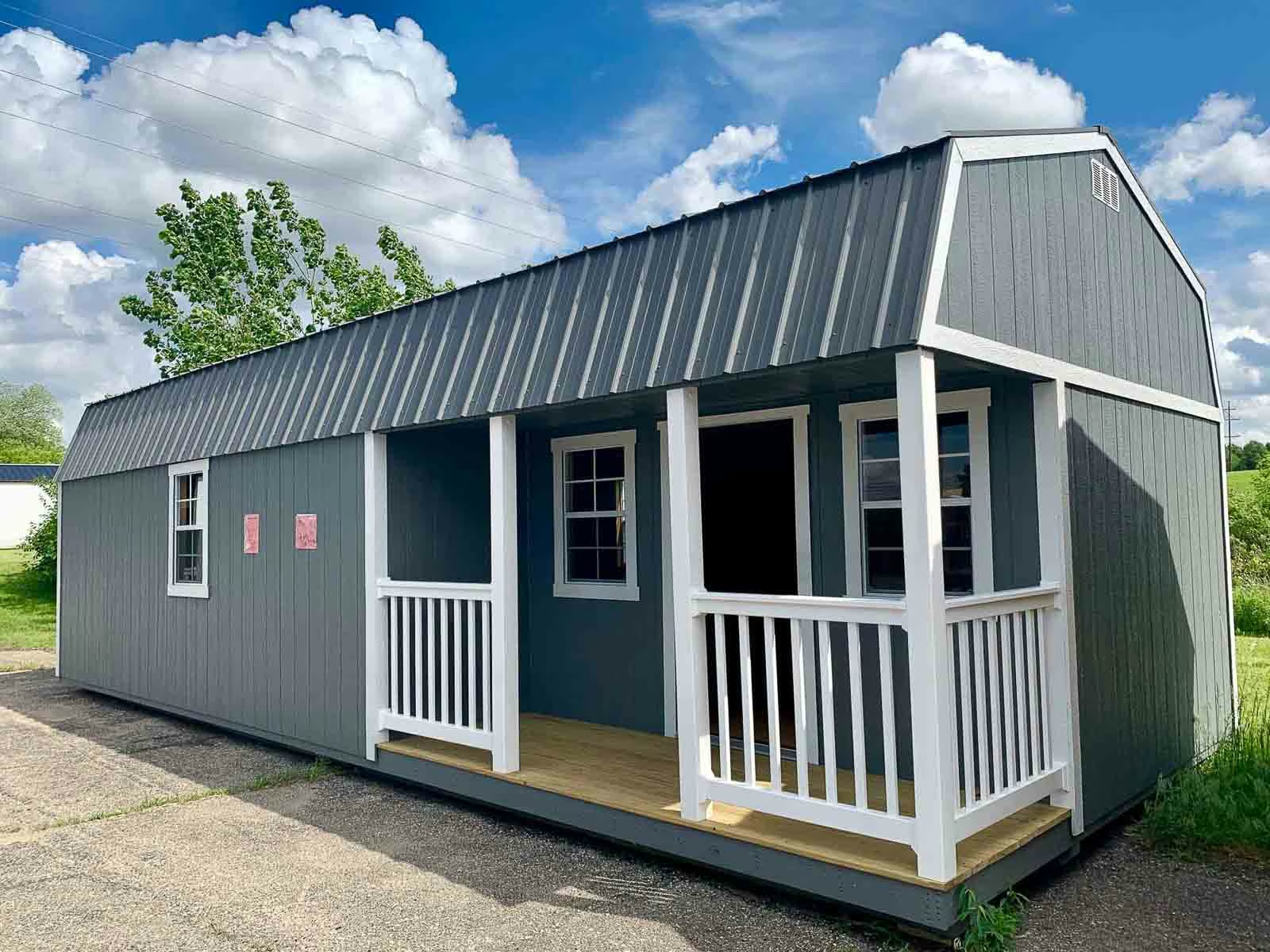
A Cabin is built with living space in mind: a covered porch, larger windows, an entry door, and layouts that lend themselves to a finished interior. A shed is built for storage first. If you're picturing a guest space, office, or weekend retreat, start with a Cabin rather than retrofitting a shed.
Mostly the porch. Both are finishable, porch-style buildings with the same construction, but the cabin runs its covered porch across the front, the classic cabin look, while the casita tucks the porch into a corner for a more house-like footprint. It comes down to the porch and the look you're after.
The loft. A lofted barn adds a built-in overhead storage area under its gambrel roof, giving you a second level for bins, seasonal gear, and lighter items. A regular barn keeps the same classic roofline and open floor without the loft. If you want maximum storage in the same footprint, the lofted barn wins.
For pure storage capacity, the lofted barn's gambrel roof and overhead loft give you more usable room in the same footprint. A utility shed is simpler and a bit easier to set up a workbench or walk around in. It comes down to whether you want vertical storage or open floor space.
More Questions
Back to FAQ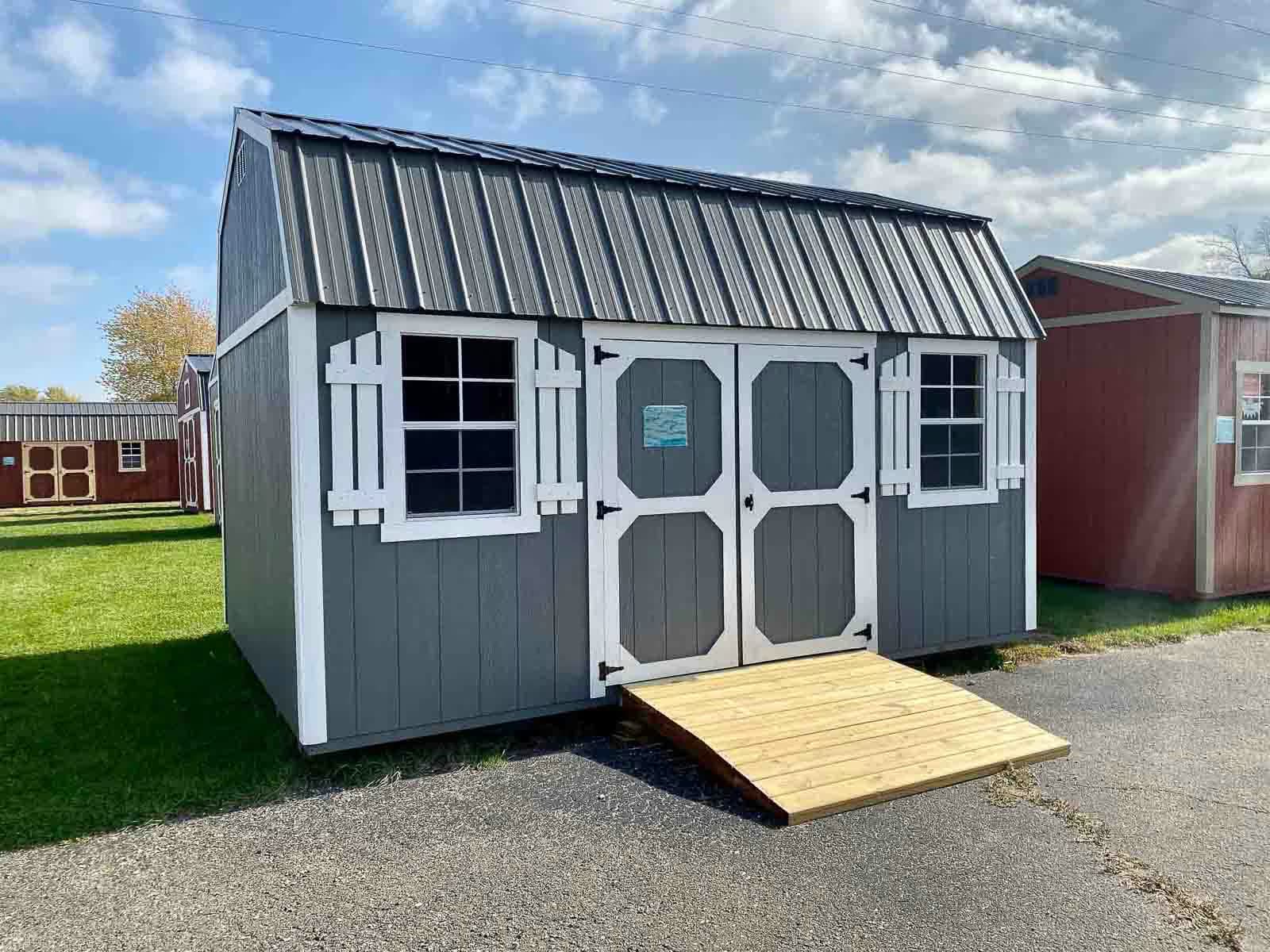
Buying & Getting Started
Everything you need to know before purchasing an Amish-built building.
20 Questions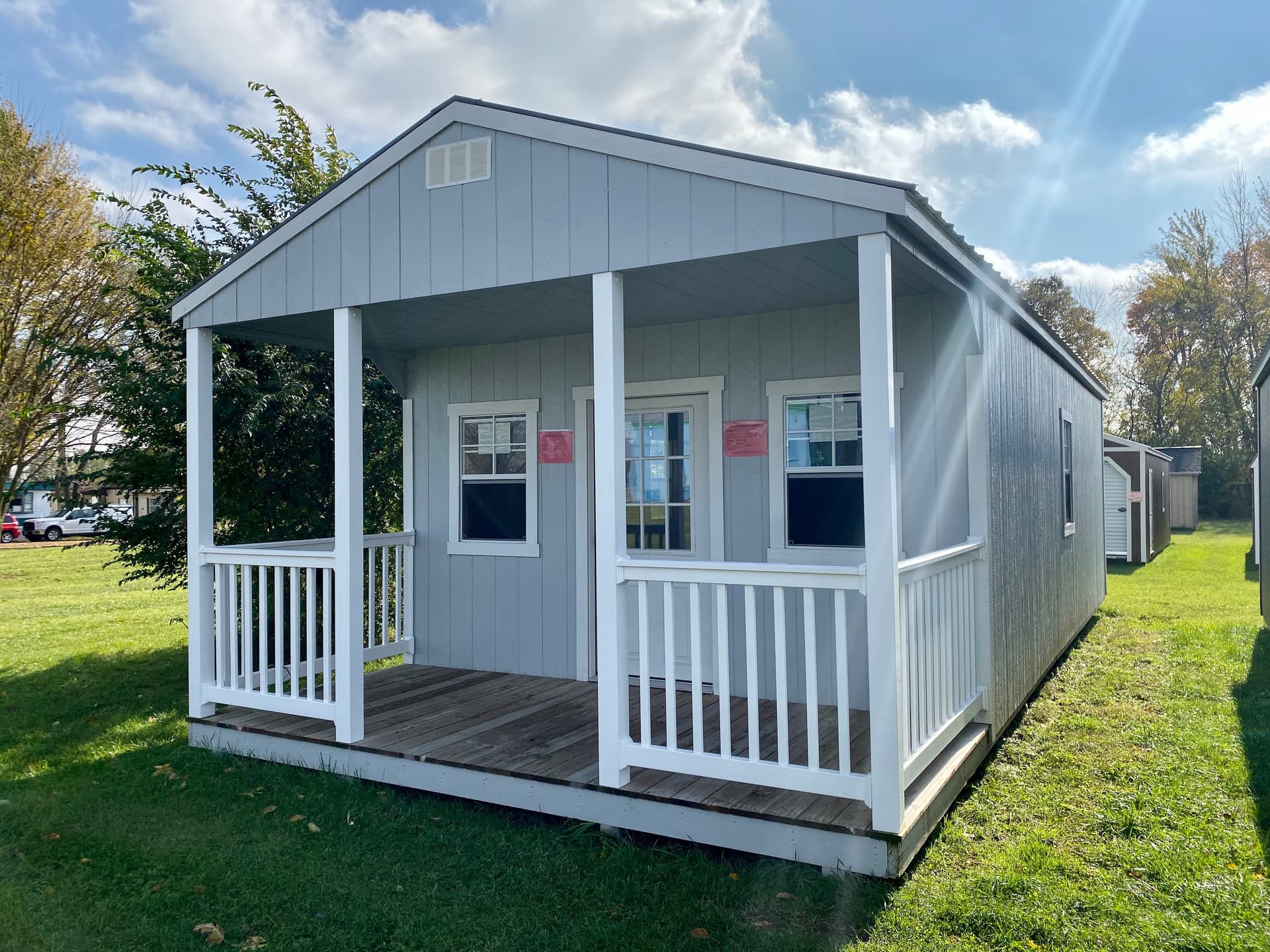
Rent-to-Own & Financing
Payment options, rent-to-own details, and financing for your building.
35 Questions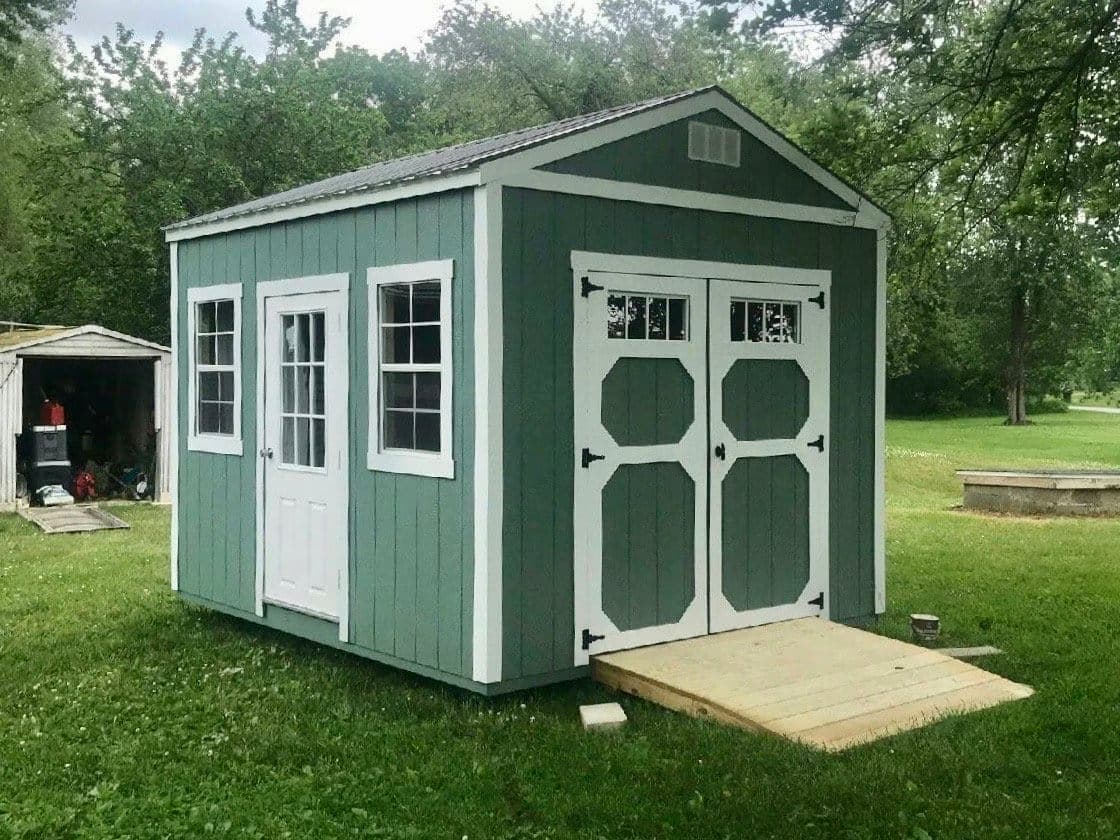
Pricing & Value
What things cost, what affects price, and how to get the best value.
20 QuestionsSee Yours Before
You Buy It
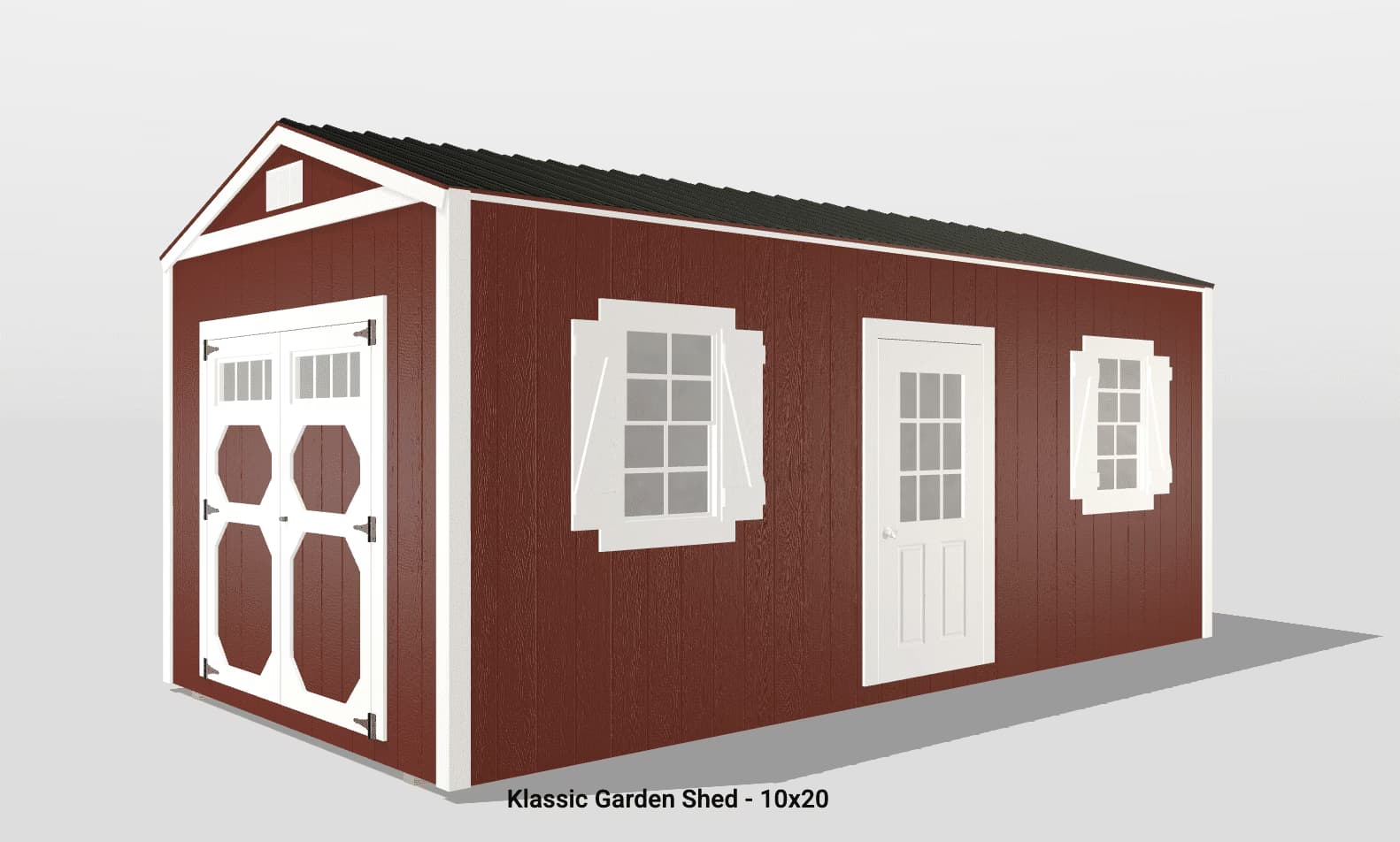
Pick your style, size, colors, and options. Rotate it, zoom in, and make it yours. The whole process is easy and you'll walk away knowing exactly what your building looks like before you commit.
Walk Through the Buildings.
Open Every Door.
Adrian
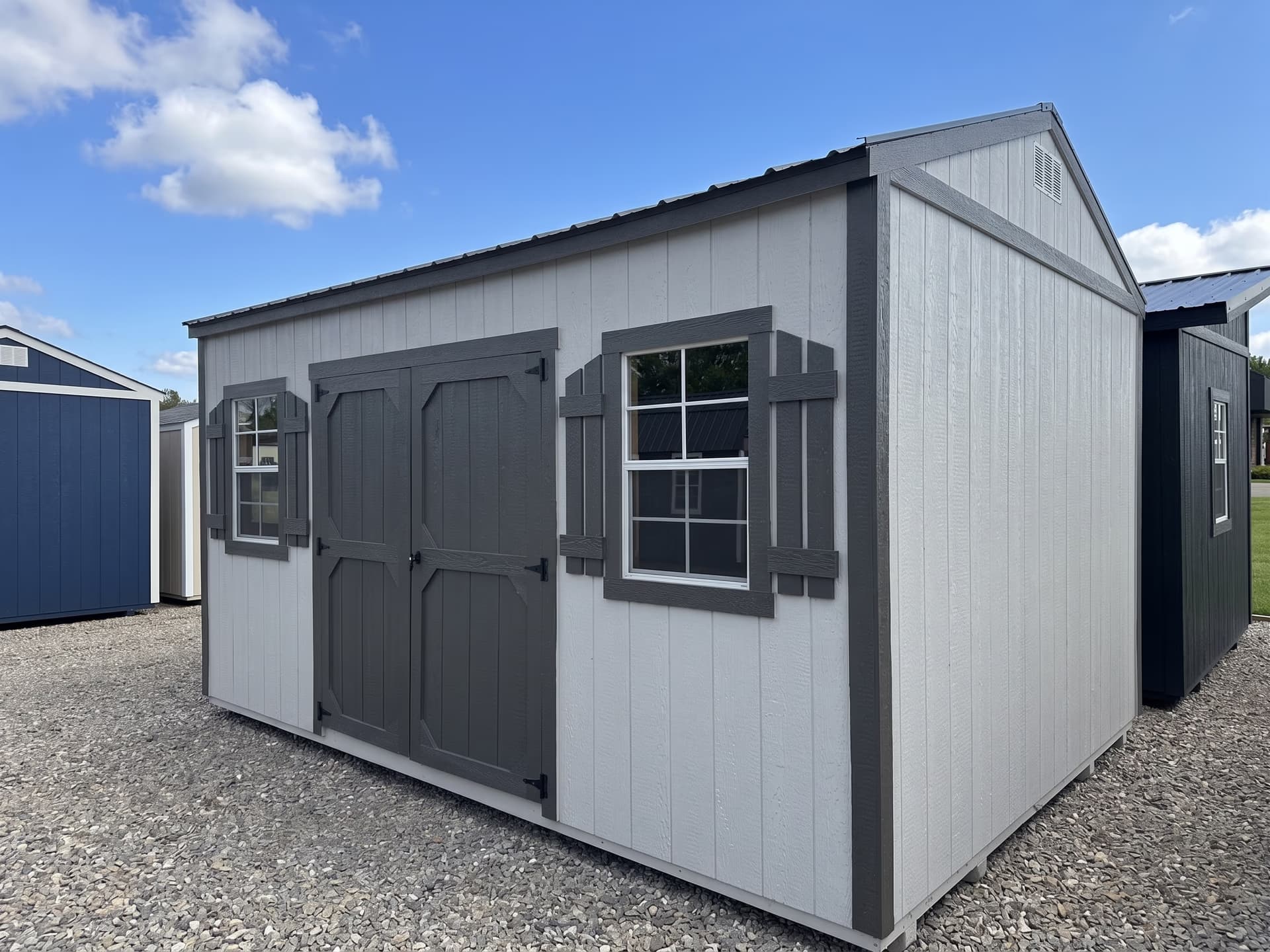
Our first established location just off US-223 in Adrian. Walk through dozens of styles and configurations, sit inside a few, take your time. No appointment needed. We leave the buildings unlocked. Come see the quality for yourself.
Hours
Mon–Tue: 10am–5pm
Wed: Closed
Thu–Fri: 10am–5pm
Sat: 10am–3pm
Sun: Closed
Carleton
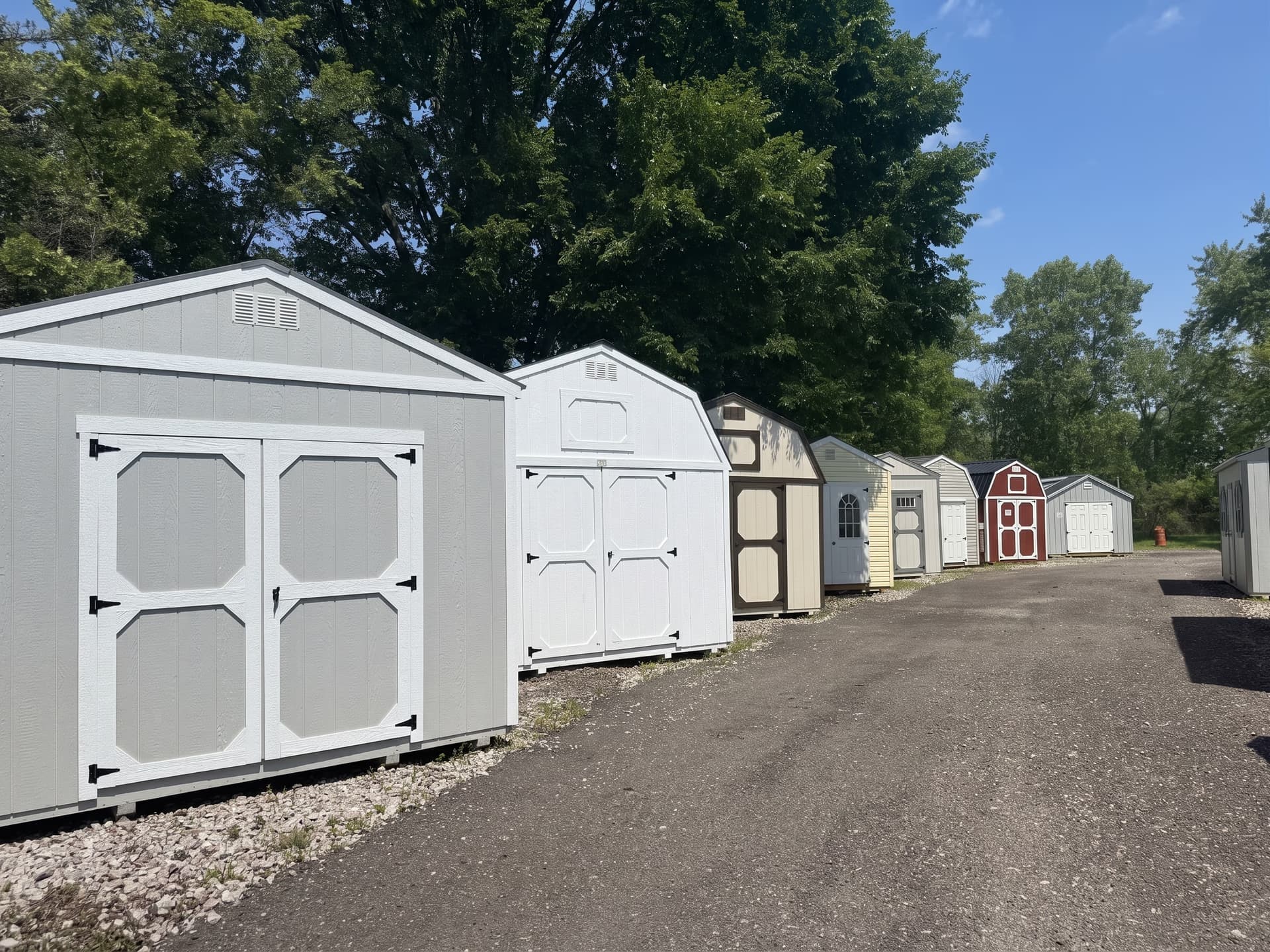
Located just off Telegraph Road in Carleton, we have a full selection of sheds, cabins, garages, barns, and more ready to walk through whenever you're ready. We can't wait to see you soon.
Hours
Mon–Tue: 10am–5pm
Wed: Closed
Thu–Fri: 10am–5pm
Sat: 10am–3pm
Sun: Closed