
Pricing & Value
What things cost, what affects price, and how to get the best value.
View Questions & AnswersQuestions
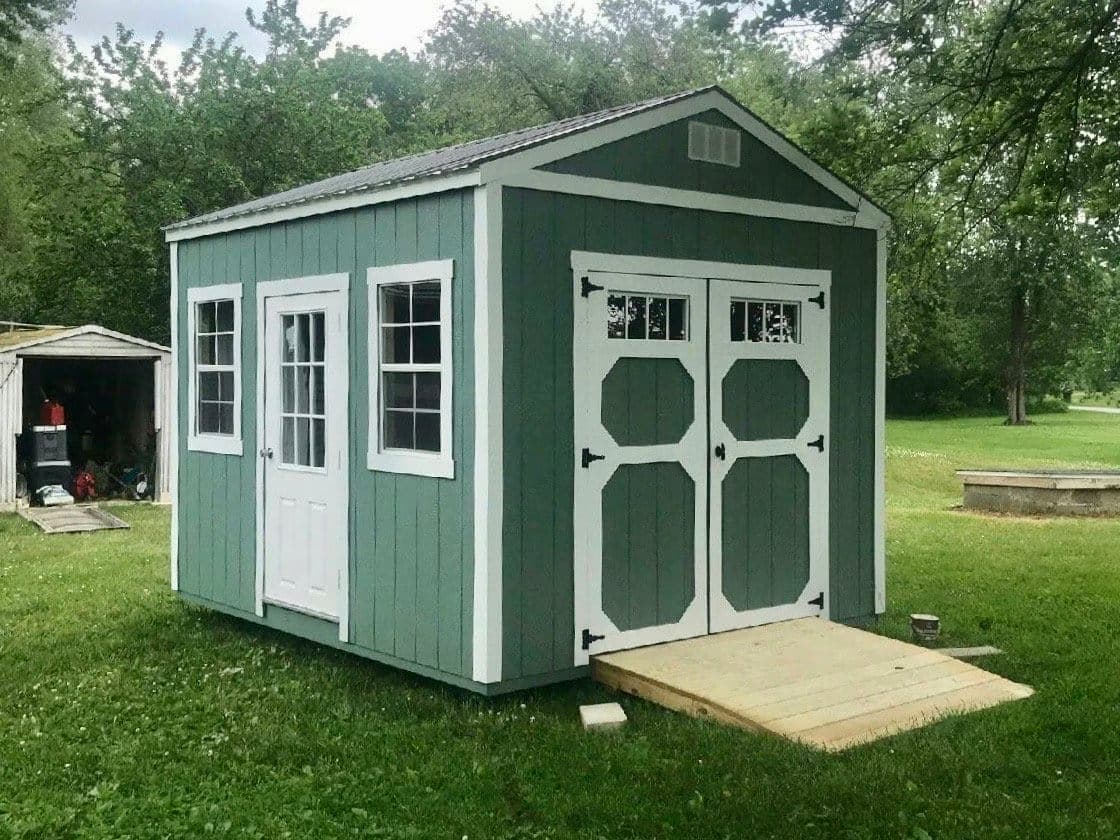
The price you see on our site is the price of the building itself, and that's what most people pay. An 8×10 storage shed starts around $2,700. A 10×16 runs around $5,000-$6,000 depending on style and options. Bigger builds like a 12×24 garage can range from $8,000 to $12,000+.
Where people sometimes get surprised at other companies is delivery fees, site prep costs, or card processing surcharges. With us, delivery is included within our service area, our driver sets and levels the building on your prepared base, and we don't charge extra for paying by card. The price we quote you is the price you pay. The only thing that can add to your total is upgrades you choose: extra windows, a different door style, a loft, things like that. But those are always your call, and we'll tell you exactly what they cost before you commit.
The building itself, delivery, and setup. When your building arrives, our team places it on your property and makes sure it's level and ready to use. You're not paying extra for any of that.
Your building comes standard with the doors, hardware, roofing, and siding for that model. From there, you can add upgrades like extra windows, different door styles, a workbench, a loft, shelving, ramps, or different color options. Those are all optional and priced individually, so you always know exactly what you're spending before you say yes.
For most customers, delivery is included in your building's price. Our driver brings it out, then sets and levels it on your prepared base. The base itself is yours to handle, on your own or with a local contractor. If you're within about 40 to 50 miles of our Adrian or Carleton locations, which covers a huge chunk of Southern Michigan and Northwest Ohio, there's no delivery charge at all.
If you're a bit further out, there may be a delivery fee depending on the distance. We'll always let you know upfront so there are no surprises.
The one situation where there's an additional cost is build-on-site. If your property has access issues, like tight spaces, trees, or fencing that would make it difficult to deliver a prebuilt building, our crew can come out and build it right on your property instead. Build-on-site starts at $1,000 or 20% of the base price. You're getting the exact same building, the same Amish craftsmanship out of the Shipshewana region, the same quality and attention. The only difference is where it gets assembled.
Some customers find it's actually cheaper to temporarily remove a section of fence to make room for a standard delivery. Every situation is different, and we're happy to help you figure out the best route. Give us a call or text and we'll walk through your options.
No. And we mean that. The price we quote you is the price you pay. We don't add card processing surcharges, delivery fees within our service area, or setup charges. A lot of companies will advertise a low price and then stack on 3-5% for paying by card, charge extra for delivery, or hit you with fees you didn't see coming. That's not how we do business.
If you add upgrades to your building, those are itemized and you'll know exactly what they cost before you commit. No surprises, no fine print. What we quote is what you pay.
Because they're not all built the same. A $2,000 shed and a $5,000 shed might look similar in a photo, but the difference shows up fast in person. Cheaper buildings typically use thinner framing, lower-grade siding, lighter-duty hardware, and shortcuts in places you won't notice until something starts sagging, leaking, or rotting a couple years down the road.
With Amish-built buildings out of the Shipshewana region, you're getting solid construction from people who take genuine pride in their work. Better lumber, tighter joints, heavier-duty materials. It's the kind of quality you can see and feel when you walk inside one on our lot.
That doesn't mean expensive is always better or cheap is always bad. It means you should ask what you're actually getting for the price. Walk through the building. Look at the framing, the floor, the roof, the doors. If a company won't let you see those details up close, that tells you something.
Spend more upfront. Almost every time. A cheap shed might save you money today, but if the floor starts rotting in three years or the doors won't close right after two winters, you're either paying to fix it or buying a new one.
A well-built shed should last for decades with minimal maintenance. That's the whole point. When you buy quality upfront, you're not just getting a building. You're getting something that holds up through Michigan weather year after year without becoming a project.
We've seen plenty of customers come to us after buying a cheap shed somewhere else and regretting it. It's one of those things where paying a little more now saves you a lot more later.
Size, materials, and construction quality. A $2,000 shed is typically a smaller footprint with basic features, and depending on who built it, the materials might be entry-level. A $5,000 shed is usually bigger, built with better lumber and hardware, and has the kind of construction that's designed to hold up for the long haul.
At our lots, even our most affordable buildings are Amish-built with solid materials. So the price difference between an $2,500 building and a $6,000 building is mostly about size and upgrades: bigger footprint, additional doors or windows, a loft, workbench, different siding style. The craftsmanship doesn't drop just because the building is smaller.
Where that price gap gets dangerous is when you're comparing across companies. A $2,000 shed from a big-box store and a $5,000 Amish-built shed aren't even in the same conversation. One's built to sell. The other's built to last.
New is almost always the better call, unless you find a great deal on a used building you can inspect in person. With a new build, you know exactly what you're getting: fresh materials, no wear, no mystery damage, and you get to choose your size, style, color, and upgrades. It's built for you.
Used sheds can be tempting on price, but they come with unknowns. You don't always know how it was maintained, what the floor looks like underneath, or whether it was sitting on bad ground for years. A building that looks fine on the outside can have soft floors, mold, or structural issues hiding underneath.
If you do go used, inspect it carefully. Walk inside, check the floor, look at the roof, open and close the doors. And make sure you're factoring in the cost of delivery, because moving a used shed isn't free.
They can be a great deal. A repossessed building is one that was returned through a rent-to-own program, and it's usually priced well below what a new build would cost. We get them back on our lots from time to time, and they don't tend to sit long.
A couple things to know upfront. Repos are sold as-is, and sometimes the previous owner has already started putting their own stamp on it, adding shelving, setting it up as a workshop, that kind of thing. We don't make any claims about what was done to it after it left our lot. But here's the thing: we want you to look it over completely before you decide. Walk through it, check the floor, open the doors, take your time. Think of it the same way you'd inspect a used car before buying. We're not trying to hide anything. We want you to feel confident in what you're getting and trust your own judgment.
If you're looking for a quality Amish-built building at a lower price and you're flexible on size, color, and features, a repo is absolutely worth asking about. Give us a call or text and we'll let you know what's available.
Check the floor first. That's where problems hide. Walk every inch and feel for soft spots, especially near the door where moisture tends to collect. If the floor feels spongy, walk away.
After that: look at the roof for rust, lifted panels, or daylight coming through. Open and close every door and window to make sure nothing is warped or sticking. Check the base of the walls and corners for signs of rot or water damage. And look underneath the building if you can. That'll tell you a lot about how it was sitting and whether the ground underneath was doing it any favors.
If you're buying used from a private seller, ask how long it's been on the property, whether it's ever been moved, and what it's been sitting on. A building that's been on bare dirt for five years is a different story than one that's been on gravel blocks since day one.
There's no hard rule, but a fair price for a used shed is typically somewhere around 40-60% of what a comparable new building would cost, depending on age, condition, and how well it's been maintained. If someone's asking 80% of new price for a building that's been sitting on bare dirt for five years, that's not a deal.
The best way to know if you're getting a fair price is to compare it against what a new build would run you. Check our site or give us a call or text, and we'll tell you exactly what a similar building costs new. That gives you a baseline to work with, whether you're buying from us or looking at something on Marketplace.
In almost every case, yes. A storage unit in Michigan runs anywhere from $75 to $200+ a month depending on size and location. Over two or three years, that's thousands of dollars with nothing to show for it. The stuff is still in a box across town, and you're still paying rent.
A shed sits on your property. You walk outside and it's right there. No driving, no gate codes, no monthly bill that never ends. Even if you go rent-to-own, once you've made your last payment, the building is yours and the payments stop. A storage unit never stops costing you money.
Plus, you're adding something to your property that has real value. A quality building in the backyard is an asset. A storage unit is just an expense.
Faster than most people think. If you're paying $100 a month for a storage unit, that's $1,200 a year. A solid 10×12 shed purchased outright runs around $4,000 to $5,000. In three to four years, the shed has paid for itself, and from that point on, your storage is free for as long as the building stands.
Which, with Amish-built quality, is a very long time.
Even on rent-to-own, once you've finished your payments, you own it outright. Compare that to a storage unit where you could pay $100 a month for ten years and still own absolutely nothing.
Depends on what you need, but for most people looking for extra storage, a shed wins on speed, cost, and simplicity. Building a garage means permits, contractors, concrete, inspections, and weeks or months of construction. You're easily into $20,000 to $40,000+ for a basic stick-built garage.
A portable garage or large shed can be on your property within days, costs a fraction of that, and in most cases doesn't require a permit for standard sizes. If all you need is covered, secure storage for equipment, tools, seasonal gear, or vehicles, a portable building gets you there faster and for a lot less money.
If you're adding something that needs to be attached to the house or tied into utilities, a traditional garage might be the right call. But for standalone storage and workspace, it's hard to beat what we offer.
It can, especially if it's a well-built, attractive building that matches the property. A quality shed or garage in the backyard is a real selling point when it comes time to list. Buyers notice it. Realtors notice it. It signals that the homeowner took care of the property and invested in practical upgrades.
Will you get 100% of your money back dollar for dollar? That depends on the market and the buyer. But a clean, functional outbuilding almost always makes a property more appealing and can absolutely tip a buyer's decision in your favor. Compare that to money spent on a storage unit, which adds zero value to anything.
It can. Buyers love usable outdoor storage, and most homes don't come with enough of it. A well-placed shed or garage in the backyard tells a buyer they've got room for their tools, lawn equipment, seasonal gear, hobbies, whatever they need, without cramming it into the basement or a two-car garage that's already full.
It's not going to sell a house by itself, but it's one of those features that makes a listing stand out. Especially in Michigan where people have snowblowers, mowers, kayaks, and hunting gear that all need a home. A quality Amish-built building in the yard looks a lot better than a tarp over a pile of stuff next to the fence.
Our garage-style buildings start in the $5,000 to $7,000 range for smaller footprints and go up from there depending on size and options. A larger 12x24 or 14x28 garage with overhead doors, windows, and upgrades can run $10,000 to $15,000+. The exact price depends on your size, door configuration, siding, and any extras you add.
To get an accurate number, use the 3D designer to choose your size, siding, colors, doors, and windows, then submit the design. We usually get you a price within 24 hours, and within 24 to 48 hours at the latest. You can also call or text either location and we will walk through the options with you over the phone. Delivery is included within our service area, and our driver sets and levels the building on your prepared base. No hidden fees, no card surcharges.
The easiest way to explore what's available is to play around with the 3D designer on our site. You can add and remove options to see how your build comes together, then submit it and we'll send you back an official quote.
Our cabin-style buildings typically start in the $6,000 to $8,000 range for smaller models and can go up to $15,000+ for larger cabins with more features. Exact pricing depends on the size, layout, windows, doors, and any upgrades you choose.
Cabins are some of our most popular buildings. People use them for guest houses, home offices, backyard retreats, she-sheds, hunting camp shelters, you name it. And just like everything else we sell, the price we quote is the price you pay. No hidden fees, no surprise charges. Delivery is included within our service area, and our driver sets and levels the building on your prepared base.
Use the 3D designer to spec out exactly what you're looking for, or give us a call or text and we'll help you figure out the best option for your budget.
Usually, yes. Garages cost more than sheds at the same footprint because the construction is different: garage-style buildings use heavier floor framing, larger door openings, and sturdier hardware. A 12x20 garage is going to cost more than a 12x20 standard shed because the specs are not the same.
The right choice depends on what you plan to keep inside and how much clearance you need. Measure the item, door opening, interior depth, and walking room before assuming a specific garage size will work.
Want to compare? Give us a call or text with your size and we will price out both options side by side so you can see exactly where the difference is.
Our Amish-built sheds start around $2,465 for a compact 8×8 utility shed, and the price you see is the price of the building. A popular 10×12 runs in the $3,800 to $4,000 range depending on style and siding, and larger 12×16 or 12×20 sheds climb from there. You can see every size and current pricing on our pricing page.
Our garages start around $6,235 for a 12×16, and the price you see is the price of the building. A roomy 12×24 runs around $8,195, and larger 14×24 or 14×28 garages with extra doors and windows climb from there. Full sizes and current pricing are on our pricing page.
Our Cabins start around $3,880 for an 8×12 with a porch, and the price you see is the price of the building. A mid-size 12×24 runs around $8,200, and larger or lofted models climb from there. See every size on our pricing page.
Our Casitas start around $3,880 for an 8×12 with a porch, and the price you see is the price of the building. Larger and lofted Casitas climb from there with size and options. Current pricing for every size is on our pricing page.
Our barns start around $2,280 for a compact 8×8, and the price you see is the price of the building. A popular 10×16 lofted barn runs around $5,130, with larger sizes climbing from there. See every size on our pricing page.
Our Gazebos start around $4,920, and the price you see is the price of the building. Size, roof style (single or double roof), and a screened option move the price from there, and Pavilions are priced similarly by size. See current pricing on our pricing page.
More Questions
Back to FAQ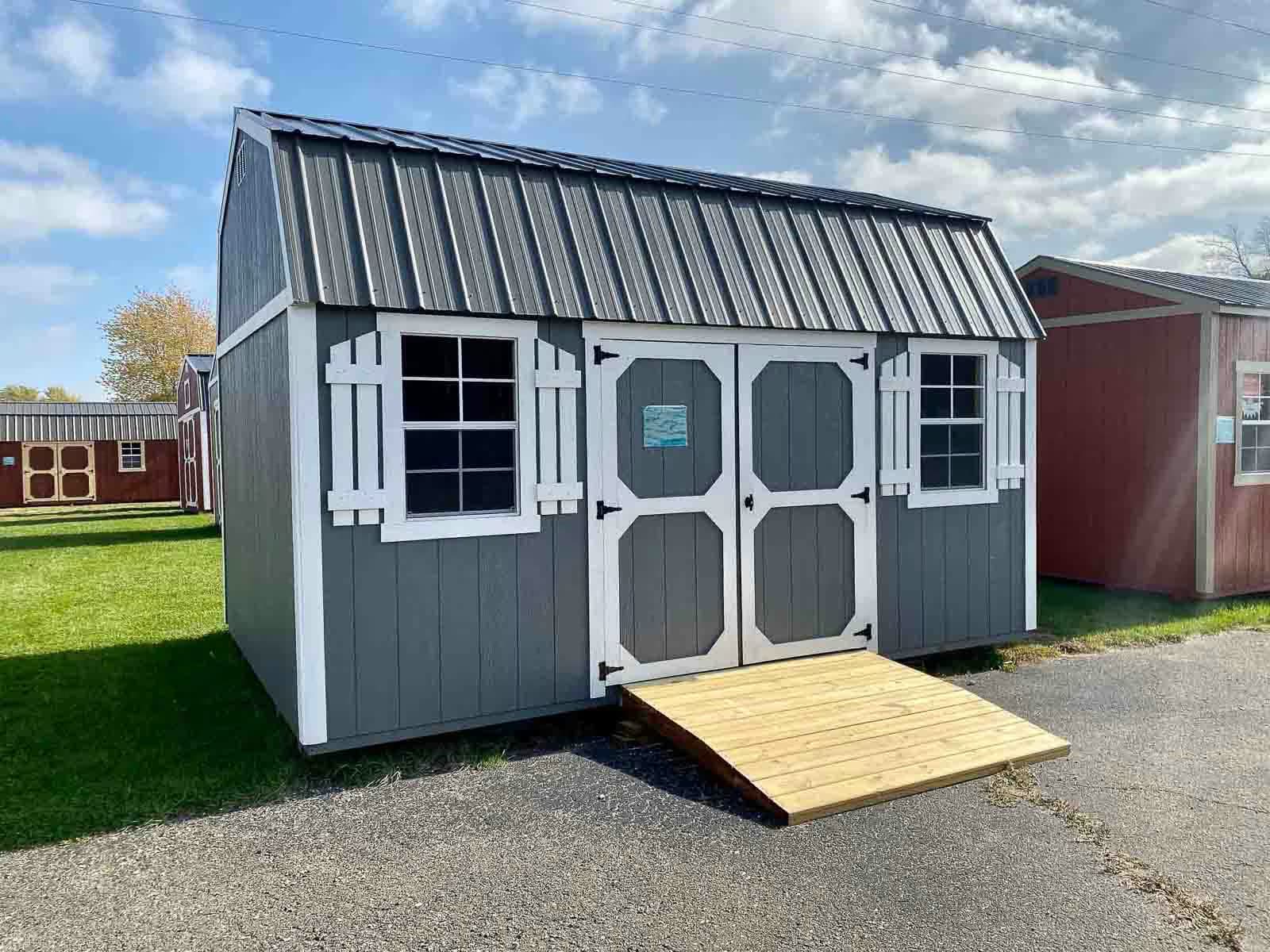
Buying & Getting Started
Everything you need to know before purchasing an Amish-built building.
20 Questions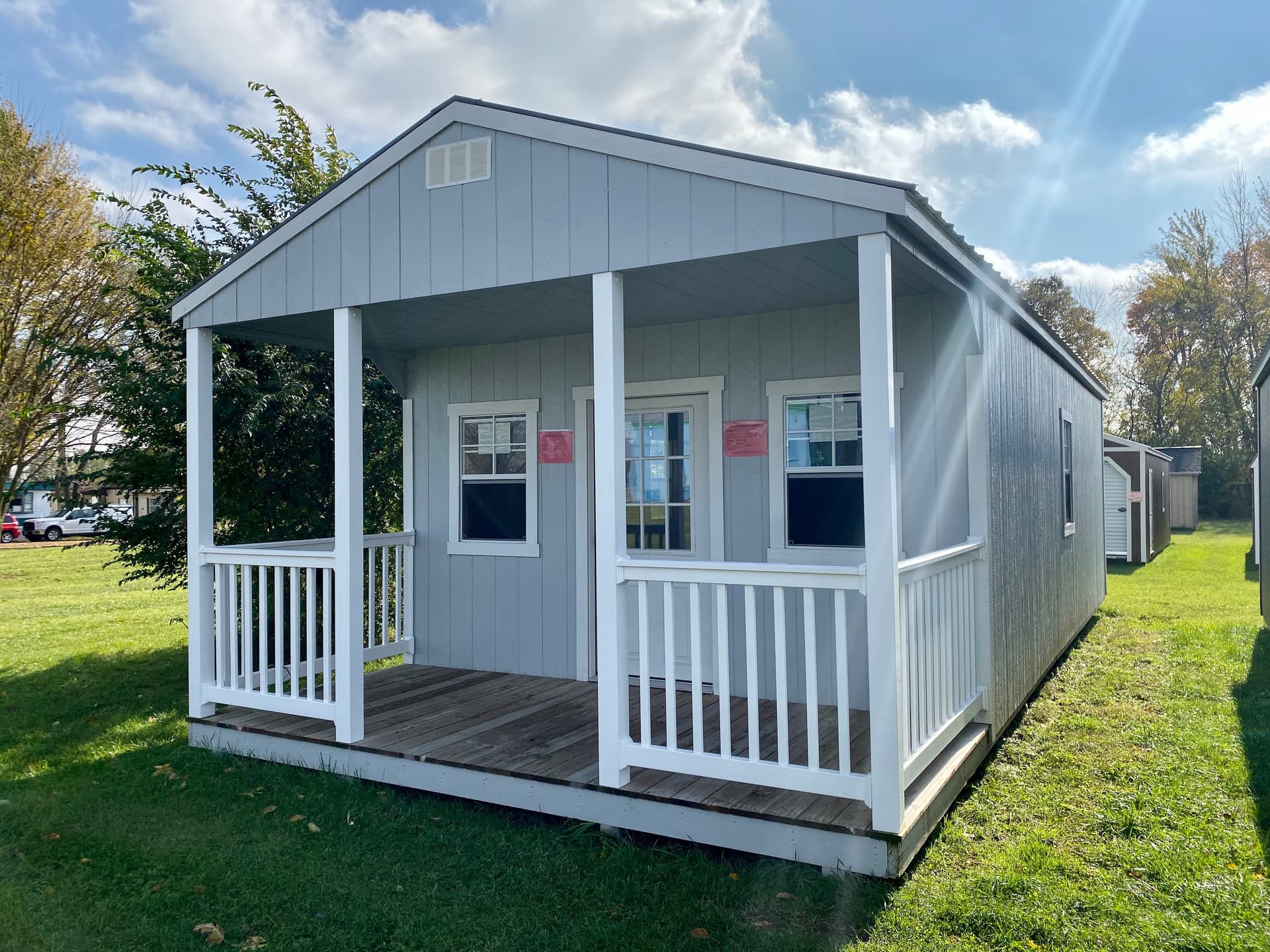
Rent-to-Own & Financing
Payment options, rent-to-own details, and financing for your building.
35 Questions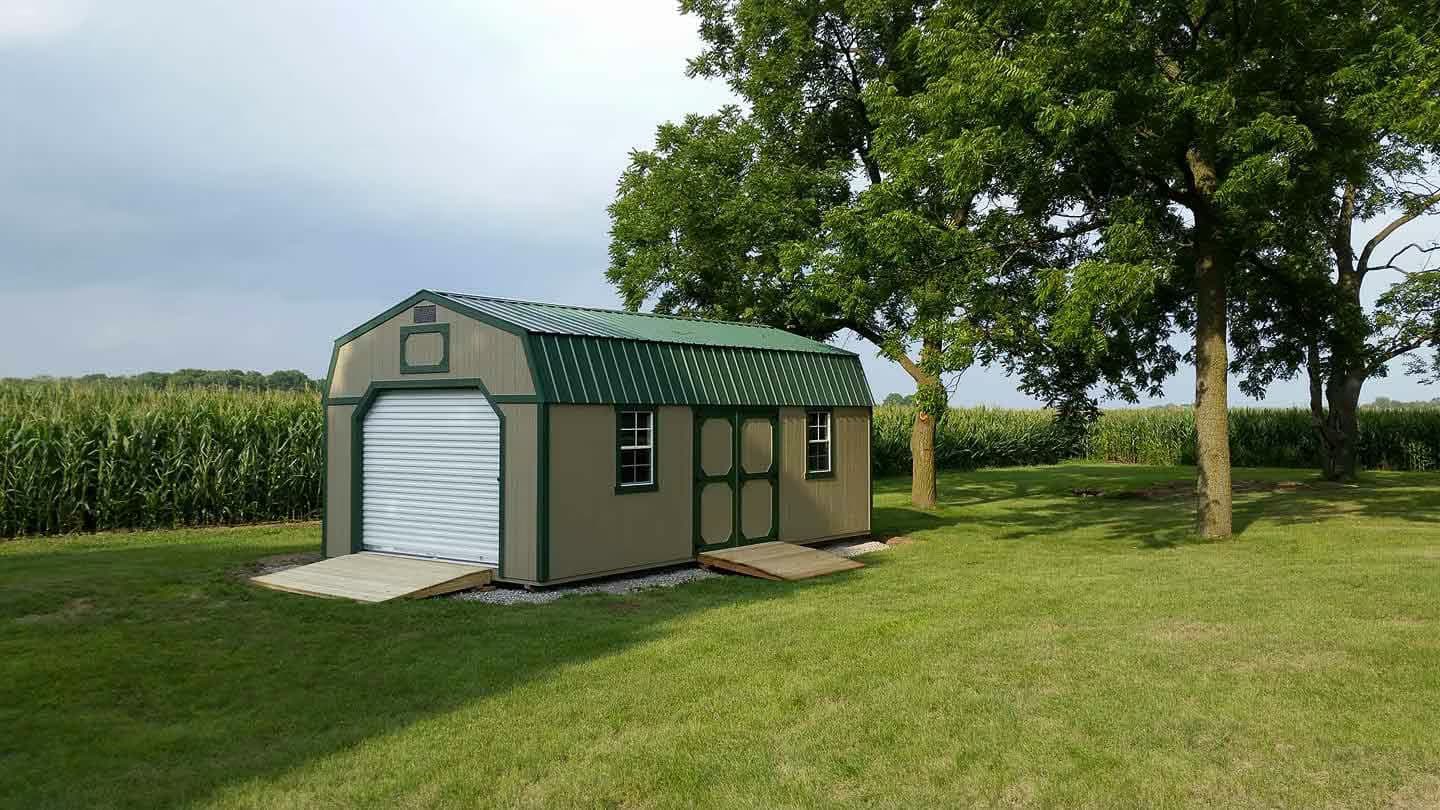
Buildings & Options
Building types, sizes, customization options, and what comes standard.
16 QuestionsSee Yours Before
You Buy It
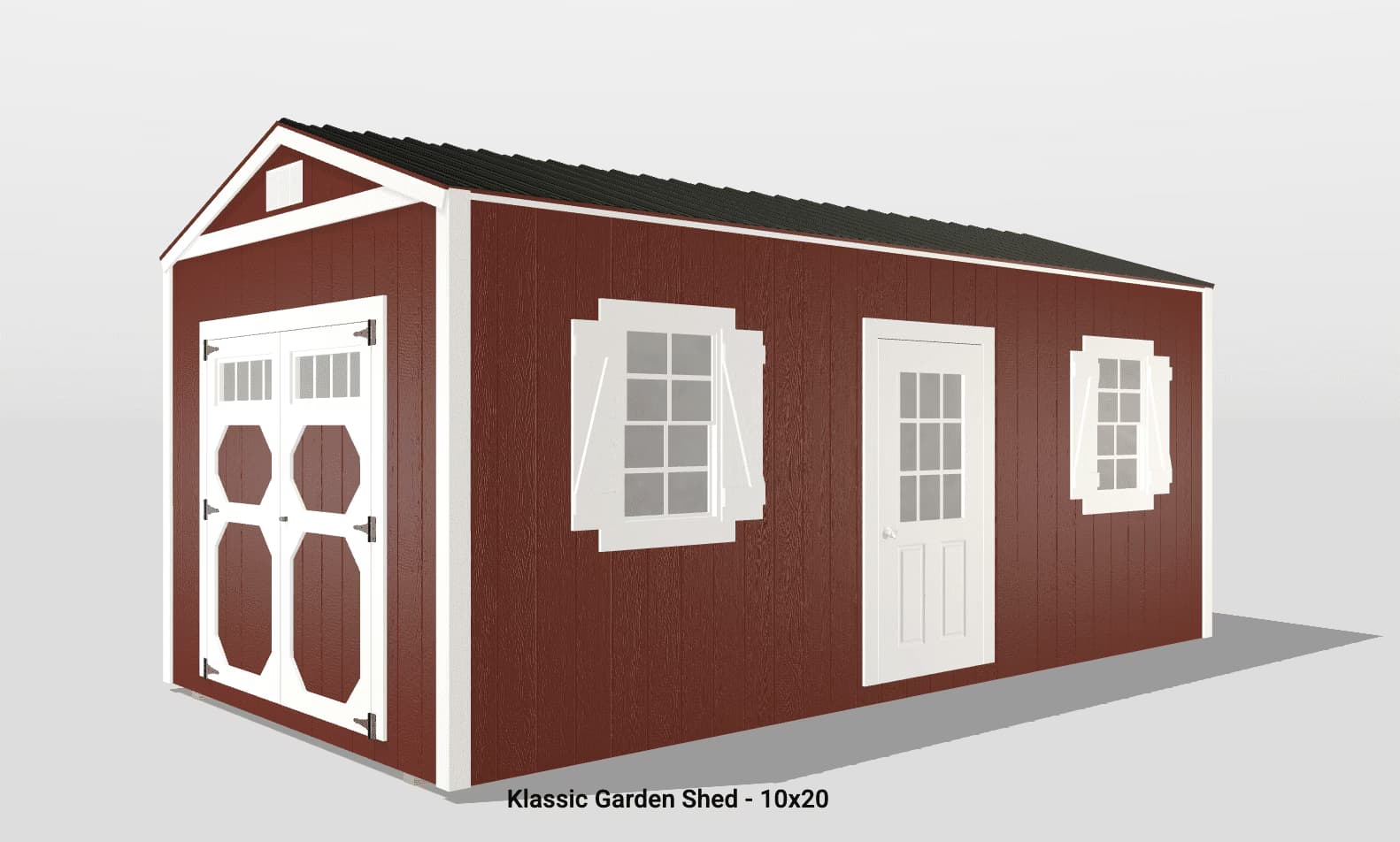
Pick your style, size, colors, and options. Rotate it, zoom in, and make it yours. The whole process is easy and you'll walk away knowing exactly what your building looks like before you commit.
Walk Through the Buildings.
Open Every Door.
Adrian
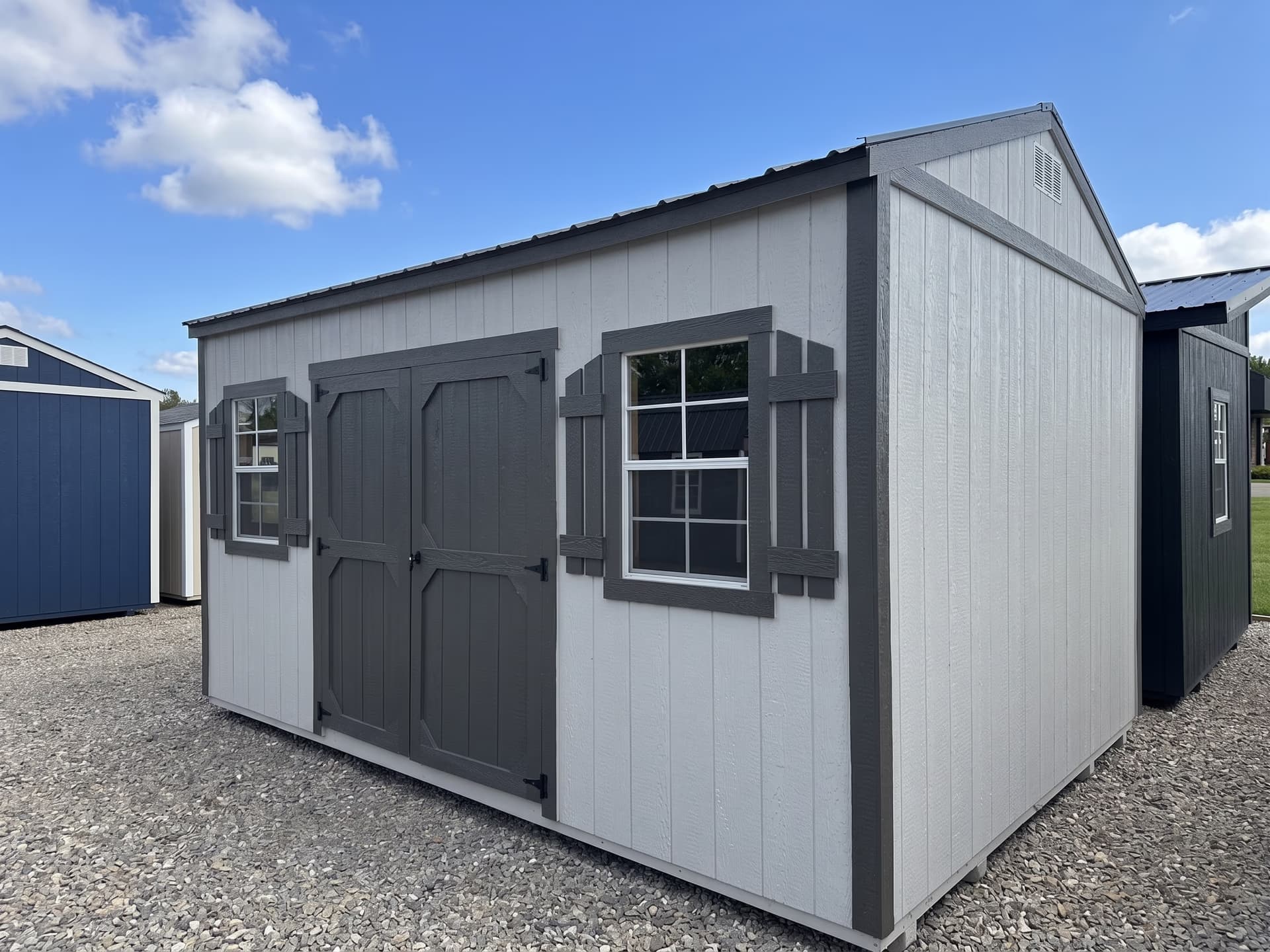
Our first established location just off US-223 in Adrian. Walk through dozens of styles and configurations, sit inside a few, take your time. No appointment needed. We leave the buildings unlocked. Come see the quality for yourself.
Hours
Mon–Tue: 10am–5pm
Wed: Closed
Thu–Fri: 10am–5pm
Sat: 10am–3pm
Sun: Closed
Carleton
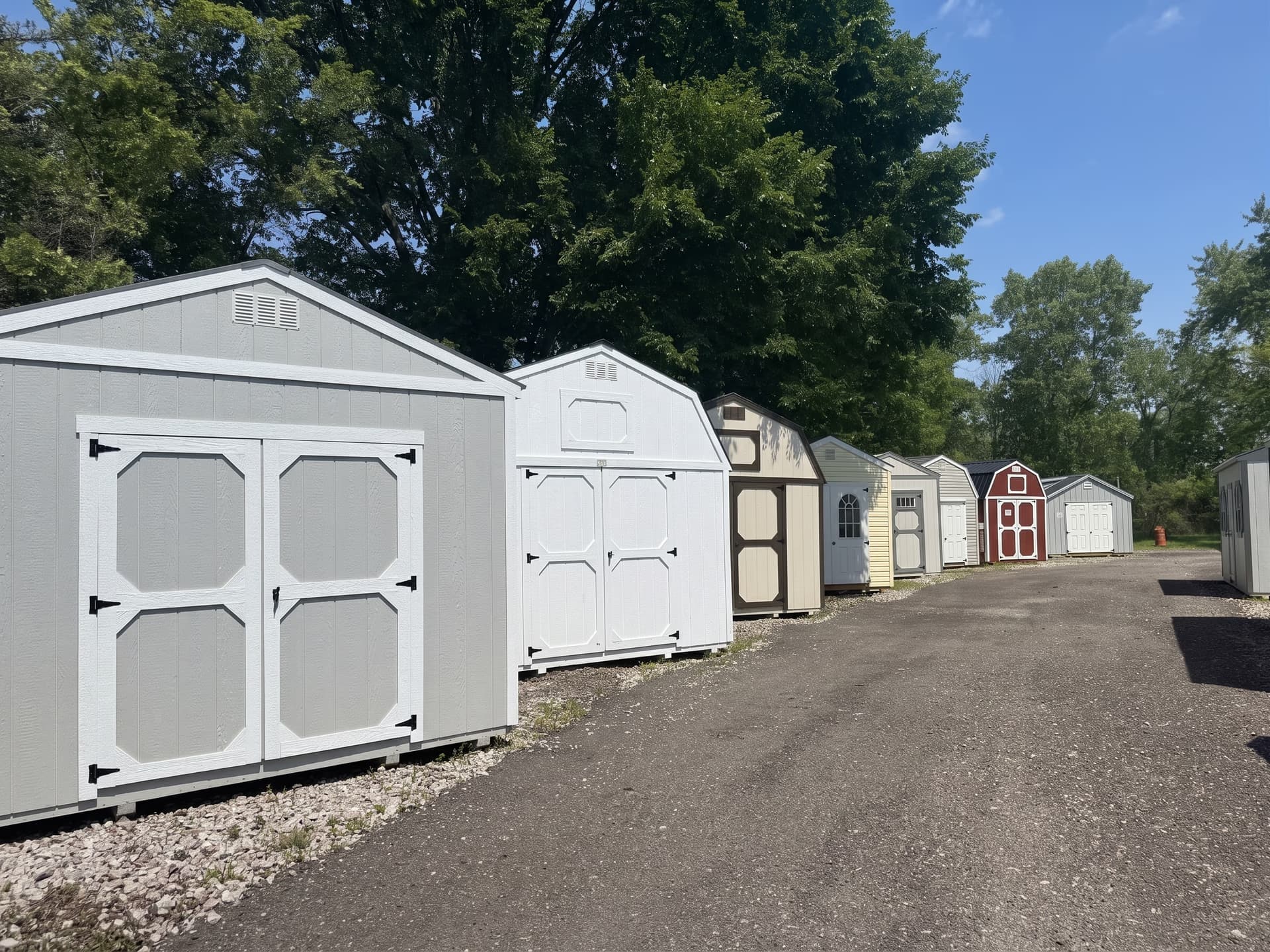
Located just off Telegraph Road in Carleton, we have a full selection of sheds, cabins, garages, barns, and more ready to walk through whenever you're ready. We can't wait to see you soon.
Hours
Mon–Tue: 10am–5pm
Wed: Closed
Thu–Fri: 10am–5pm
Sat: 10am–3pm
Sun: Closed