
Permits & Zoning
Building permits, zoning rules, setbacks, and HOA considerations across Southern Michigan.
View Questions & AnswersQuestions
It depends on where you live, and the only way to know for sure is to check with your local township, city, or county. In Michigan, permit rules are set at the local level. Most communities that require anything follow a two-tier pattern: a zoning compliance permit for structures up to about 200 square feet, then a building permit above 200. Where your shed lands depends on your jurisdiction, so a quick call to the zoning office gives you the real answer.
There's no single statewide answer in Michigan. Most townships and cities use a square footage threshold, commonly around 200 square feet. At or under it, you're often looking at a light zoning compliance permit or nothing at all; above it, a full building permit usually applies. A 12x16 at 192 square feet frequently sits just under the line. Your local office sets the exact number, so confirm before you build.
Absolutely. Two properties ten minutes apart can have completely different rules depending on whether they're in a township, a village, or a city. The general shape is similar, a zoning compliance permit for buildings up to around 200 square feet and a building permit above that, but the exact threshold and what each requires is set locally. One office might wave through a 200-square-foot building while the one down the road asks for a full permit, so always check yours.
Lenawee County covers a lot of different townships, and each one can have its own rules. Adrian Township, Tecumseh, Blissfield, they don't all follow the same playbook when it comes to permits and setbacks.
Your best bet is calling your specific township's zoning office or the Lenawee County Building Department directly. They'll tell you exactly what applies to your property. It's a quick call and it gives you a definitive answer instead of a guess.
Same situation as anywhere in Michigan: it depends on your specific township or city within Monroe County. Carleton, Dundee, Newport, Monroe Township, they each handle zoning their own way.
Call the Monroe County Building Department or your township's zoning office and give them the building size you're considering. They'll let you know if a permit is required and what the setback rules look like for your property.
Your local township or city zoning office is the place to start. If you're not sure which jurisdiction your property falls under, your county building department can point you in the right direction.
When you call, have your property address ready and let them know you're looking at a portable building. Ask about permits, setbacks, height limits, and any other requirements. Most of the time, one call gets you everything you need.
We'll provide your 3D quote and building documentation so you have specifics to share with the zoning office. And we're working on a guide that will make this whole process even smoother for our customers, so you'll know exactly what to ask and where to go before you even pick up the phone.
It varies by jurisdiction, and this is one of those gray areas that trips people up. Some townships classify portable buildings on skids as temporary or accessory structures that don't require a permit below a certain size. Others treat anything placed on a property the same as a permanent structure, regardless of whether it has a foundation.
The fact that a building is "portable" doesn't automatically exempt it from permits. Your township's definition is the one that matters, so check with them directly.
Most townships in Michigan require some kind of setback from property lines for accessory structures. Common setbacks range from 3 to 10 feet, but your specific township may be different. Some areas also have different setbacks for side yards versus rear yards, or different rules if you're on a corner lot.
Before you pick your spot, call your local zoning office and ask about accessory structure setbacks. While you're at it, ask about any easements on your property. Utility easements can restrict placement even if your property line setback is clear.
Every township publishes its own zoning ordinance, and setback rules are part of it. You can usually find this information on your township's website, or get it with a phone call to the zoning office.
Ask specifically about accessory structures and rear/side yard setbacks. Some townships are stricter in residential neighborhoods than on rural acreage. If your property is in an HOA, those rules layer on top of the township requirements, so you may need to satisfy both.
In most Michigan jurisdictions, yes. Running electrical to an outbuilding typically requires a permit and an inspection by a licensed electrician. This is separate from any permit for the building itself. Even if your shed didn't need a permit, the electrical work probably does.
This protects you. Improper wiring in an outbuilding is a fire risk and can affect your homeowner's insurance. Have a licensed electrician pull the permit and do the work. It's one of those things worth doing right.
It depends on whether your jurisdiction required a permit. If a permit was issued, there's usually an inspection process that goes with it. The inspector will want to see that the building meets local codes for placement, setbacks, and any other requirements on the permit.
If no permit was required, there's generally no inspection. Either way, give the building a good once-over yourself on delivery day. Check the doors, the roof line, the floor, and make sure everything looks right before the driver leaves.
Honestly, it's usually not catastrophic, but it's not worth the hassle either. We've seen customers who didn't check their setback rules end up having to pay for a driver to come back out and reposition their building. That's happened in Monroe, Canton, and other areas. It's an avoidable expense and a frustrating situation.
We've also had a customer who ordered a larger building, then checked with their township before delivery and realized they needed to downsize to stay within the rules. They caught it in time, but if they hadn't, it would've been a much bigger problem.
Nobody wants to deal with fines, a forced move, or having to change their plans after the fact. The permit process for a shed is usually quick, simple, and inexpensive. One phone call before you order saves you from all of it. We'll give you the documentation you need to make that conversation easy.
Yes. If your HOA covenants restrict outbuildings, they can enforce those rules. Some HOAs prohibit sheds entirely. Others allow them with restrictions on size, placement, color, or materials. And some have no restrictions at all.
Read your HOA covenants before you order, or call the HOA board and ask. Getting approval in writing upfront saves you from a fight later. The good news: our buildings are customizable enough that we can usually meet whatever the HOA requires on color, siding, and appearance.
That's actually where our customization works in your favor. We offer a wide range of colors, including Sherwin-Williams paint matching for a small fee and vinyl color matching at no cost. If your HOA requires the building to match your house or meet a certain aesthetic standard, we can make that happen.
Get the specific requirements from your HOA in writing. Bring them to us, and we'll help you design a building that checks every box. We've worked with plenty of customers navigating HOA requirements.
Strongly recommended, yes. Getting written approval before you order protects you from having to modify or remove a building after it's already on your property. Most HOAs have an architectural review or approval process for outbuildings.
Submit your plans, including size, color, placement, and any other details they want. Once you have approval in hand, you can order with confidence. We can provide specs, color samples, and building details to include in your submission.
If you're within your township's setback requirements and in compliance with any HOA rules, you're on solid ground. A neighbor's opinion isn't the same as a zoning violation.
That said, being a good neighbor matters. If your building is close to a property line, a heads-up conversation goes a long way. Most complaints come from surprise, not the building itself. And choosing a color that complements your property rather than clashing with the neighborhood helps keep everyone happy.
Many townships restrict accessory structures to side or rear yards, so front yard placement isn't always allowed. Some areas make exceptions depending on lot layout, size, or how the property is zoned.
If the front yard is genuinely your only option, call your zoning office and explain the situation. They may have a variance process or specific rules for your type of lot. Don't assume it's a no until you've asked.
They can, and they often do. HOA covenants can restrict placement to rear yards only, require minimum distances from property lines that exceed township setbacks, or dictate which direction the doors face. Every HOA is different.
The HOA rules apply on top of your township's zoning rules, not instead of them. You need to satisfy both. Start with your HOA's guidelines, then cross-check with your township to make sure the placement works on both fronts.
This is a growing area of interest, and the short answer is: it depends heavily on your local zoning laws. Some Michigan municipalities are starting to allow accessory dwelling units, but the rules around what qualifies, what permits are required, and what modifications are necessary vary widely.
A portable cabin makes a fantastic starting point for a guest space, home office, or backyard retreat. Whether it can legally serve as a full-time dwelling with sleeping, plumbing, and a kitchen depends on your local building codes and zoning classification. You'd likely need permits, inspections, and potentially utility hookups that go beyond what the building comes with.
If this is something you're exploring, start by talking to your township about ADU regulations for your property. The building itself can be customized for the purpose, but the legal side is a local conversation.
It depends on your specific township, city, or county, since the rules are set locally. The common pattern in Southern Michigan is two steps: a zoning compliance permit covers most sheds up to 200 square feet, and anything larger usually needs a building permit. A 12x16 at 192 square feet often lands just under that line. A quick call to your zoning office tells you exactly where your build falls, and we can help you pull together the building details they ask for.
Sometimes, but it depends entirely on your local zoning and building codes, and many municipalities have specific rules about accessory dwelling units. A Cabin can be insulated and finished for comfortable use, but whether it can be a legal dwelling is up to your local authority. Always check with them before you order or finish a building for living use.
It depends on your township, city, or county, since permit rules are local. As a rule of thumb, a zoning compliance permit covers buildings up to 200 square feet and a building permit kicks in above that. Finishing a cabin into living space can add its own requirements on top, so confirm with your local office before you order or finish one for living use.
It depends on your local zoning and building codes, and ADU rules vary widely by municipality. A Casita can be insulated and finished for comfortable use, but whether it qualifies as a legal dwelling is up to your local authority, so check with them before ordering or finishing one for living use.
Your local township, city, or county sets this, and it varies. The common framework is a zoning compliance permit for buildings up to 200 square feet, then a building permit once you go over. Turning a casita into finished living space can trigger extra rules, so it's worth a call to your local office before you build or finish one.
That's set by your township, city, or county, and it varies. The usual pattern is a zoning compliance permit up to 200 square feet and a building permit above that, but agricultural use can change the rules entirely, since barns on land that's actually farmed are often handled differently. Check with your local office before you build so you know which path applies to your property.
That depends on your township, city, or county. Many follow the usual pattern, a zoning compliance permit up to 200 square feet and a building permit above it, though open structures like gazebos are sometimes treated differently from enclosed buildings. Check with your local office before you build so you know how they classify it.
Permit rules are set locally, so it comes down to your township, city, or county. Most areas around here use 200 square feet as the line, but a few set it lower, and some ask for zoning approval at any size. The permit section higher on this page shows the rule for your city. Confirm with your local office before you build. We're happy to point you in the right direction.
More Questions
Back to FAQ
Buying & Getting Started
Everything you need to know before purchasing an Amish-built building.
20 Questions
Rent-to-Own & Financing
Payment options, rent-to-own details, and financing for your building.
35 Questions
Pricing & Value
What things cost, what affects price, and how to get the best value.
20 QuestionsSee Yours Before
You Buy It
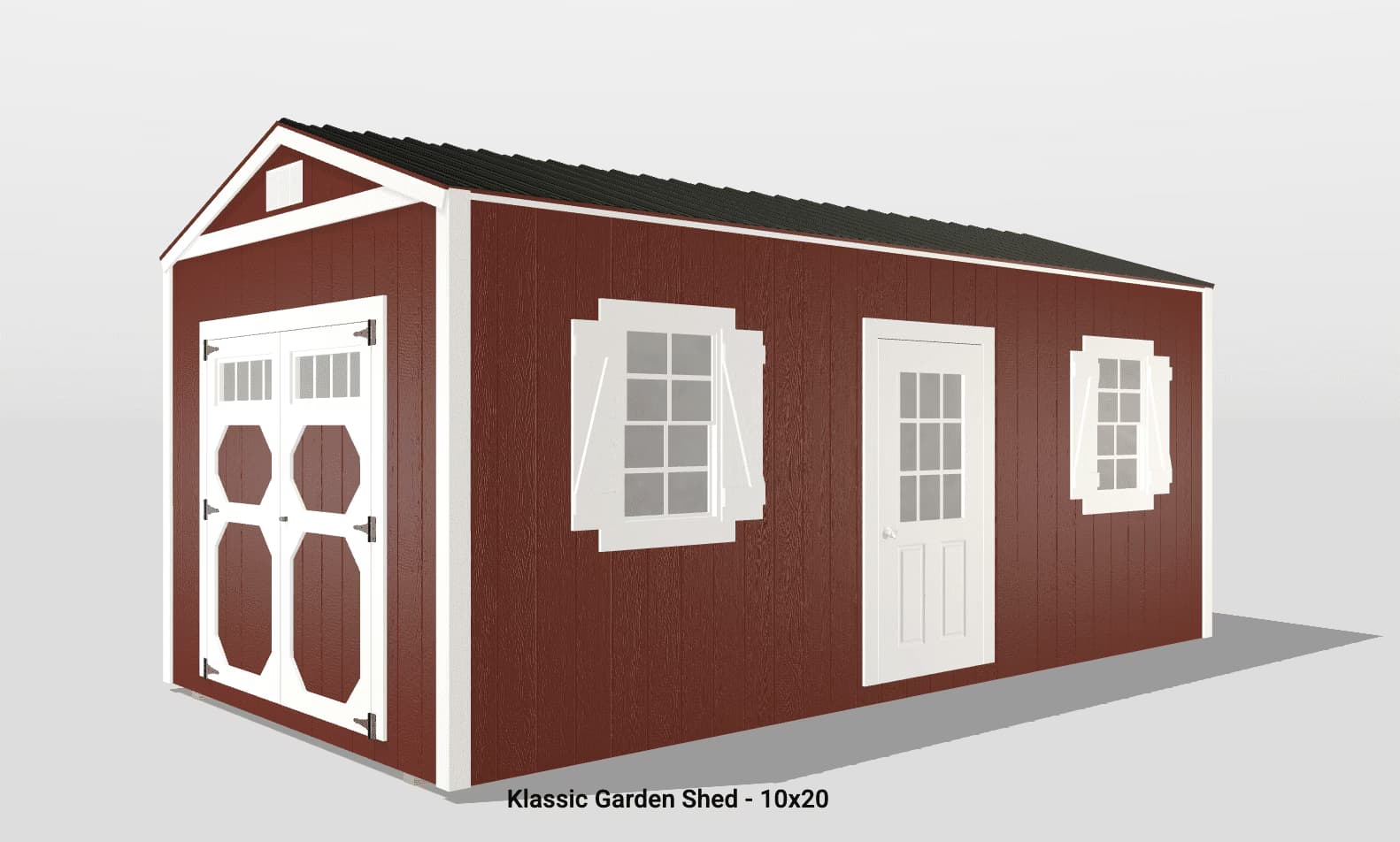
Pick your style, size, colors, and options. Rotate it, zoom in, and make it yours. The whole process is easy and you'll walk away knowing exactly what your building looks like before you commit.
Walk Through the Buildings.
Open Every Door.
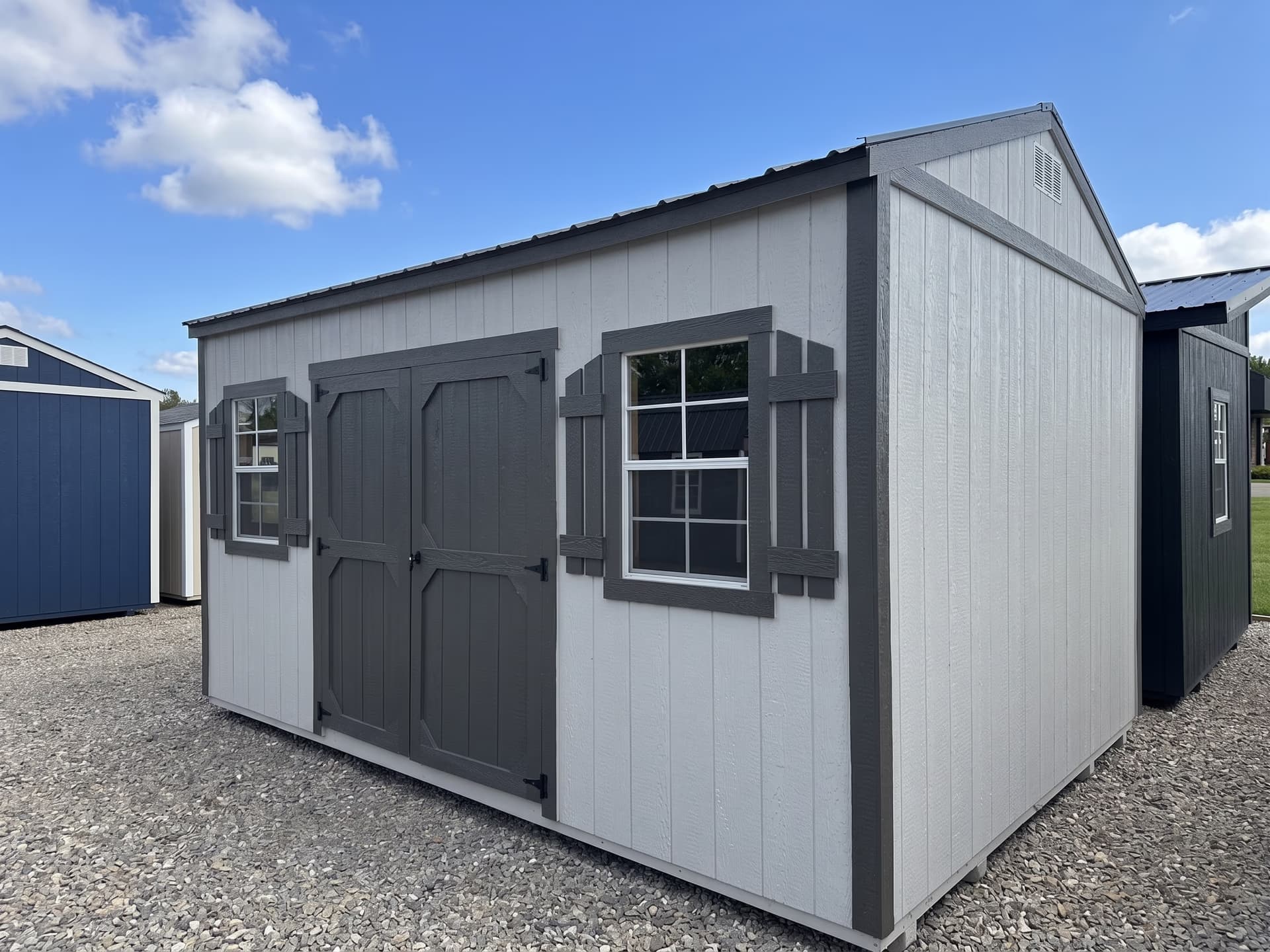
Adrian
Our first established location just off US-223 in Adrian. Walk through dozens of styles and configurations, sit inside a few, take your time. No appointment needed. We leave the buildings unlocked. Come see the quality for yourself.
Hours
Mon–Tue: 10am–5pm
Wed: Closed
Thu–Fri: 10am–5pm
Sat: 10am–3pm
Sun: Closed
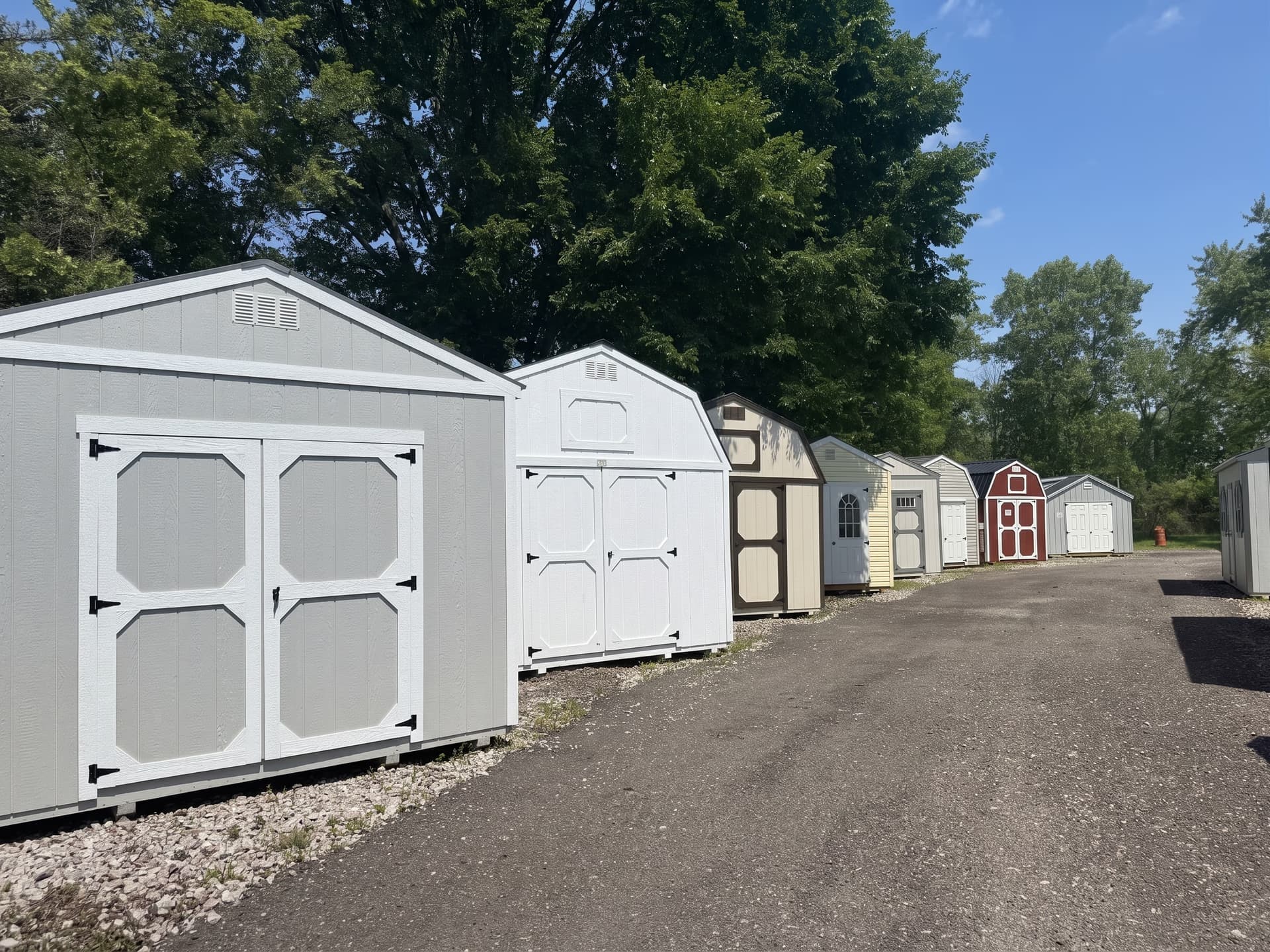
Carleton
Located just off Telegraph Road in Carleton, we have a full selection of sheds, cabins, garages, barns, and more ready to walk through whenever you're ready. We can't wait to see you soon.
Hours
Mon–Tue: 10am–5pm
Wed: Closed
Thu–Fri: 10am–5pm
Sat: 10am–3pm
Sun: Closed