
Use Cases
Real ways people use sheds, garages, cabins, and barns on their property.
View Questions & AnswersQuestions
More than most people realize. We've seen customers turn their buildings into home offices, workshops, art studios, she sheds, backyard gyms, music rooms, craft spaces, small business storage, farm equipment shelters, hunting camp cabins, gaming rooms, bars, pool houses, and even mother-in-law suites. One of the best parts of a portable building is that it doesn't have to be just a storage box.
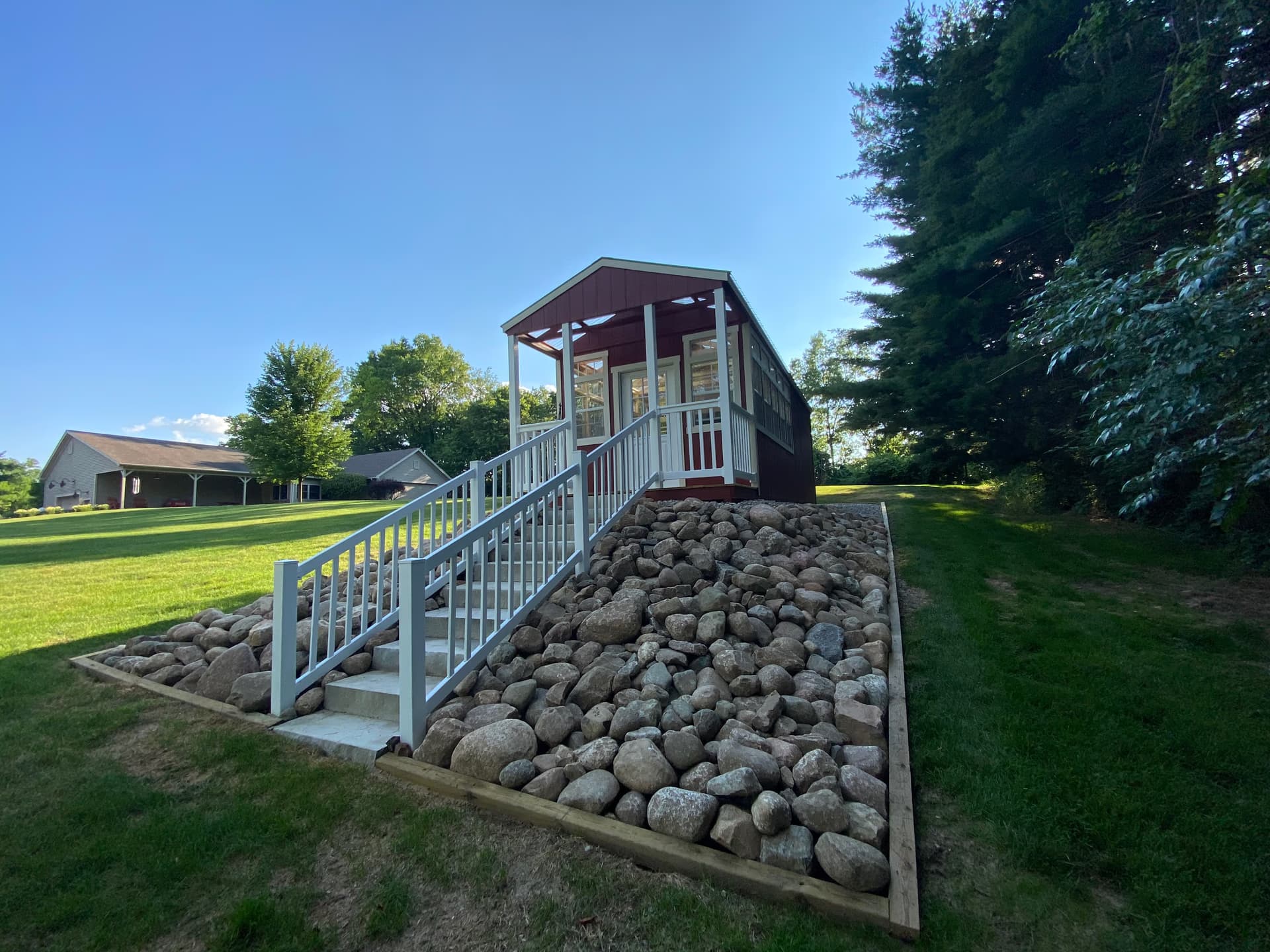
The structure is the starting point. What you do with it is up to you. Add insulation and electric, and suddenly it's a year-round workspace. Add some windows and a porch, and it's a retreat. The portable building world is an oyster if you have the desire to get creative with a little hard work.
Without a doubt. Our buildings have solid floors built to handle serious weight: table saws, drill presses, welders, you name it. The framing is strong enough to mount shelving, pegboard, and tool racks directly to the walls. Add a workbench, run electrical for lighting and outlets, and you've got a dedicated workspace that's separate from the house and all yours.
A lot of our customers who go the workshop route choose a garage-style building with an overhead door for moving materials and larger projects in and out. A lofted barn gives you overhead storage for supplies while keeping the floor open. Either way, these buildings can take it.
People do it all the time, and it's one of the fastest-growing reasons people buy from us. A 10x12 or 12x16 gives you a comfortable, private workspace that's a real separation from home life. No commute, no coffee shop noise, no kids wandering through your Zoom calls.
You'll want to add insulation, electrical, and climate control to make it usable year-round in Michigan. We offer spray foam insulation, which is a high-quality solution that sets you up for easy paneling or drywall down the road. A mini-split system handles both heating and cooling efficiently. Add some windows for natural light, and you've got an office that most coworking spaces can't compete with. There are tons of incredible guides on YouTube for office buildouts, and we're working on putting together some of our own to help customers create something special.
Absolutely. We've seen customers use them for everything from inventory storage and equipment housing to full-on small business operations. Landscapers, contractors, crafters, online sellers, pet groomers, the list goes on.
The building itself gives you dedicated, secure space on your own property with no landlord, no lease, and no monthly rent. Depending on what your business needs, you can keep it simple as a storage and staging area, or finish it out with electric, insulation, and climate control for client-facing or daily-use space. Check with your township on any zoning requirements for running a business from a residential property.
That's the bread and butter. A shed is the most practical solution for getting all of that out of your garage so you can actually park your car again. Riding mower, push mower, trimmers, leaf blower, bikes, holiday decorations, patio furniture in the winter, all of it has a home.
Even a 10x12 fits more than people expect. If you've got a bigger collection of equipment or want room to grow into, a 12x16 gives you space to organize everything with room left over. Throw in some shelving and wall hooks and it turns into a system instead of a pile.
That's actually one of the most common reasons people call us. The house is full, the garage became a storage unit three years ago, and there's nowhere left to put anything. A shed gives you breathing room without the monthly cost of a storage unit or the headache of a home renovation.
Baby gear, sports equipment, seasonal clothes, camping supplies, tools that used to live in the basement. All of it moves out of the house and into a secure, dry building twenty steps from your back door. And unlike a storage unit across town, you can grab what you need whenever you want.
A 10x12 is where it starts to feel like a real room rather than a closet. That's enough for a reading nook, a craft table, some comfortable seating, and shelving for your stuff. If you want to spread out or have friends over, a 12x16 or larger gives you the space to make it feel like a genuine getaway.
The key with a she shed is that it's your space. It should feel intentional, not cramped. Think about what you want to do in there, add a couple feet of buffer, and that's your size.
Windows. Natural light completely changes the feel of a small building. After that, it's the personal touches: a good door with transom glass, color that matches your style, Sherwin-Williams matching if you want something specific, a porch for sitting outside, and enough electrical outlets to run a lamp, a speaker, and whatever else makes it yours.
Inside, insulation and a mini-split keep it comfortable year-round. Some customers add shiplap walls, curtains, string lights, area rugs. The building is the canvas. What makes it a she shed is everything you do with it.
Yes to all three, and those are the upgrades that turn it from seasonal to year-round. A licensed electrician can run power from your house to the building for lighting, outlets, and climate control. We offer spray foam insulation that provides excellent thermal performance and sets you up for a clean interior finish. And a ductless mini-split handles both heating and cooling without taking up floor space.
You'll want an electrical permit for the wiring, which your electrician will handle. Beyond that, it's straightforward work that most contractors do regularly. Once it's set up, you've got a climate-controlled private space in your backyard that works in January just as well as July.
Cabins and lofted garden sheds tend to be the most popular for retreat builds. Cabins come with larger windows and a layout that already feels livable. Lofted garden sheds give you a wide, open interior with a loft for extra storage overhead, keeping the floor plan clear for furniture and living space.
A porch makes a big difference too. Even a small one turns the building into something that looks like it belongs in a magazine rather than a hardware store. Match the color to your house, add some landscaping around the base, and it becomes a feature of your yard, not just a building in it.
Start with the exterior. Color-match it to your house or pick something that complements your yard. Add transom windows in the doors for that natural light glow. A porch, even a small one, instantly changes the vibe from "storage" to "space."
Flower boxes under the windows, stepping stones leading up to the door, landscape lighting around the base. Inside, paint or panel the walls, add curtains, hang some art, lay down a rug. The bones of the building are solid, so everything you add on top is purely about making it feel like yours.
The gap between "that's a nice shed" and "I want to hang out in there" is smaller than most people think.
A 10x12 handles a desk, chair, and bookshelf with room to move. That's your solo-focused-work setup. If you need a standing desk, a second monitor, filing space, or room for the occasional client visit, go 12x16 or bigger.
Think about what your workday actually looks like. If you're on video calls, you want enough depth behind you to not look like you're sitting in a closet. If you're spreading out plans, samples, or materials, you need table space. Size up based on how you'll actually use it, not just what fits on paper.
With the right setup, yes. Insulation, electrical, a mini-split for year-round climate control, and a good internet connection, run ethernet or use a strong Wi-Fi extender, make it a legitimate full-time workspace. People do it every day.
The real advantage is separation. Your commute is thirty seconds. Your office door closes behind you, and you're at work. When the day is done, you walk back to the house and you're home. That mental boundary is something a kitchen table or spare bedroom can't replicate.
The building itself might run $4,000 to $8,000 depending on size and features. Finishing it out with insulation, drywall or paneling, electrical, and a mini-split typically adds another $3,000 to $6,000 depending on the complexity and your local electrician's rates. It can be an incredible DIY project too, and there are tons of great YouTube guides to walk you through it.
We're also developing partnerships with companies that will provide finishing services directly to our customers at the time of order. Those options are coming soon. In the meantime, the total for a fully finished, climate-controlled backyard office is typically $7,000 to $14,000. Compare that to renting office space at $500 to $1,000+ a month, and it pays for itself within a year or two.
Three non-negotiables: insulation, electrical, and climate control. Michigan goes from 90 degrees in August to well below freezing in January. Without all three, you're looking at a three-season space at best.
We offer spray foam insulation that's a game-changer for year-round use. It seals gaps, prevents drafts, and works especially well under the building for floor insulation, since the building sits elevated. Spray foam under the floor is one of the best investments you can make if you plan to finish the interior later. A ductless mini-split handles heating and cooling in one unit. After that, it's details: weatherstripping on the doors, maybe a small area rug over the floor, and good window placement so you're not fighting glare on your screen.
Insulation does most of the heavy lifting. Standard fiberglass batts in the walls and ceiling cut down outside noise significantly. If you need more, mass-loaded vinyl between the drywall and studs is the next step up. Solid-core doors seal better than hollow ones.
Seal every gap. Sound leaks through the same places air does: around doors, windows, and where walls meet the floor and ceiling. Weatherstripping, acoustic caulk, and proper door sweeps handle the small stuff. For most people, insulation plus sealed gaps is more than enough to take calls, record audio, or just work in peace.
Go bigger than you think. A 12x24 or larger gives you room for a table saw, a workbench, a lumber rack, and space to actually move around a full sheet of plywood. Woodworking eats square footage fast.
A garage-style building with an overhead door is ideal. You can slide sheet goods straight in, get cross-ventilation when you're finishing, and open it up when you need extra room on a big project. Heavy-duty electrical is a must: 220V if you're running a table saw, planer, or dust collector. And that solid Amish-built floor will hold whatever you put on it without flexing.
For hand tools, a small bench, and focused projects, a 10x12 works. You'll be cozy, but organized storage keeps it functional. For power tools, a proper bench, and room to work on larger pieces, 12x16 is the sweet spot. Anything involving full sheets of material, a table saw, or multiple stations, go 12x20 or bigger.
The common mistake is underestimating how much room you actually need once tools, materials, and projects start accumulating. If you can afford the extra few feet, you won't regret it.
Yes. Our floors are built on pressure-treated joists with solid decking, the same construction quality as the rest of the building. Table saws, drill presses, workbenches, tool chests, they're all well within what these floors are designed to carry.
For extremely heavy loads, like a full-size metal lathe, a loaded tool cabinet, or a vehicle in a garage, a concrete slab gives you the most peace of mind. But for the vast majority of workshop and hobby use, the standard floor handles it without issue.
Perfectly suited for it. Windows are your best friend here. Natural light matters for art, and we can set up your building with windows positioned to give you the best light throughout the day. Add some extra outlets for task lighting and tools, and you've got a dedicated creative space.
A lofted garden shed is a popular choice for studios because of the open, wide interior. The loft stores supplies overhead while the floor stays clear for easels, worktables, and whatever your medium demands. Paint the walls white on the inside for a clean backdrop, and it's a legitimate studio.
With the right setup, yes. Insulation cuts down sound transmission significantly, and adding mass-loaded vinyl in the walls takes it further. Seal every gap around doors and windows. A solid-core door with weatherstripping makes a noticeable difference versus a standard hollow door.
Placement matters too. The farther from your neighbor's house, the less you need to worry. Positioning the building so the wall with no windows faces their property helps, since windows are the weakest point for sound. You probably won't get full recording-studio isolation, but for practicing drums, amplified guitar, or running a podcast, a well-insulated shed keeps things neighborly.
A garage-style building with high ceilings and an overhead door is hard to beat. Open it up in nice weather for fresh-air workouts, close it in winter with a mini-split running. The overhead door also makes it easy to move heavy equipment in and out.
Size depends on your setup. A 12x16 handles a squat rack, bench, and some floor space for stretching or cardio. If you're building out a full home gym with multiple stations, go 12x24 or larger. Make sure you've got electrical for lighting, a fan, and a speaker. Add rubber mats over the floor to protect it from dropped weights, and you're set.
A shed can become cabin-like with the right upgrades, but if you're going for a true cabin experience, start with one of our actual cabin models. They're designed for it from the ground up: bigger windows, layouts that lend themselves to livable space, and features you'd have to retrofit onto a standard shed.
Either way, insulation, electrical, and climate control turn the structure into a year-round usable space. People use them as guest cabins on their property, weekend retreats, hunting camp shelters, and seasonal getaways. Whether you start with a shed or a cabin model, the Amish construction underneath is the same quality.
That's a zoning question, and the answer varies by location. Most Michigan townships don't allow accessory structures to be used as full-time residences without meeting specific building code requirements for habitable space: plumbing, electrical, egress windows, minimum square footage, and more.
Some municipalities are loosening rules around ADUs, accessory dwelling units, but it's far from universal. If full-time living is your goal, talk to your township before anything else. They'll tell you what's allowed and what modifications would be required.
Our buildings make excellent guest spaces, seasonal retreats, and supplemental living areas. Whether they qualify as a legal dwelling depends entirely on your local codes.
A shed is a utility structure designed primarily for storage or workspace. A cabin is built with livable features in mind: bigger windows, more open floor plans, and a design that lends itself to spending extended time inside. An ADU, accessory dwelling unit, is a legal classification for a secondary residential structure with plumbing, electricity, and living amenities that meets local building codes for habitation.
The physical structures can overlap. You can finish a shed into a space that functions like a cabin. You can build a cabin that meets ADU requirements. The difference is mostly about intent, features, and what your local government classifies it as.
It's one of the most popular uses for our cabins. Add insulation, electrical, and a mini-split, and you've got a comfortable, private guest space that's separate from the main house. Your guests get their own door, their own space, and some breathing room. You get your house back.
Some customers go further with finished walls, a small kitchenette area, and a bathroom if plumbing is feasible. Others keep it simpler with a bed, some lighting, and a portable heater. It depends on how far you want to take it.
Insulation in the walls, ceiling, and floor. We offer spray foam insulation that handles all three, including under the building, which is one of the best moves you can make for future flexibility. Electrical for lighting, outlets, and climate control. A ductless mini-split for heating and cooling. Finished interior walls, whether that's drywall, paneling, or shiplap. Weatherstripped doors and quality windows.
If you're going beyond a guest room or retreat into true living space, you'd also need plumbing, an egress window, and compliance with local building codes for habitable structures. That's where the township conversation becomes essential. The building itself can handle all of it. The question is whether your municipality allows it at your location.
We're also developing partnerships with finishing service companies that will be available directly to customers at the time of order. Those are coming soon.
Significantly. A home addition in Michigan typically runs $100 to $300+ per square foot when you factor in foundation, framing, roofing, utilities, permits, and contractor labor. A portable building with interior finish-out comes in at a fraction of that cost.
The all-in cost depends on materials, labor, and the choices you make, but based on recent projects we've seen customers complete in our industry, a 12x16 cabin fully finished with insulation, electrical, climate control, and interior walls has lately landed around $10,000 to $18,000. A 192-square-foot home addition at $150/sq ft would run close to $30,000, and that's before it gets complicated with architectural plans and months of disruption.
The trade-off is that a converted shed isn't attached to your house and may not have plumbing. For guest space, an office, or a retreat, that usually doesn't matter. For a full-time living situation, a home addition may be the more practical route depending on your needs.
Built for it. Hay, feed, tools, tack, small equipment, fencing supplies, everything that needs to be dry and secure. Our buildings hold up to the kind of use that farm life puts on a structure: heavy loads, daily access, and Michigan weather year-round.
A lot of our rural customers run multiple buildings on their property for different purposes. One for equipment, one for feed and supplies, one as a workshop. The pressure-treated floors and solid construction mean they handle agricultural use without issues.
People do it. Our buildings are more than sturdy enough, and Homestead Barns even makes a dedicated chicken coop if that's specifically what you're after. For converting a shed, you'd want to add ventilation, maybe some windows that open, and adjust the interior for nesting boxes, perches, or whatever your setup requires.
Keep in mind that animal housing can create moisture and ammonia, so airflow is important. A building that's too sealed up without ventilation can cause problems. Plan for cross-ventilation and you'll be in good shape. Also check your local zoning for any rules about keeping animals on your property.
Great use for a potting shed. Homestead Barns even builds a dedicated potting shed model with features designed for exactly this. A wide workbench area, storage for pots, soil, and tools, and enough windows to let in natural light.
Even a standard utility shed works well as a garden hub. Add a workbench, some shelving, and hooks for your tools, and you've got a clean, dry workspace steps away from your garden. It won't replace a greenhouse for growing, but it's the perfect companion to one.
Very much so. A secure, weather-tight building on your own property beats a storage unit in almost every way. No monthly rent, no driving across town, no limited access hours. Your inventory and tools are right there when you need them.
Landscapers, contractors, online resellers, and small business owners use our buildings for exactly this. Go with a double door or overhead door for easy loading and unloading. Add shelving to keep things organized and maximize your square footage. For high-value inventory or tools, a good padlock and solid doors give you the security you need.
One of the more fun builds we see. A shed or cabin near the pool becomes a place to store towels, chairs, and pool supplies while also giving you a spot to change, cool off, or just hang out without tracking water through the house.
Add a porch facing the pool, some windows for cross breeze, and maybe a mini fridge inside, and you've basically got a cabana. Match the color and style to your house so it looks intentional, and it becomes a feature that ties the whole backyard together.
A cabin, hands down. Our Amish-built cabins are the most popular choice for hunting property. They're tough enough to sit on rural land year-round, hold up through harsh winters, and provide a warm, dry base camp during season.
Add insulation and a propane heater for late-season hunts when temperatures drop. A lofted cabin gives you sleeping space up top and gear storage below. No plumbing needed for most deer camp setups, just a solid, secure structure that's there when you are and locked up when you're not.
We've delivered cabins to hunting properties all over Southern Michigan, Northwest Ohio, and Northeastern Indiana. If the land has a delivery path, we can get one there.
Plenty. We see sheds turned into home offices, workshops, hobby studios, home gyms, and craft rooms once you add insulation, electrical, and a little finish work. If you're planning a year-round workspace, ask about insulation and upgrade options when you order.
Absolutely. Feed, tools, tack, fencing, supplies, and small equipment all store well in our barns, and the gambrel roof gives you extra overhead room. They're built with real framing and 3/4" flooring to hold up to daily use and Southern Michigan weather.
More Questions
Back to FAQ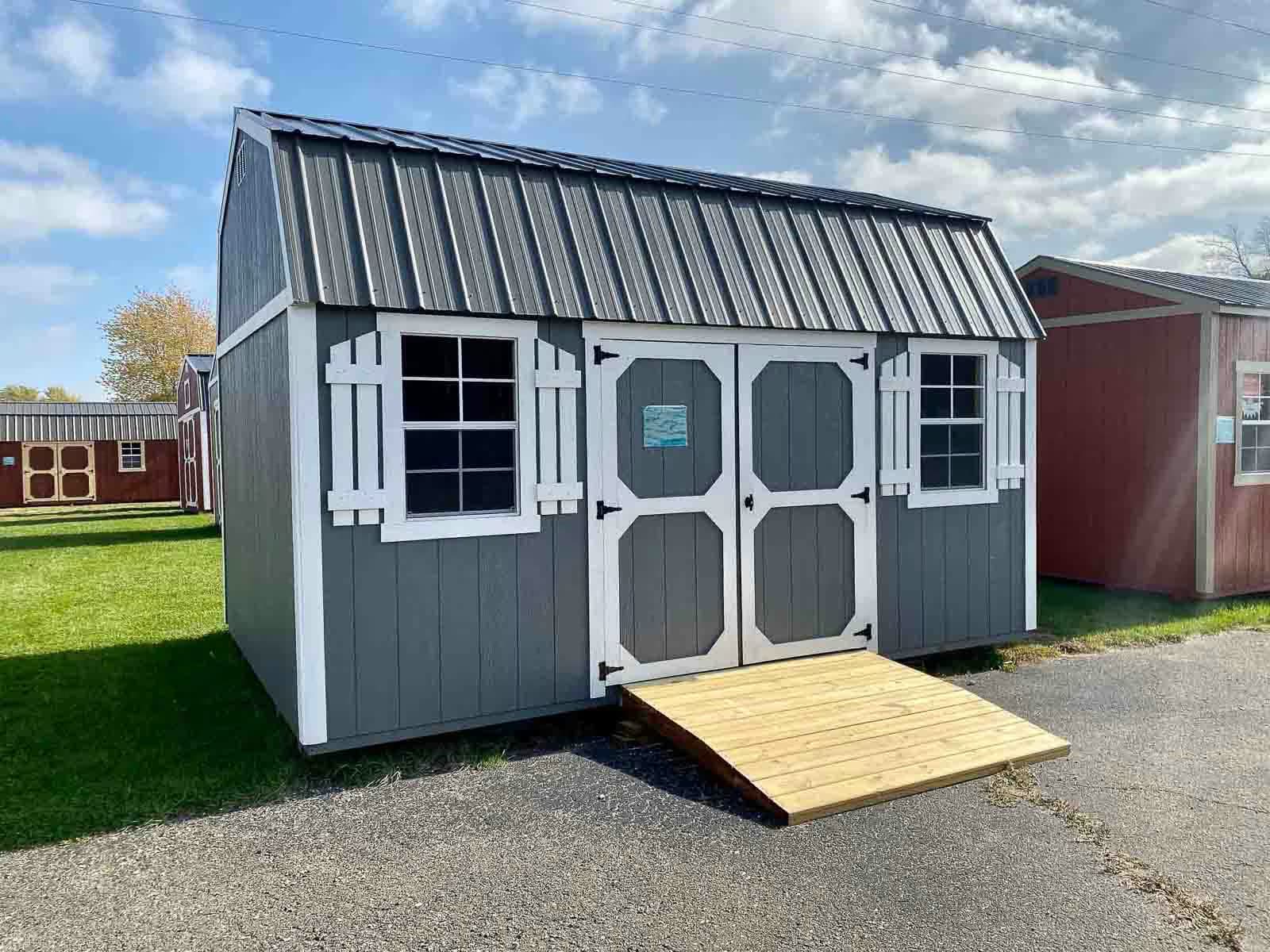
Buying & Getting Started
Everything you need to know before purchasing an Amish-built building.
20 Questions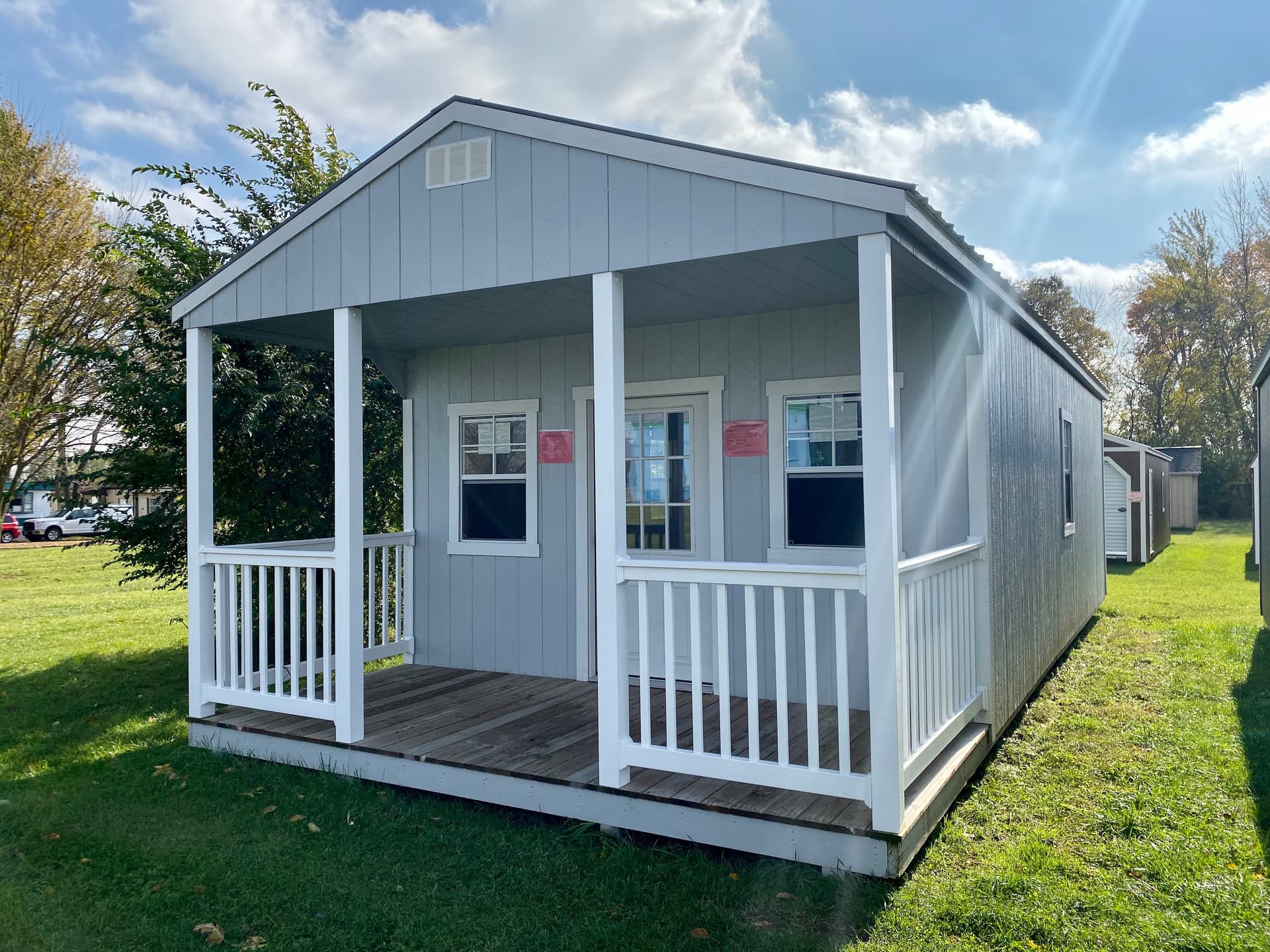
Rent-to-Own & Financing
Payment options, rent-to-own details, and financing for your building.
35 Questions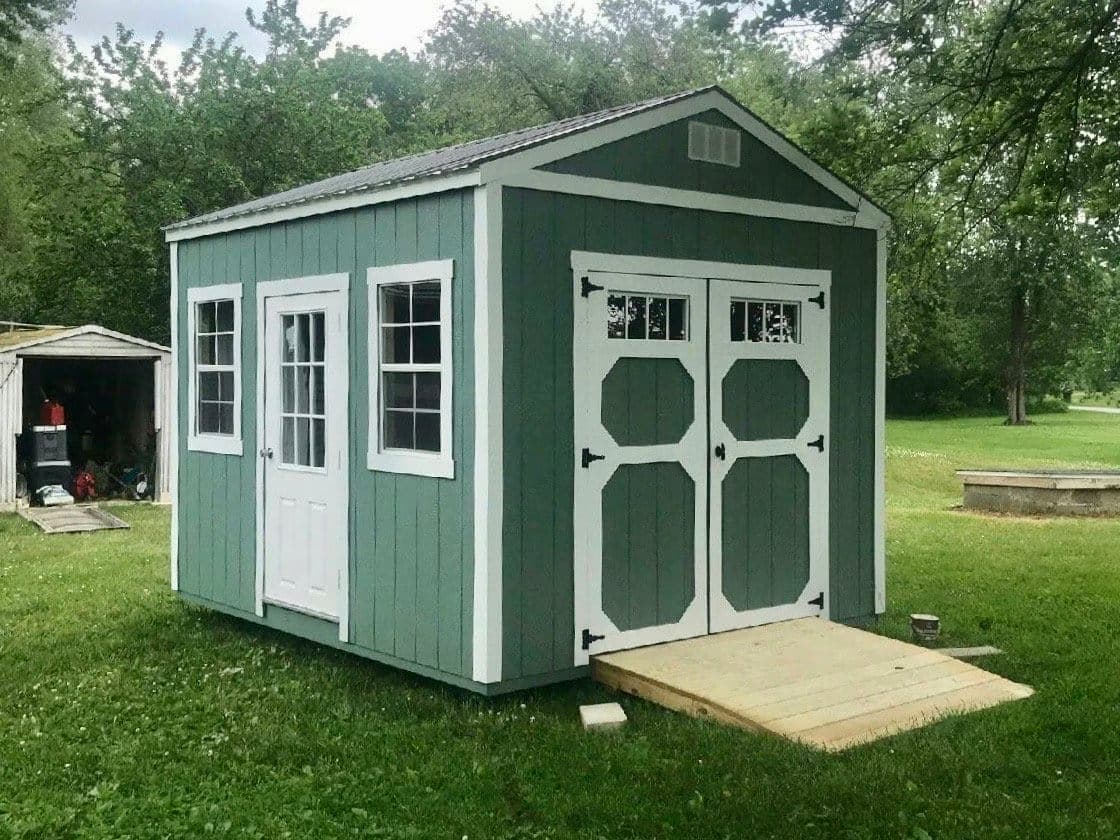
Pricing & Value
What things cost, what affects price, and how to get the best value.
20 QuestionsSee Yours Before
You Buy It
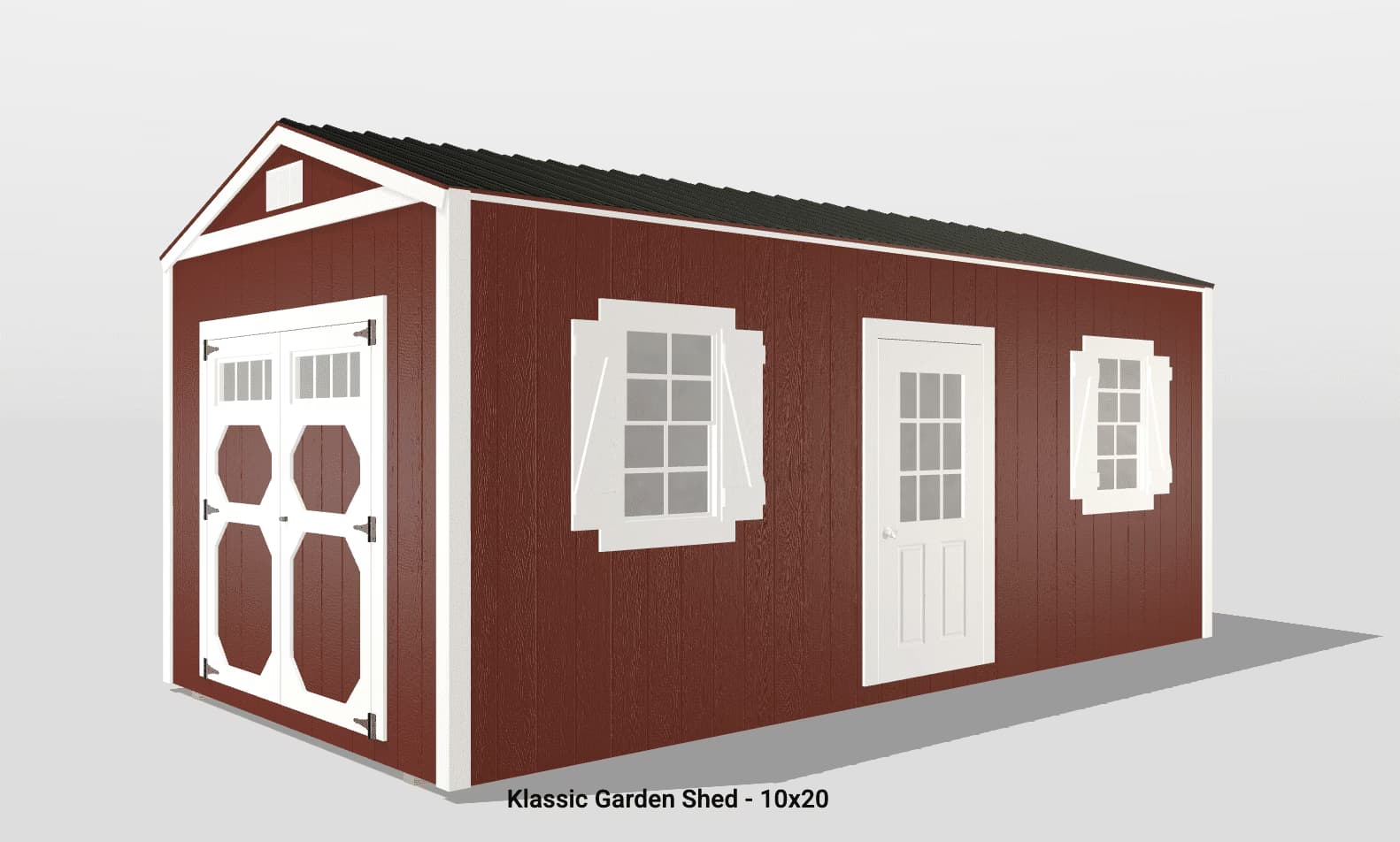
Pick your style, size, colors, and options. Rotate it, zoom in, and make it yours. The whole process is easy and you'll walk away knowing exactly what your building looks like before you commit.
Walk Through the Buildings.
Open Every Door.
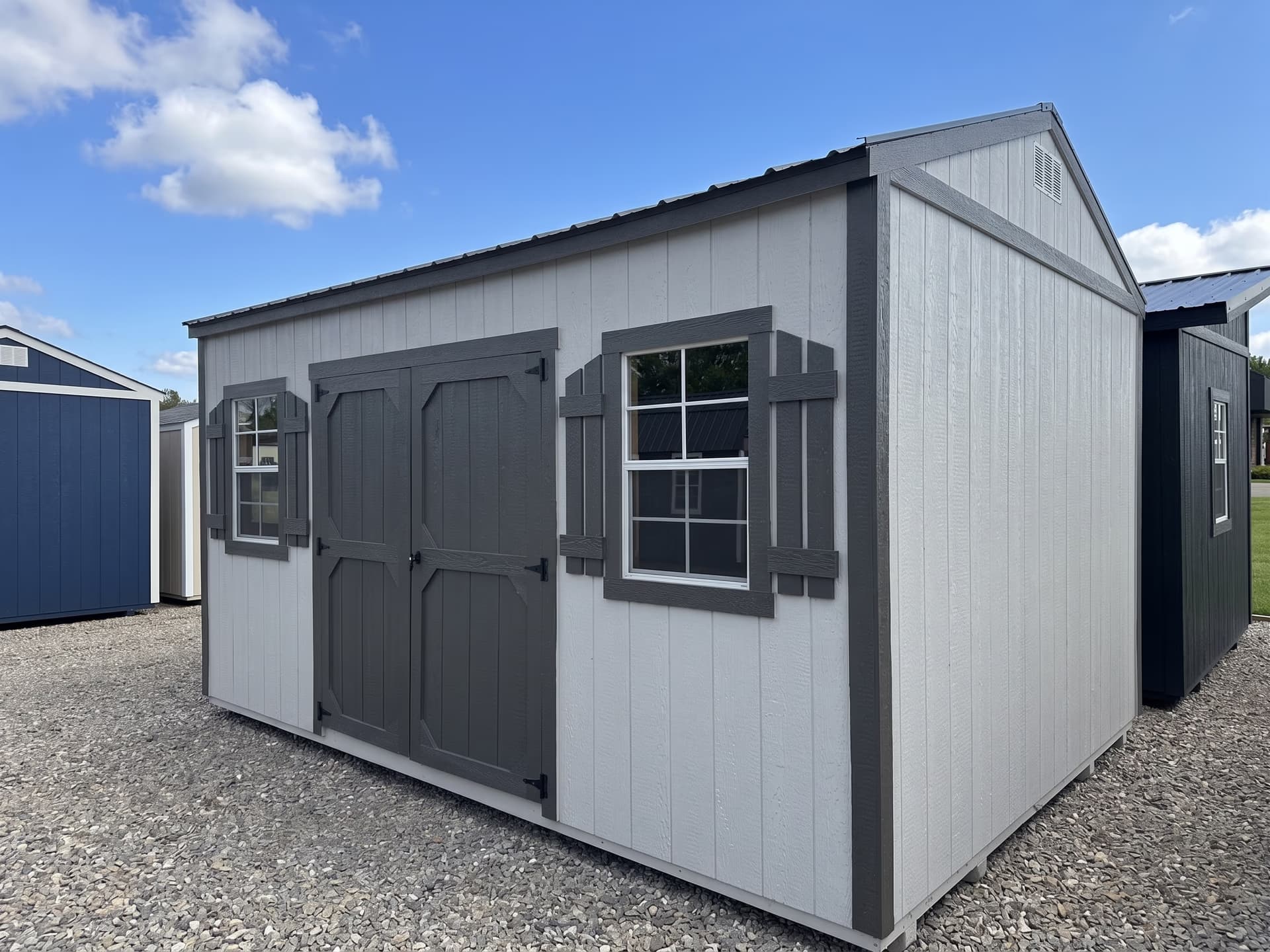
Adrian
Our first established location just off US-223 in Adrian. Walk through dozens of styles and configurations, sit inside a few, take your time. No appointment needed. We leave the buildings unlocked. Come see the quality for yourself.
Hours
Mon–Tue: 10am–5pm
Wed: Closed
Thu–Fri: 10am–5pm
Sat: 10am–3pm
Sun: Closed
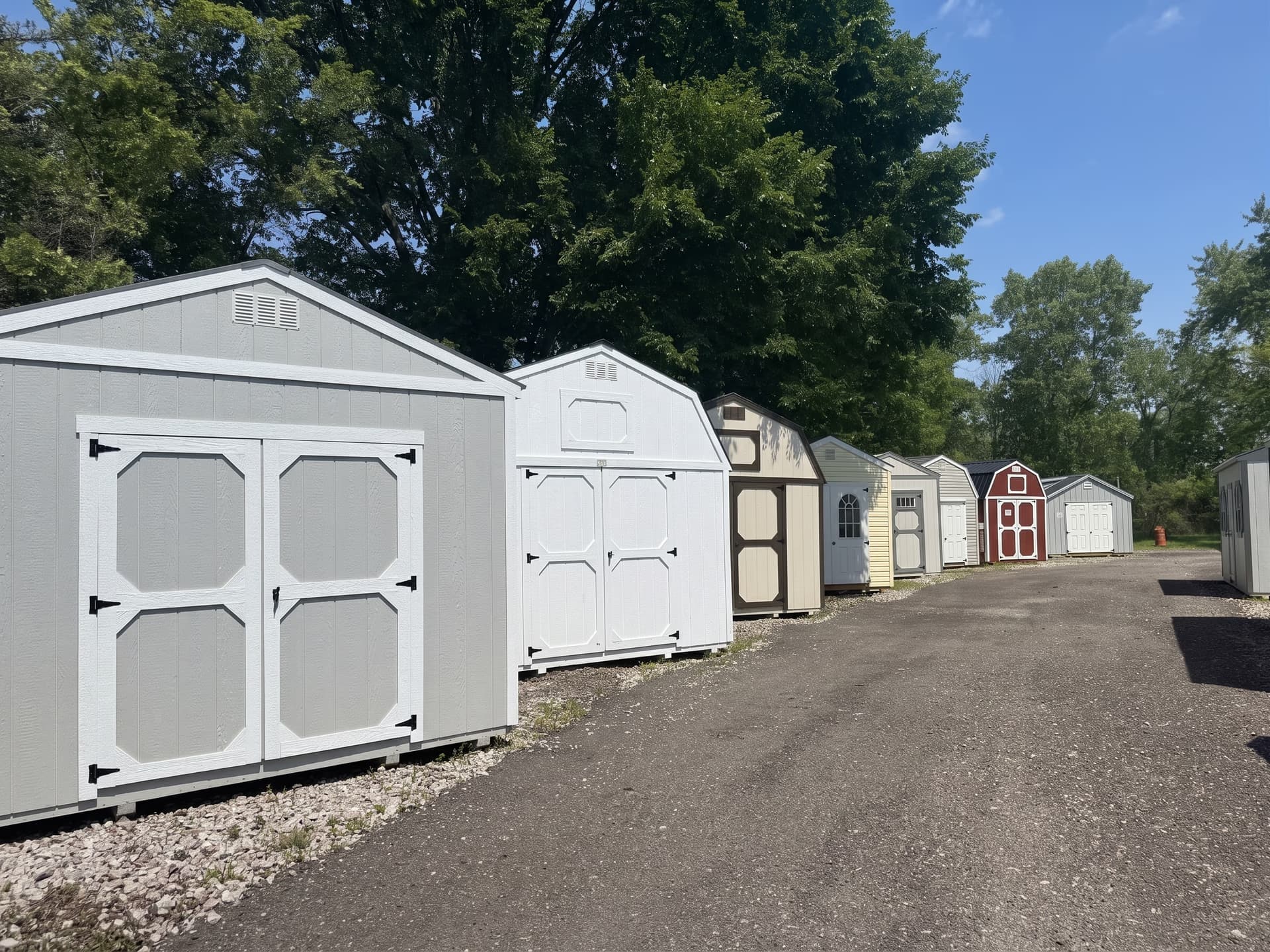
Carleton
Located just off Telegraph Road in Carleton, we have a full selection of sheds, cabins, garages, barns, and more ready to walk through whenever you're ready. We can't wait to see you soon.
Hours
Mon–Tue: 10am–5pm
Wed: Closed
Thu–Fri: 10am–5pm
Sat: 10am–3pm
Sun: Closed