
After Purchase
Warranties, maintenance, modifications, and everything after your building arrives.
View Questions & AnswersQuestions
Yes, and it's one of the most common upgrades people do after delivery. A licensed electrician runs a line from your main panel to the building, adds a subpanel inside, and wires it for outlets, lighting, and whatever else you need.
You'll need an electrical permit in most Michigan jurisdictions. Your electrician handles that. Plan for the trench from the house to the building as part of the project. Total cost varies, but most residential shed electrical jobs run a few thousand dollars depending on distance and how much you're wiring inside.
Absolutely, and we offer spray foam insulation that makes the whole process easier. Spray foam in the walls and ceiling provides excellent thermal performance, and spraying under the building for floor insulation is one of the best things you can do if you plan to finish the interior later. It seals gaps, prevents drafts, and sets you up for drywall or paneling without worrying about moisture.
Between the spray foam and a ductless mini-split for climate control, your building becomes a legitimate year-round space. January or July, it's comfortable.
A ductless mini-split system. It handles both heating and cooling in one unit, mounts on the wall so it doesn't eat floor space, and runs efficiently enough to keep energy costs reasonable. For a well-insulated shed, a single mini-split covers the whole space.
For a workshop where you're in and out and don't need constant climate control, a portable space heater in winter and a fan with the doors open in summer might be all you need. It depends on how much time you're spending in there and how comfortable you want to be.
Yes. Our buildings have wood-framed walls, which means running wire, mounting junction boxes, and adding fixtures is straightforward for a licensed electrician. It's the same process as wiring any wood-framed structure.
If you think you might want electrical down the road, it doesn't change anything about your initial purchase. The building is ready for it whenever you are. Some customers add electric right away. Others use the building for storage first and wire it later when they decide to convert it into a workspace. Either approach works.
Technically, yes, but it's more involved than electrical. Plumbing requires running water supply and drain lines from your house to the building, which means trenching and connecting to your existing system. In Michigan, you'll need permits, and the work needs to be done by a licensed plumber.
For a full bathroom or kitchenette, the cost adds up: plumbing, permit fees, possibly a separate septic connection depending on your setup. For most shed and cabin uses, people get by without plumbing. But if you're building out a guest suite, a pool house, or any space where water is essential, it's absolutely doable.
Easiest upgrade on the list. Three options, from best to simplest:
Run an ethernet cable from your router to the building. It's the most reliable connection and doesn't depend on signal strength. Bury the cable in the same trench as your electrical if you're doing both at the same time.
Use a mesh Wi-Fi system or a dedicated access point. Most modern mesh routers cover a backyard building without issues, especially if you place one node near the back of the house facing the shed.
Use a Wi-Fi range extender. Cheapest option, works fine for basic browsing and video calls, but can be spotty for heavy use. For a full-time office, go ethernet or mesh.
For most workshop tools, hobby equipment, and general use, the standard floor handles it. Our floors are built on pressure-treated joists with solid decking designed to carry significant weight.
If you're planning to park a vehicle inside a garage, install extremely heavy machinery, or load the building with dense commercial inventory, a concrete slab gives you the most support. For anything short of that, the standard floor is built for it.
Less than most people think. Vinyl-sided buildings need almost nothing. A hose-down once or twice a year keeps them looking clean. Painted wood or LP SmartSide benefits from a fresh coat of paint every 5 to 7 years depending on sun exposure and weather. Metal roofs are virtually maintenance-free.
The two things worth checking annually: make sure the ground around the building still drains properly and that no debris is piling up against the base. Clear any leaves or branches off the roof after fall. That's about it. These buildings are built to be low maintenance, and they deliver on that.
Start with what's underneath it. The pressure-treated lumber in our floors carries a lifetime warranty against termite damage and decay, so the wood itself is built to resist moisture. The rest is about giving water somewhere to go that isn't under your building.
A gravel pad or concrete blocks keep the structure elevated with airflow underneath. Make sure the ground slopes away from the building so rain and snowmelt drain outward. Avoid stacking dirt, mulch, or leaves against the base. If you do those things, the floor will outlast most of the stuff you put inside the building.
Ventilation is the key. Moisture builds up when warm air meets a cold surface with nowhere to go. Gable vents, ridge vents, or even just cracking a window periodically lets air circulate and prevents condensation from forming on the walls and ceiling.
If you're using the building for storage, avoid sealing it up completely. Air needs to move. For a finished interior with insulation and climate control, the insulation itself prevents the temperature differential that causes condensation. Spray foam is particularly effective because it seals gaps and eliminates the cold spots where moisture likes to collect.
Keep it dry and keep the air moving. Mold needs moisture and still air to grow. A well-ventilated building on a proper base with good drainage rarely has mold problems.
Don't store wet items inside. If you bring in a wet lawnmower or damp camping gear, let the building air out after. Avoid pushing storage tight against all four walls, leave a small gap for airflow. If you notice any musty smell, a dehumidifier or even just opening the doors on a dry day usually clears it up.
Seal the gaps. Mice can squeeze through a hole the size of a dime. Check around the base of the building where it meets the skids, around door frames, and anywhere utilities enter. Steel wool stuffed into small gaps and expanding foam for larger ones are your best friends.
Inside, don't leave food, birdseed, or pet food stored in bags. Use sealed plastic bins. Mouse traps or bait stations around the exterior perimeter are cheap insurance. For bugs, keeping the area around the building clear of tall grass, woodpiles, and debris removes the habitat that attracts them.
Our buildings are well-constructed with tight joints, which helps significantly. But a shed in a yard is always going to be more exposed than the inside of a house, so a little prevention goes a long way.
Every 5 to 7 years for most Michigan locations. South-facing walls that take the most sun may need attention sooner. You'll know it's time when the paint starts looking chalky, faded, or you see bare wood peeking through.
LP SmartSide holds paint longer than raw wood, so if your building has LP siding, you might get extra years between coats. Vinyl never needs paint. If touching up the paint sounds like more than you want to deal with, vinyl siding is the zero-maintenance choice.
Almost none. That's one of the reasons our buildings come with them standard. Check it once a year for any debris, fallen branches, or leaves that might be sitting in a valley. Clear heavy snow if it accumulates several feet deep, though the roof pitch handles normal Michigan winters on its own.
Metal doesn't rot, doesn't grow moss, and doesn't need replacing every 20 years like asphalt shingles. It's about as close to maintenance-free roofing as you can get on a building this size.
On a well-built shed, this shouldn't be a problem for a long time. Doors stick or sag when the building shifts, usually from an uneven foundation settling over time. The fix starts underneath: make sure the building is level. If it's shifted, releveling the base often solves the door issue.
For minor sticking, check the hinges. Tighten any loose screws, and lubricate the hinges with a dry lubricant spray. If a door has warped slightly from moisture, sanding the sticking edge usually takes care of it. On our buildings, the doors are hung on solid frames, so most issues trace back to the base rather than the door itself.
Some settling is normal, especially in the first year as the ground adjusts to the weight of the building. If you notice doors sticking or a slight lean, the building may need to be shimmed or the support adjusted.
For buildings on blocks, it's usually a matter of jacking up the low corner and adding or adjusting a block. For buildings on a gravel pad, the pad may need additional stone in a settled area. A bottle jack and some blocking material handles most minor releveling. If the building has shifted significantly, give us a call or text and we can talk through the best approach or connect you with a driver who can help.
With proper ground prep and basic maintenance, you shouldn't be looking at anything major for 15 to 20 years or more. The pressure-treated structural components carry a lifetime warranty against decay and termites. The metal roof will outlast the shingles on most houses. The framing is solid and built to last.
The things that shorten a building's life are all preventable: sitting on bare dirt, letting moisture collect underneath, ignoring maintenance on wood siding, or letting debris pile against the base. Take care of the simple stuff and your building will be standing long after you've forgotten what you paid for it.
That's literally what makes them portable. Our buildings are constructed on skids, which means a driver with the right equipment, like the Mule, can pick it up and move it to a new location on your property or haul it to a different address entirely.
This is one of the biggest advantages over a stick-built structure. If you relocate, rearrange your yard, or sell the building to someone else, it can go wherever it needs to go.
It depends on the size of the building, the distance, and the access at both the pickup and delivery locations. It's essentially a delivery job, similar in cost to what the initial delivery involved. Give us a call or text and we can give you a ballpark based on your specific situation.
Any portable building on skids can be moved. That includes all of our sheds, garages, cabins, and everything else we sell. The Mule and trailer setup that delivered it in the first place is the same equipment used to move it later.
The only consideration is access. If the building has been in place for years and trees have grown in, a fence was added, or the landscaping has changed, make sure the path is still clear enough for the equipment to get in and out.
In most cases, yes. Standard homeowner's insurance policies typically cover detached structures on your property under "other structures" coverage, which is usually a percentage of your home's dwelling coverage. That means your shed, garage, or cabin may already be covered for things like fire, wind, theft, and falling trees.
Call your insurance agent and let them know you're adding a building to your property. They can confirm your coverage, tell you if any adjustments are needed, and make sure you're protected. It's a five-minute call that's worth making.
Probably not, if your homeowner's policy already covers other structures. Most people are covered under their existing policy without any additional premium. However, if you're using the building for a home business, storing high-value inventory, or finishing it out as a living space, your standard coverage might not be enough.
Talk to your agent. Explain what the building is for and what's inside it. They'll tell you whether your current policy covers it or if a rider or adjustment makes sense.
File a claim with your homeowner's insurance. Storm damage and falling trees are typically covered under your "other structures" coverage. Document the damage with photos before you touch anything, and contact your agent right away.
Whether the building can be repaired or needs to be replaced depends on the extent of the damage. Our buildings are tough, and we've seen them take hits and come out better than expected. But either way, that's what insurance is for. Having that conversation with your agent before something happens means you're not scrambling after.
With us, it doesn't matter. Our pricing is the same whether you buy in January or July. You won't find a "spring blowout" or a "fall clearance" on our lot, because we don't inflate the price to make a discount look good. The number you see today is the real number.
That said, winter does have some practical advantages. Demand is lower, which means shorter wait times on custom builds and more flexibility on delivery scheduling. The shop isn't as backed up, and John has more room to work with your timing. Summer is peak season, so build queues and delivery windows get tighter.
If a company's price changes every other weekend, you're left guessing when to pull the trigger. We'd rather you buy when you're ready and know you got the same honest price as everyone else.
## Notes for Audit 1. ✓ COMPLETE (2026-03-25): Retroactive sweep - "cash" → "pay in full" or "buy outright" (7 edits). See `staging/sweep-report.md`. 2. ✓ COMPLETE (2026-03-25): Default CTA updated to "call or text" throughout (5 CTAs updated). 3. ✓ VERIFIED (2026-03-25): Spray foam insulation mentions present in Q179, Q185, Q191, Q203, Q230. 4. ✓ VERIFIED (2026-03-25): Consistent pricing / no gimmick sales language present in Q211, Q228, Q255. 5. ✓ VERIFIED (2026-03-25): YouTube/DIY references present in Q179 and Q190. 6. ✓ VERIFIED (2026-03-25): Finishing service partnerships mentioned in Q190 and Q203. 7. Q001-Q021 and many Q031-Q117 answers from prior sessions still need exact text pulled from conversation history and dropped in. 8. Voice rules must be checked across all answers for consistency during fresh-eyes audit.
More Questions
Back to FAQ
Buying & Getting Started
Everything you need to know before purchasing an Amish-built building.
20 Questions
Rent-to-Own & Financing
Payment options, rent-to-own details, and financing for your building.
35 Questions
Pricing & Value
What things cost, what affects price, and how to get the best value.
20 QuestionsSee Yours Before
You Buy It
Pick your style, size, colors, and options. Rotate it, zoom in, and make it yours. The whole process is easy and you'll walk away knowing exactly what your building looks like before you commit.
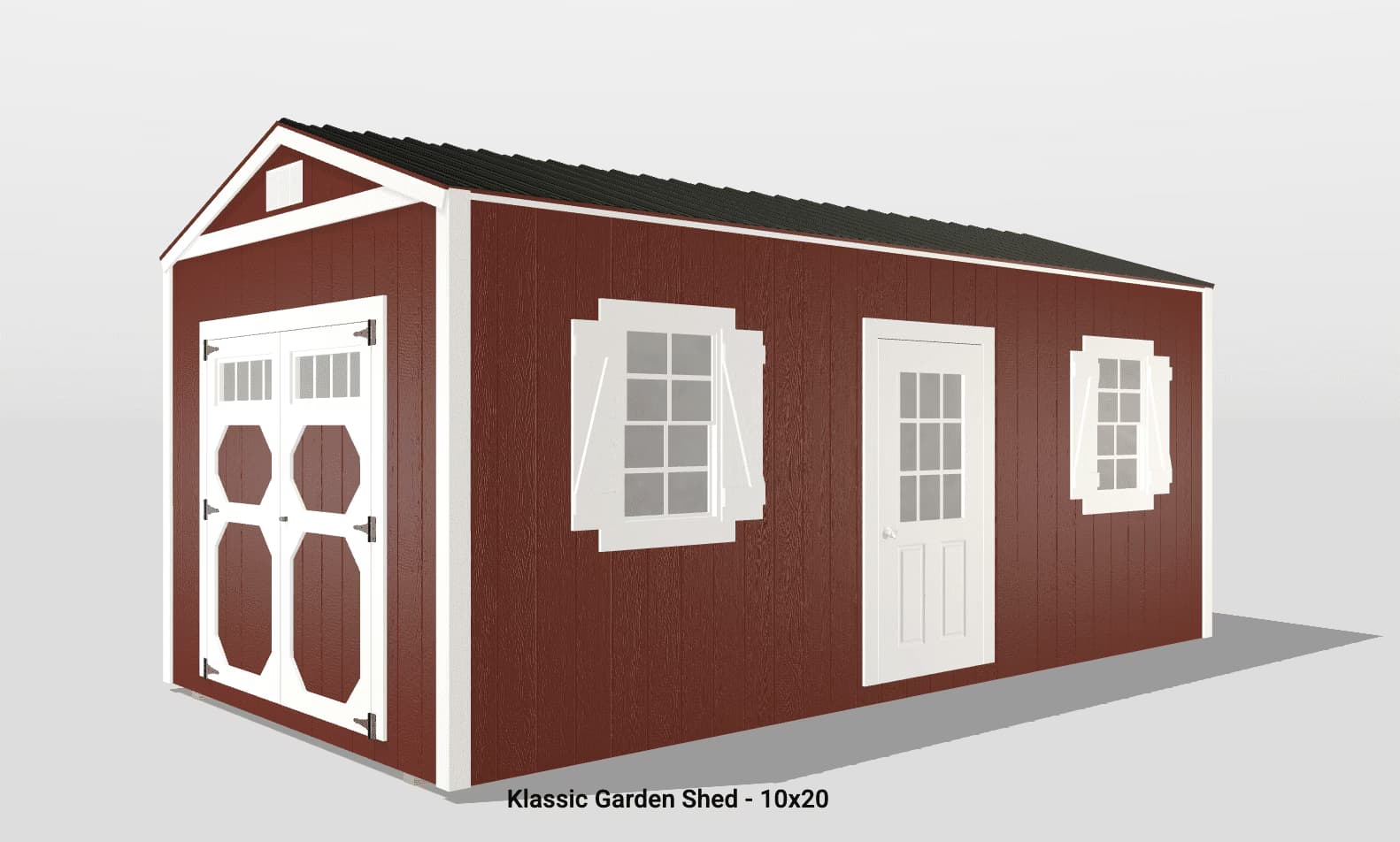
Walk Through the Buildings.
Open Every Door.
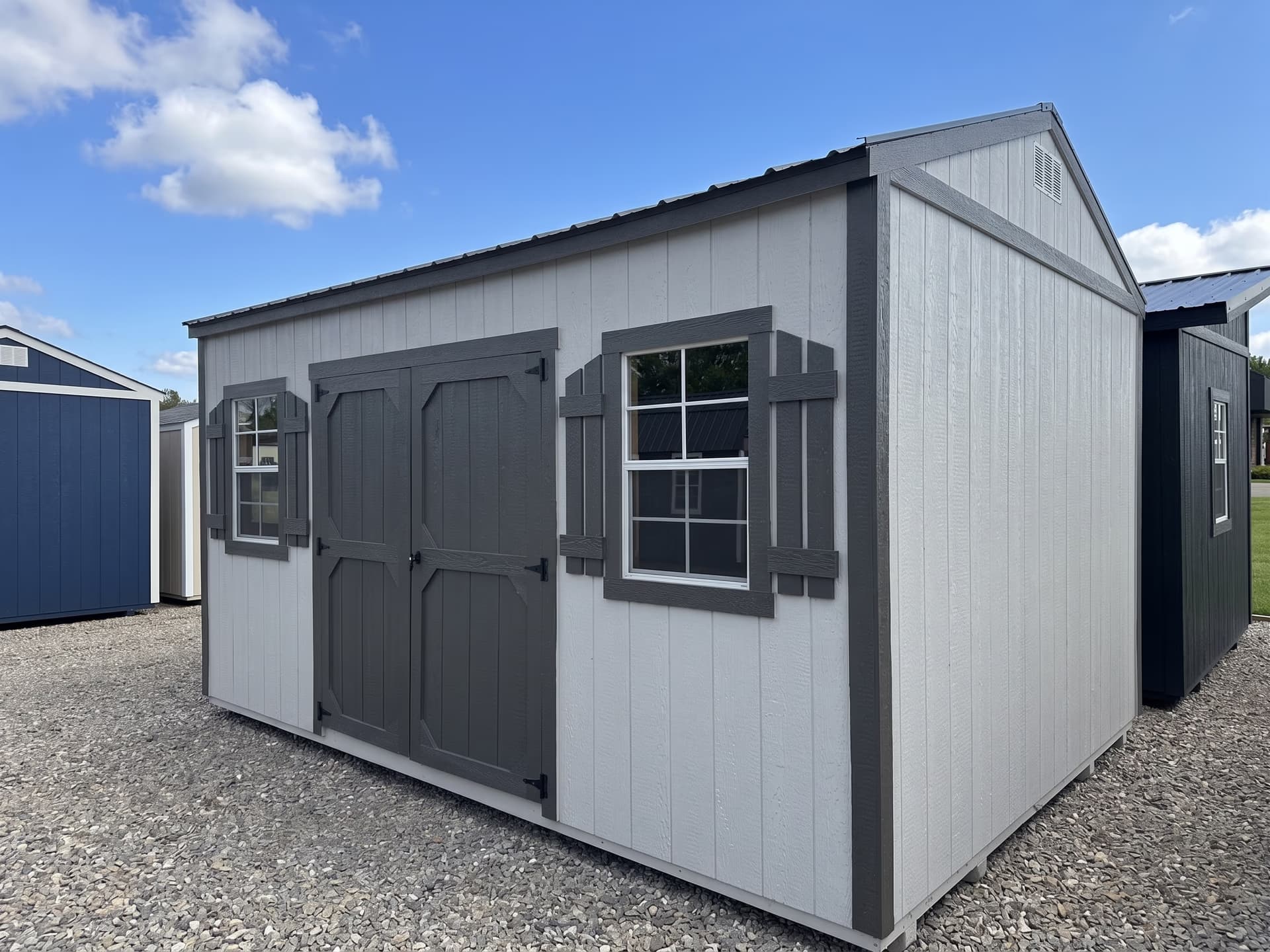
Adrian
Our first established location just off US-223 in Adrian. Walk through dozens of styles and configurations, sit inside a few, take your time. No appointment needed. We leave the buildings unlocked. Come see the quality for yourself.
Hours
Mon–Tue: 10am–5pm
Wed: Closed
Thu–Fri: 10am–5pm
Sat: 10am–3pm
Sun: Closed
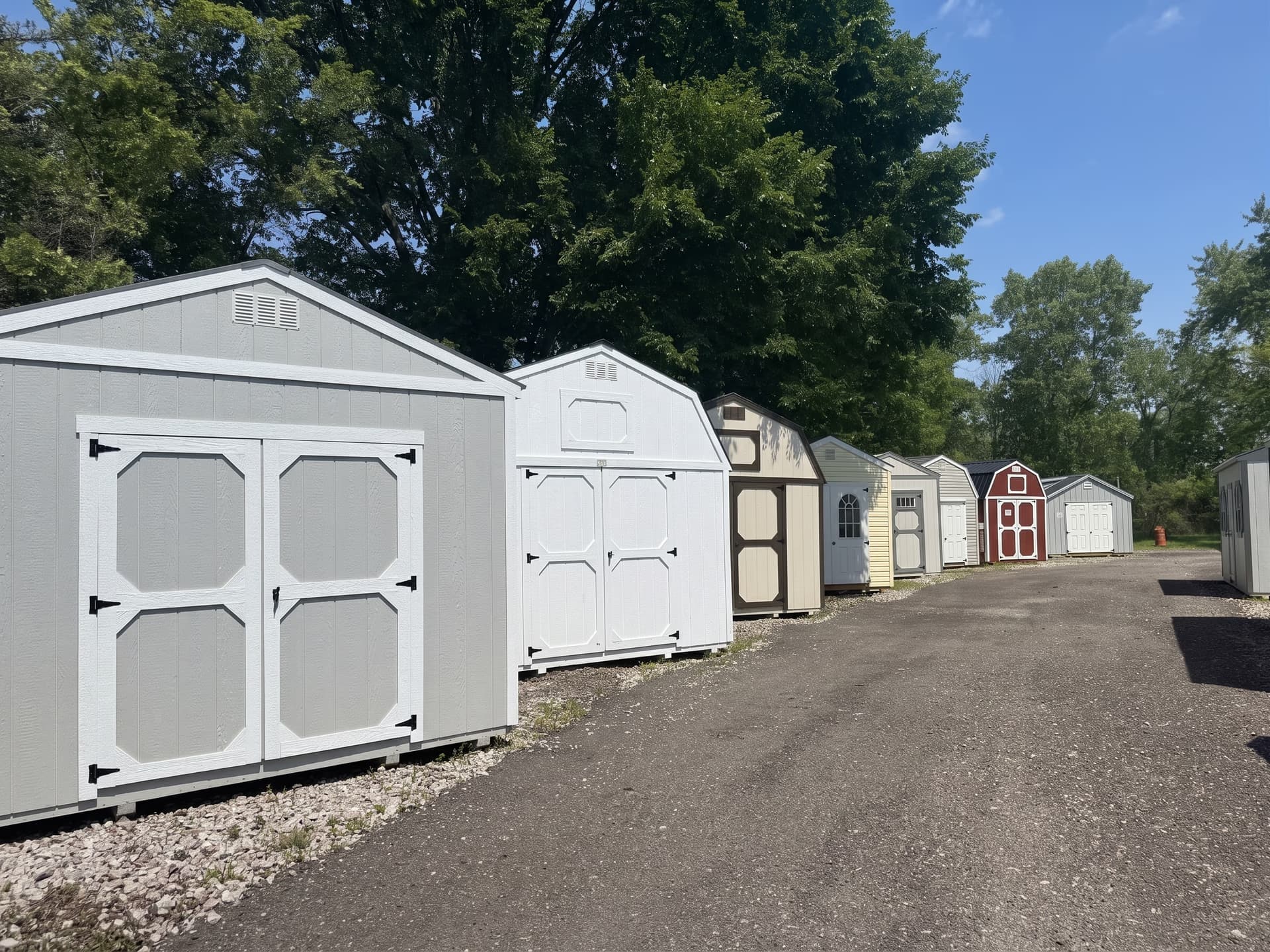
Carleton
Located just off Telegraph Road in Carleton, we have a full selection of sheds, cabins, garages, barns, and more ready to walk through whenever you're ready. We can't wait to see you soon.
Hours
Mon–Tue: 10am–5pm
Wed: Closed
Thu–Fri: 10am–5pm
Sat: 10am–3pm
Sun: Closed