
Delivery & Site Prep
How delivery works, what to prepare on your property, and what to expect on delivery day.
View Questions & AnswersQuestions
If you're buying a building off one of our lots, delivery typically happens within five to seven business days. If you're ordering a custom build, it's usually three to four weeks from order to delivery. Either way, it moves faster than most people expect.
It depends on the time of year and how busy the shop is. Spring and summer tend to book up faster, so the earlier you reach out, the better. Give us a call or text and we'll let you know what the current timeline looks like. We'd rather give you an honest answer than a guess.
Weather is the biggest one. Heavy rain, snow, or a muddy site can push things back a day or two. Seasonal road restrictions in the spring can occasionally affect routing in rural areas. And during peak season, the build queue at the shop can run a bit longer than usual.
None of that is common, and we stay in touch throughout the process so you're never left wondering. If something shifts, you'll hear from us.
Yes. John, our dispatch manager, will reach out with plenty of time to coordinate your delivery. He's been doing this for over 15 years and he's great at working with your schedule to find the right window. If something needs to shift or you have specific timing concerns, he's flexible and always willing to work with you. You're not going to be left guessing when your building shows up.
It's the best way to make sure everything goes exactly the way you want it. You can confirm placement, point out any obstacles, and make sure the building lands in the right spot. Our drivers, guys like Jerry, Sherwin, and Greg, are experienced pros, but nobody knows your property like you do.
If you can't be there, the next best thing is having someone who can represent you on-site with instructions to guide the driver in. We want the delivery to go right, and a little coordination up front makes all the difference.
If the site isn't accessible or the ground conditions won't work, the driver will do their best to find a solution. But if the building truly can't be placed safely, it may need to come back another day once the issue is resolved. That's why we always recommend talking through your site details with us before delivery day.
Tight access, soft ground, low branches, fencing, we've seen it all. Most issues can be solved with a little planning ahead of time. Give us a call or text with your situation and we'll help you figure it out before the truck rolls.
Our drivers are experienced and careful, but we're delivering a large structure on a trailer, so some ground contact is unavoidable. On firm ground, gravel, or concrete, you shouldn't see much impact at all. On soft or wet grass, there may be some tire tracks or minor rutting.
If your yard has been soaked by rain, it's sometimes worth waiting a day or two for things to firm up. The building isn't going anywhere without you. We'd rather deliver on a good day than fight the mud and leave tracks behind.
If the building arrives with damage from transport, that's on us to make right. Give us a call or text right away and we'll work with you and Homestead Barns to get it resolved. That's why we recommend being on-site at delivery so you can inspect everything before the driver leaves.
Your gate needs to be wider than the building itself, plus a little extra clearance on each side for the Mule to maneuver. If you're getting an 8-foot-wide building, your gate opening needs to be at least 10 feet. For a 10 or 12-foot-wide building, you'll need even more.
Not sure if your gate is wide enough? Send us a photo or give us a call or text with the measurements. We deal with this all the time, and there are usually options, including temporarily removing a fence section, which a lot of customers find easier and cheaper than you'd think.
Plan for at least a foot or two of clearance on each side for the delivery equipment to set the building down accurately. You'll also want enough room to walk around the building for future maintenance, gutter drainage, or just getting to the back side.
If you're placing near a fence line, property line, or another structure, check with your township on any setback requirements. Those vary by location, and it's worth a quick call before you commit to a spot.
The building rides on a trailer, so you need enough vertical clearance for the structure plus the trailer height to pass under anything in the path: tree branches, power lines, carport overhangs, basketball hoops, you name it. For most buildings, figure at least 14 feet of overhead clearance along the delivery route.
If you've got a tight spot with low branches, trimming them ahead of delivery is a lot cheaper than rescheduling. Walk the path from where the truck would enter your property to where the building goes, look up, and plan accordingly.
Tree branches, trim them or have them trimmed before delivery day. That's the easy one. Power lines are a different conversation. Our drivers will not deliver under low power lines. It's a safety issue, full stop.
If power lines cross your delivery path, give us a call or text before scheduling. Sometimes there's an alternate route onto your property. In other cases, your utility company can temporarily raise or relocate a line. We'd rather figure this out ahead of time than discover it on delivery day.
It depends on the width. If the side yard or alley is wider than the building plus clearance for the equipment, we can usually make it work. Our drivers navigate tight spots regularly, and the Mule is designed to maneuver in spaces a regular truck can't.
The best thing to do is measure the narrowest point along the path and let us know. Send a photo if you can. John will factor your access into the delivery plan and let you know what's realistic before we schedule anything.
The truck and trailer need enough width to get in, but once we're on your property, the Mule does the heavy lifting. If the driveway is tight but the building can reach its final spot through an alternate path, we've usually got options.
Call or text us with the details. We've delivered to properties with tight driveways, shared driveways, and driveways that barely fit a car. John has been coordinating deliveries for over 15 years, and he's seen every layout you can imagine.
Yes, as long as there's an opening wide enough for the building to pass through. A lot of our customers have fenced backyards, and delivery works fine when the gate or an open section of fencing provides enough clearance.
If your gate isn't wide enough, some customers temporarily remove a fence section for delivery day and put it back after. It's a common solution that's quick, affordable, and saves the cost of a build-on-site. We're happy to help you figure out the best approach for your setup.
Only if your gate isn't wide enough to fit the building through. If it is, you're good to go. If it's not, pulling a section of fence is usually straightforward and a lot of customers go this route. A few screws out, the building goes in, a few screws back, and you're done.
It beats the alternative of paying for a build-on-site just because of a fence. If you're not sure, send us your measurements and we'll tell you what you're working with.
The Mule is built for exactly this kind of thing. It can maneuver buildings into positions that would be impossible with just a truck and trailer. Tight turns, angled placement, navigating between obstacles, that's what it's designed for.
That said, physics still applies. There are limits to what any equipment can do, and the tighter the space, the more planning it takes. Give us the details of your layout and John will tell you straight whether we can make it work and how.
Slopes are manageable depending on the grade. Mild to moderate slopes are usually fine, and the Mule can handle uneven terrain better than you'd expect. Steep grades may require some additional ground work or a build-on-site instead.
Mud is the trickier one. Wet, soft ground is harder on the equipment and can lead to rutting. If your yard has been soaked from recent rain, it's usually better to wait a couple days for things to firm up. We'd rather reschedule by a day or two than fight conditions that could damage your property.
Keep it simple. Clear the delivery path of anything that could be in the way: vehicles, lawn furniture, kids' toys, low branches. Make sure the spot where the building goes is accessible and as level as you can get it. If you're using concrete blocks, have those on-site and the driver will place them.
Walk the route from your driveway to the final location and look for anything that could be a problem: tight gaps, soft ground, overhead wires, gates that need to be opened. A ten-minute walk-through the day before saves headaches on delivery day.
At minimum, you want a level, clear spot with decent drainage. A gravel pad is the best option for most buildings. Concrete blocks from Lowe's, Home Depot, or Menards work great as a budget-friendly alternative, and our driver will place them for you.
If you're going with gravel, lay down landscape fabric first, then 4 to 6 inches of crushed stone. Make the pad about a foot wider than the building on each side for drainage and airflow. For a larger garage or workshop, a poured concrete slab is worth considering.
The important thing: don't set it on bare dirt. Moisture, frost heave, and weeds will cause problems over time. A little prep now saves a lot of hassle later.
Reasonably level, yes. Perfectly level, no. Minor variations in the ground are normal and can be handled with shimming or block placement during delivery. Our drivers deal with this regularly and know how to get a building sitting right.
What you want to avoid is a significant slope or one end sitting noticeably higher than the other. If your spot has more than a few inches of grade change across the footprint, some leveling work ahead of time will make everything go smoother.
About a foot wider on all sides is the standard recommendation. So for a 10x12 building, you'd want roughly a 12x14 pad. That extra space allows water to drain away from the base, gives airflow underneath, and provides a clean edge around the building.
Going a little bigger never hurts. Some customers extend one side further to create a small gravel walkway or work area in front of the doors.
Four to six inches of crushed stone is the sweet spot for most buildings. That's deep enough to provide solid drainage and a stable base without overdoing it. For heavier buildings like garages, six inches is the safer bet.
Use crushed, angular stone, not round river rock. The jagged edges lock together and create a firm surface that won't shift under the building's weight. Smooth stone rolls and settles unevenly.
Three-quarter-inch crushed stone is the go-to for shed pads. It's the right balance of drainage and stability: small enough to pack down firm, large enough to let water move through.
Avoid pea gravel. It looks nice, but the smooth, round stones don't lock together. Your building will settle unevenly over time. Crushed limestone or crushed granite are both solid choices that you can find at any landscape supply yard.
It's a good idea. Landscape fabric keeps weeds from growing up through the gravel and prevents the stone from slowly sinking into the soil underneath. It's inexpensive, easy to lay down, and adds years of clean, low-maintenance performance to your pad.
Lay it down before you spread the gravel, overlap any seams by at least six inches, and you're set. It takes maybe twenty minutes and saves you from pulling weeds through stone for the life of the building.
You can, but we don't recommend it. Grass traps moisture against the bottom of the building, and bare dirt doesn't drain well. Over time, that moisture leads to issues: soft spots, uneven settling, and more wear on the floor than necessary.
Even a basic setup of concrete blocks makes a significant difference. Pick up 10 to 15 blocks from your local Menards, Lowe's, or Home Depot, have them on-site, and our driver will set them in place during delivery. It's the cheapest upgrade you'll make and it protects the whole investment.
For a standard storage shed, a gravel pad or concrete blocks will serve you well at a fraction of the cost. A slab is overkill in most cases.
Where a slab makes sense is for larger garages, workshops, or buildings where you're doing heavy work inside. If you're rolling vehicles in and out, running power tools, or using the building as a serious workspace, the flat, permanent surface of a concrete slab is hard to beat. It's a bigger investment upfront, but it turns your building into a permanent, heavy-duty structure.
A poured concrete slab. For a building that's handling vehicle traffic, heavy equipment, or serious workshop use, concrete gives you the most stable, permanent, and durable base. It won't shift, won't settle, and makes the floor inside the building feel rock solid.
If a full slab isn't in the budget right away, a well-prepared gravel pad with six inches of crushed stone is a strong second option. It drains better than concrete and still supports a heavy building well. Plenty of customers start with gravel and pour a slab later when the time is right.
You'll need to create a level area for the building to sit on. For mild slopes, that usually means cutting into the high side and filling the low side with compacted gravel until you've got a flat pad. For steeper grades, a retaining wall on the downhill side can hold everything in place.
The key is getting the footprint level and ensuring water drains away from the building, not toward it. If you're not sure how much work your slope needs, give us a call or text with some photos and we can help you plan.
You need water moving away from the building, not pooling around or under it. In most cases, a properly sized gravel pad handles this naturally because the stone lets water pass through and disperse.
If your building sits in a low spot or at the bottom of a slope, you may want a simple French drain or a swale to redirect runoff. It doesn't have to be fancy. The goal is making sure rain and snowmelt have somewhere to go that isn't directly under your building.
Start with what the building sits on. A gravel pad drains naturally. Concrete blocks keep the structure elevated with airflow underneath. Both prevent moisture from sitting against the floor.
Beyond that, make sure the ground around the building slopes gently away on all sides. Even a slight grade pushes water in the right direction. If you're in a naturally wet area, extending the gravel pad a bit wider or adding a simple drainage channel can make a big difference.
The pressure-treated floor has a lifetime warranty against termites and decay, so it's built to handle moisture contact. But helping water move away from the building means everything lasts longer and stays in better shape.
The Mule is a specialized piece of equipment designed to move portable buildings into place. It lifts the building and maneuvers it precisely where it needs to go, even in tight spaces, angled yards, or spots a regular truck and trailer can't easily reach. And yes, we use one.
Funny enough, one of our drivers delivered a building a few years ago right here in Southern Michigan, and the video ended up going viral on YouTube with over 3 million views. It's one of the best demonstrations of how the Mule system works that exists on the internet, and we think it's pretty cool that it happened with one of our deliveries.
Our drivers are experienced operators who do this day in and day out. When John, our dispatch manager, schedules your delivery, he takes your property layout into account to make sure the right equipment and approach are lined up before anyone shows up.
That's exactly the kind of situation the Mule was built for. It can navigate buildings through spaces that would stop a regular truck and trailer. Tight gates, narrow side yards, angled approaches, our drivers handle these setups regularly.
The limiting factor is always the width of the building versus the width of the opening. If the building physically fits through with a little room on each side, we can almost certainly make it work. Send us a photo or your measurements and John will let you know the plan.
If you're buying a shed that's already at one of our locations, delivery usually happens within 7 to 10 days, and often sooner once we schedule the logistics. A custom-built shed typically takes about 3 to 4 weeks, though during the summer peak season that can stretch to 5 to 6 weeks. Either way, our Mule delivery sets the building right where you want it.
You'll want a reasonably level spot ready before delivery, and many customers set a garage on a gravel pad or concrete slab. Our drivers can level minor grade changes, up to about 6 to 8 inches, with shims and blocks, but site prep is the customer's responsibility. If you're not sure what your spot needs, we can talk it through.
An in-stock garage from one of our locations usually arrives within 7 to 10 days, often sooner. A custom-built garage typically takes about 3 to 4 weeks, with summer peak season sometimes running 5 to 6 weeks.
An in-stock barn from one of our locations usually arrives within 7 to 10 days, often sooner. A custom-built barn typically takes about 3 to 4 weeks, with summer peak season sometimes running 5 to 6 weeks. Our Mule delivery places it right where you want it.
A reasonably level spot ready before delivery is the main thing, since our Gazebos come with composite flooring built in. Our drivers can handle minor grade changes, up to about 6 to 8 inches, but the site should be prepared and level beforehand. Many customers set a Gazebo on grass, gravel, or a patio.
An in-stock Gazebo from one of our locations usually arrives within 7 to 10 days, often sooner. A custom-built Gazebo typically takes about 3 to 4 weeks, with summer peak season sometimes running 5 to 6 weeks.
Most likely, yes. We deliver within about 150 miles of our Northern Indiana and Southern Michigan shops, which covers most of southern to lower-mid Michigan, Northwest Ohio, and Northeast Indiana. Beyond that we can still deliver with a quote at times. Feel free to check out the Where We Deliver page for details and more information.
Once your building is ready, we bring it to you and set it in place with our Mule, a compact machine that fits through tight or awkward spots with almost no impact to your yard. You just need a reasonably level spot ready beforehand, and our drivers can handle minor grade changes with shims and blocks.
If it's already at one of our locations, usually 7 to 10 days, and often sooner. A custom build typically takes about 3 to 4 weeks, with summer peak season sometimes running 5 to 6 weeks.
More Questions
Back to FAQ
Buying & Getting Started
Everything you need to know before purchasing an Amish-built building.
20 Questions
Rent-to-Own & Financing
Payment options, rent-to-own details, and financing for your building.
35 Questions
Pricing & Value
What things cost, what affects price, and how to get the best value.
20 QuestionsSee Yours Before
You Buy It
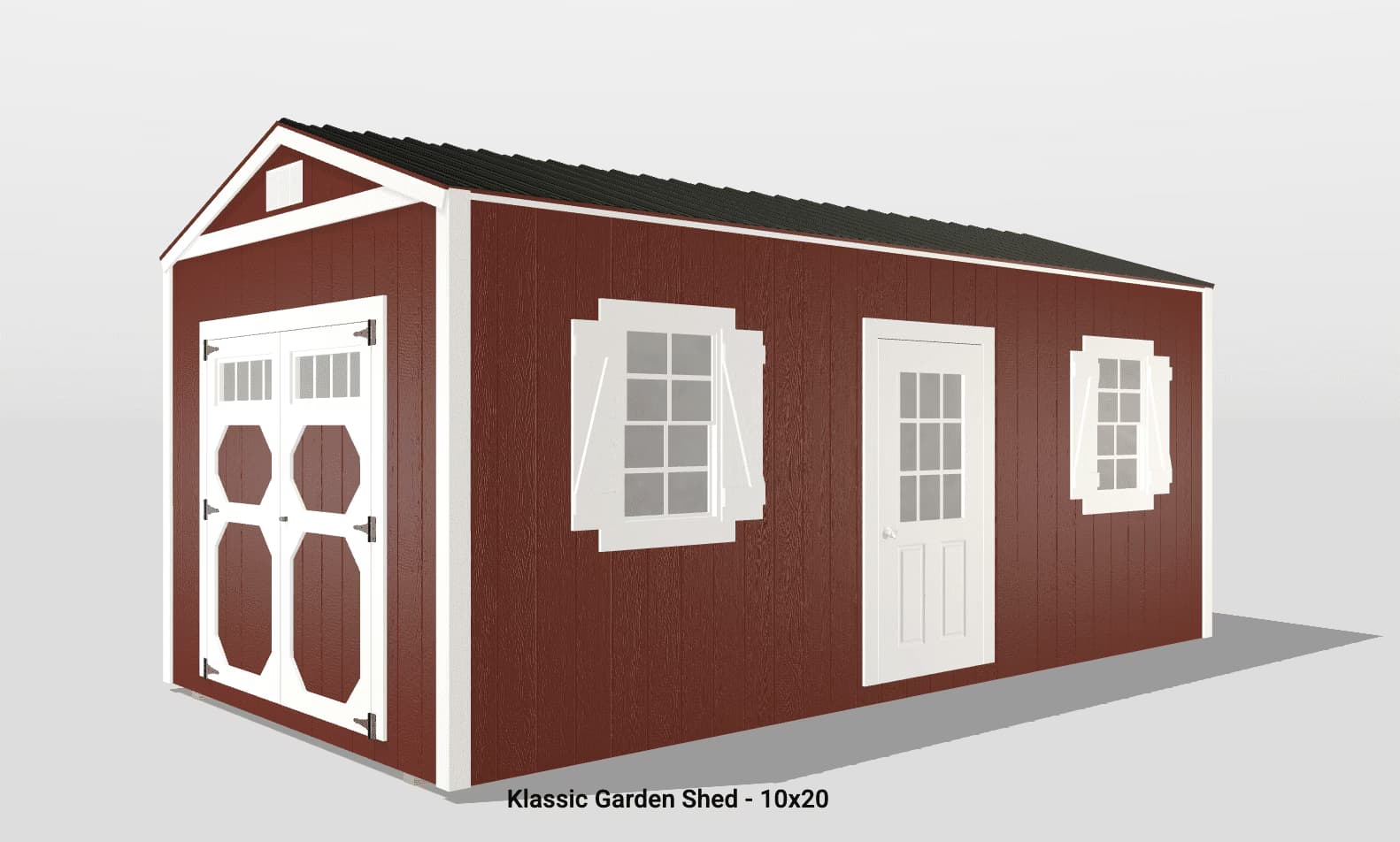
Pick your style, size, colors, and options. Rotate it, zoom in, and make it yours. The whole process is easy and you'll walk away knowing exactly what your building looks like before you commit.
Walk Through the Buildings.
Open Every Door.
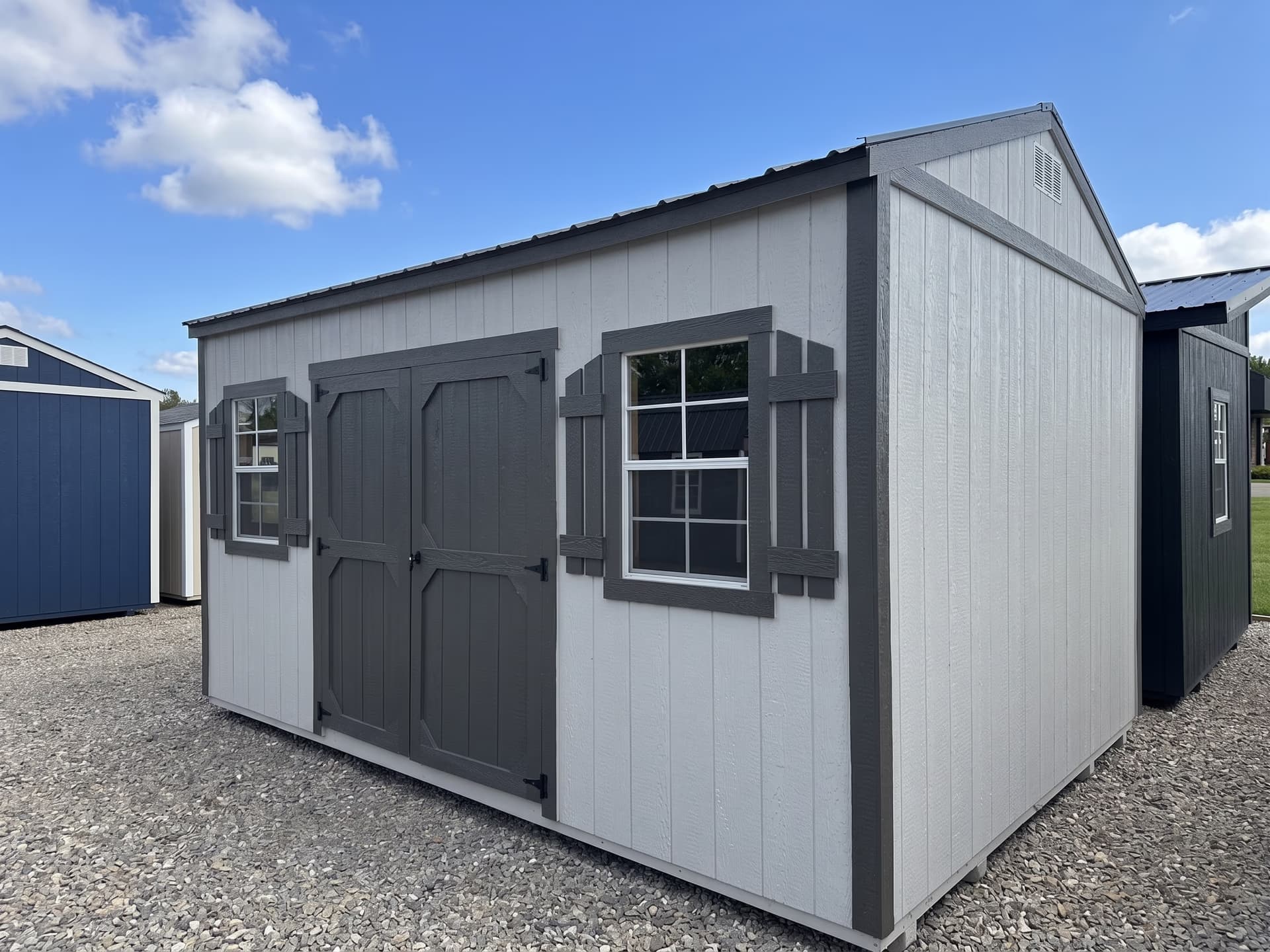
Adrian
Our first established location just off US-223 in Adrian. Walk through dozens of styles and configurations, sit inside a few, take your time. No appointment needed. We leave the buildings unlocked. Come see the quality for yourself.
Hours
Mon–Tue: 10am–5pm
Wed: Closed
Thu–Fri: 10am–5pm
Sat: 10am–3pm
Sun: Closed
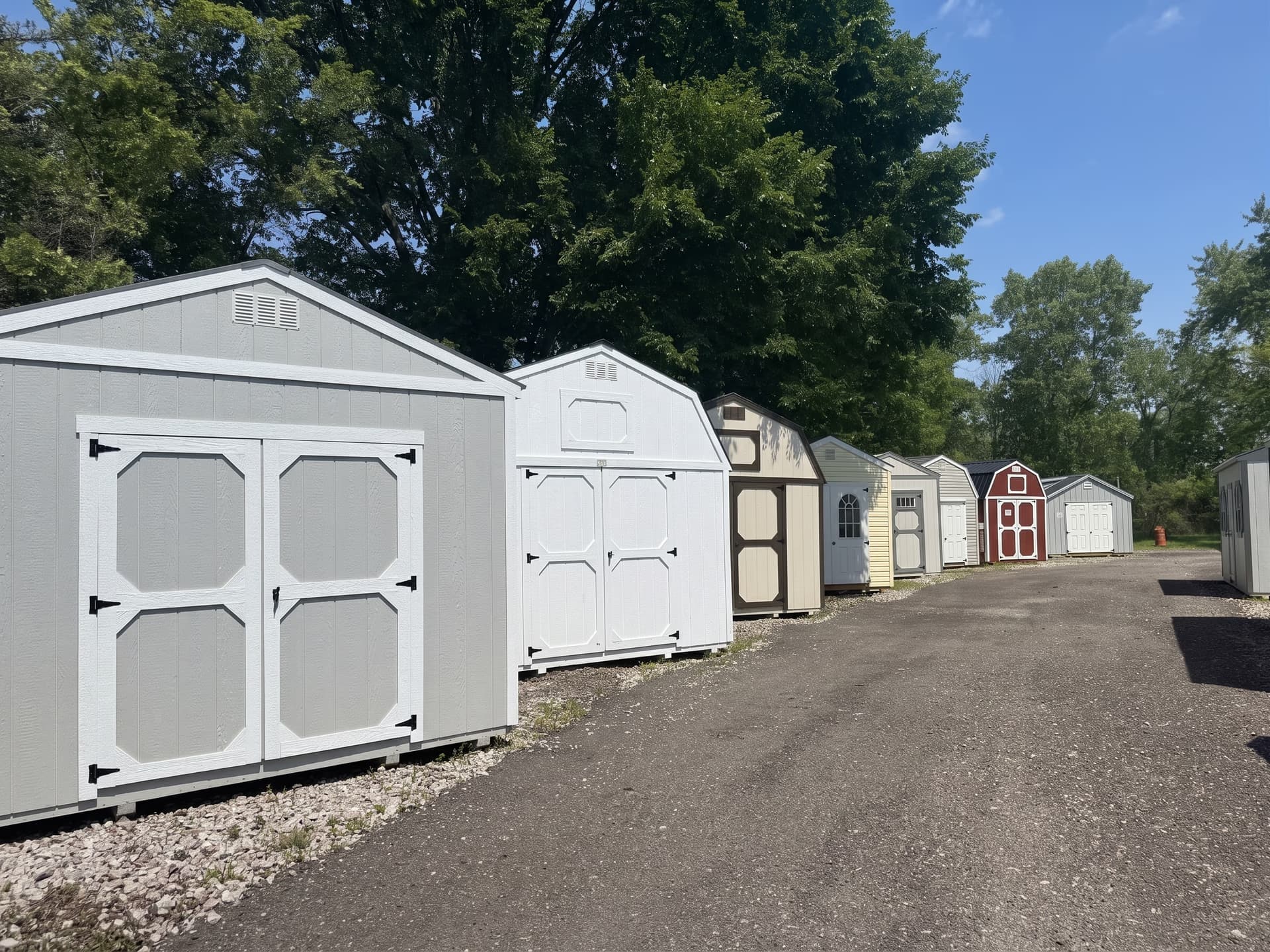
Carleton
Located just off Telegraph Road in Carleton, we have a full selection of sheds, cabins, garages, barns, and more ready to walk through whenever you're ready. We can't wait to see you soon.
Hours
Mon–Tue: 10am–5pm
Wed: Closed
Thu–Fri: 10am–5pm
Sat: 10am–3pm
Sun: Closed